
审稿:Rishi Desai, MD, MPH;
Yifan Xiao M.D.; Tanner Marshall, MS;
Evan Debevec-McKenney; Filip Vasiljevic;
翻译:MJ玥;

Intro
Charcot-Marie-Tooth disease is named after three neurologists - Jean-Martin Charcot, Pierre Marie and Howard Henry Tooth.
腓骨肌萎缩症(Charcot-Marie-Tooth病,CMT)是由三位神经病学家的名字共同命名的——Jean-Martin Charcot,Pierre Marie 和 Howard Henry Tooth。
The disease is actually not a single disease, but a group of related diseases that are progressive hereditary disorders of peripheral nervous system. Said differently, these disorders are inherited, worsen over time, and affect both sensory and motor nerve cells.
该病并不是单一疾病,而是一组进行性发展的遗传性周围神经病的集合。换言之,这种疾病是遗传性的,随着发展而恶化,同时影响感觉和运动神经元。
神经系统
Nervous System
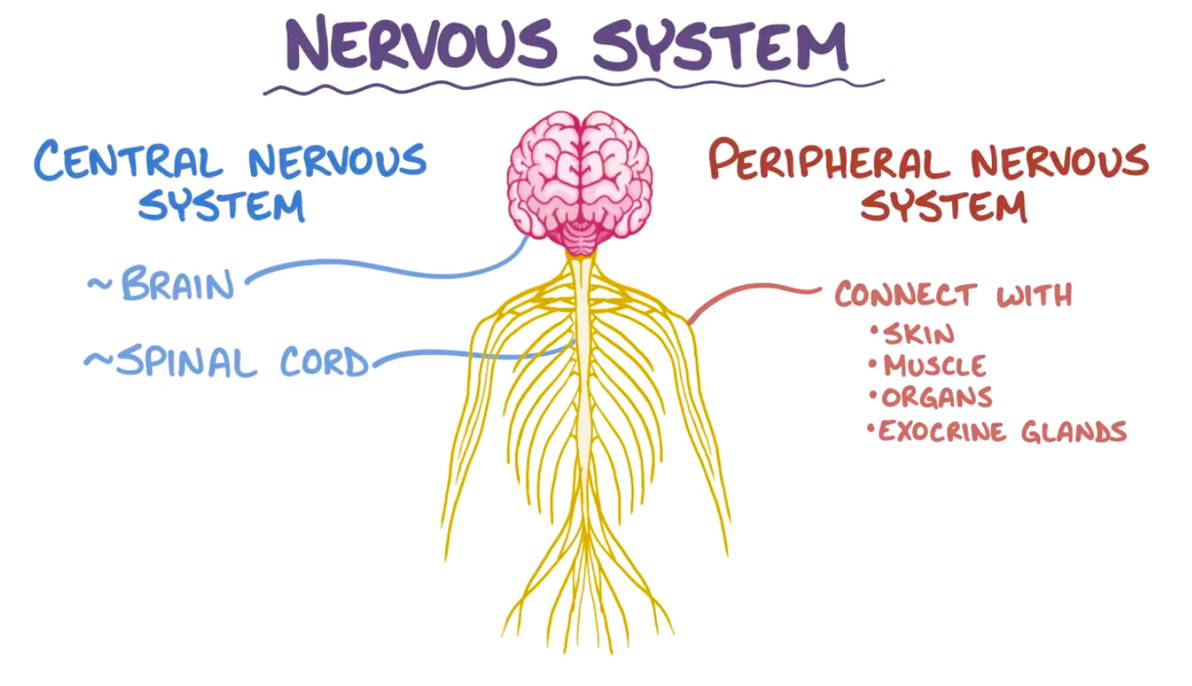
Broadly speaking, the nervous system consists of two parts, the central nervous system, and the peripheral nervous system.
广义上讲,神经系统由 中枢神经系统 和 周围神经系统 两部分组成。
The central nervous system consists of the brain and the spinal cord, and the peripheral nervous system includes the nerves that fan out from the central nervous system and connect it with the skin, muscles, organs, and exocrine glands.
中枢神经系统由大脑和脊髓组成;周围神经系统包括从中枢神经系统发出的,与皮肤、肌肉、器官和外分泌腺相连的神经。
神经元
Neuron
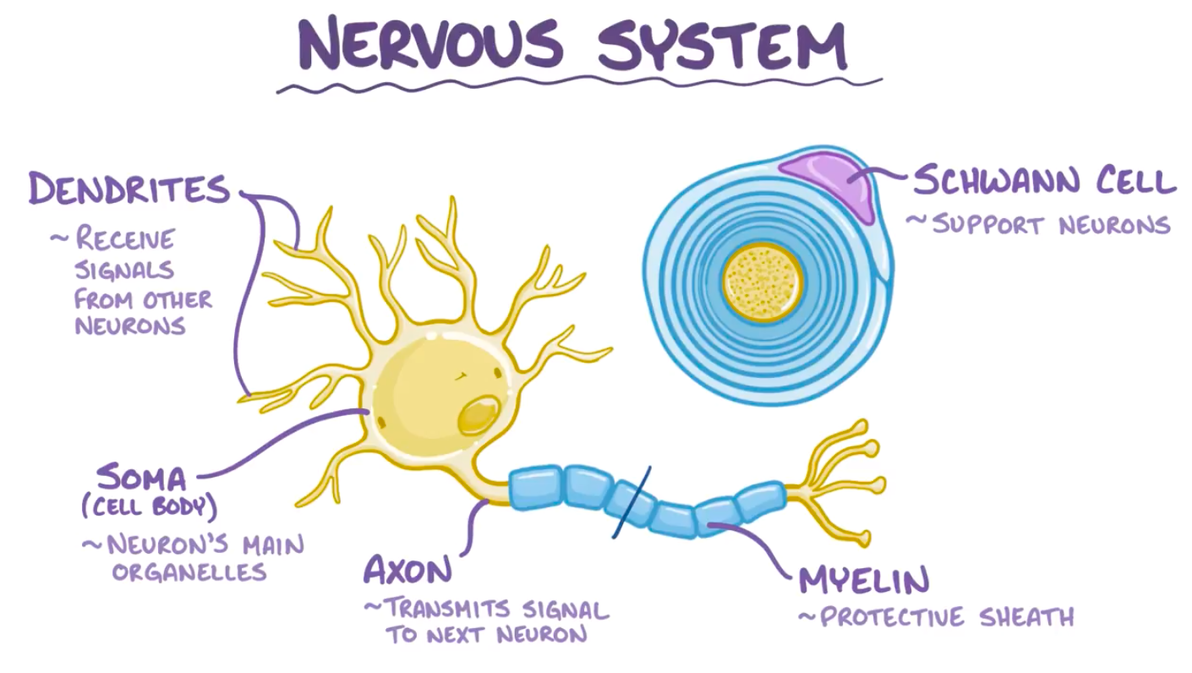
Now, zooming in to a neuron, each one is made up of three main parts.
至于神经元,每一个神经元都由三个主要部分组成。
The dendrites, which are little branches that receive signals from other neurons, the soma or cell body, which has all of the neuron's main organelles, and the axon, which transmits the signal to the next neuron in the series.
树突,是神经元上的小分支,负责接收来自其他神经元的信号;细胞体,内含神经元主要细胞器;轴突,负责将信号传递给下一个神经元。
Myelin is the protective sheath that surrounds the axons of the peripheral neurons, allowing them to quickly send electrical impulses. And this myelin is produced by Schwann cells, which are a group of cells that support neurons.
髓鞘 是包裹在周围神经元轴突周围的一层保护壳,辅助神经元快速传递电信号。周围神经的髓鞘由施旺细胞构成,施旺细胞是一组神经元辅助细胞。
CMT
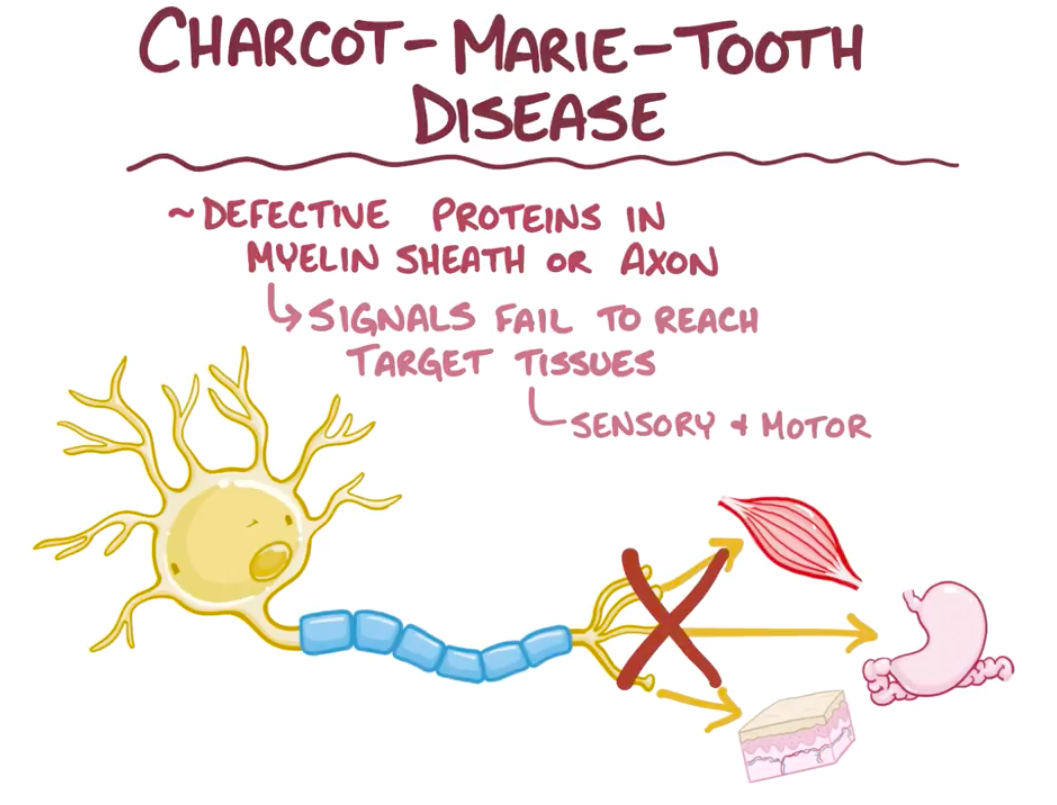
There are multiple forms of Charcot-Marie-Tooth disease and all of them are related to the defective production of proteins in either the myelin sheath or the neuron’s axon.
CMT有多种形式,它们都与构成髓鞘或轴索的蛋白质缺陷有关。
CMT1型(脱髓鞘型)
Regardless of the part of the neuron that’s affected, signals fail to reach their target tissues, and this can affect both sensory and motor peripheral neurons.
不管神经元哪一部分受累,都会影响信号下传,从而影响外周的感觉和运动。

CMT 1
The most common forms of Charcot-Marie-Tooth disease are CMT1 and CMT2, both of which are autosomal dominant diseases.
CMT中最常见的是 CMT1型 和 CMT2型,它们都是常染色体显性遗传疾病。
CMT1 is caused by mutations in the PMP22 and MPZ genes, which encode proteins that are part of the myelin sheath made by the Schwann cells. Loss of myelin slows down transmission of electrical impulses through the nerves. Over time, Schwann cells try to replace the lost myelin.
CMT1型 是由 PMP22 和 MPZ基因 突变引起的,这两个基因编码施旺细胞产生的髓鞘蛋白。髓鞘丢失将会导致神经电冲动下传速度减慢;一段时间后,施旺细胞开始重新形成丢失的髓鞘。
As a result, under a microscope, there’s often onion bulb formation, which is when an axon is surrounded by layers of new myelin with underlying damaged layers of myelin.
因此,在显微镜下通常会看到 “洋葱球” 样改变,即轴突内层髓鞘受损,外层包裹着新生髓鞘。
CMT2型(轴索型)

CMT 2
CMT2 is caused by mutations in the MFN2 gene which encodes a protein called Mitofusin-2 which is expressed in neuronal mitochondria. When the protein is defective, mitochondrial function is disrupted and that leads to neuronal death.
CMT2是由MFN2基因突变引起的,MFN2基因 编码 线粒体融合蛋白2;这种蛋白在神经元线粒体中表达。该蛋白受损将导致线粒体功能破坏,进而导致神经元死亡。

Motor & Sensory
In both CMT 1 and CMT 2, when motor neurons are affected, muscles begin to atrophy - a classic example of “use it or lose it”.
CMT1型 和CMT2型,运动神经元受损后,肌肉开始萎缩——这是典型的“用进废退”。
When sensory nerves are affected, it first affects the feet and toes first, because those are the neurons with the longest axons, and are therefore most sensitive to damage.
当感觉神经受损时,最先受累的是脚 和 脚趾,因为这些神经元拥有最长的轴索,同时也是最容易受累的。
症状
Symptoms
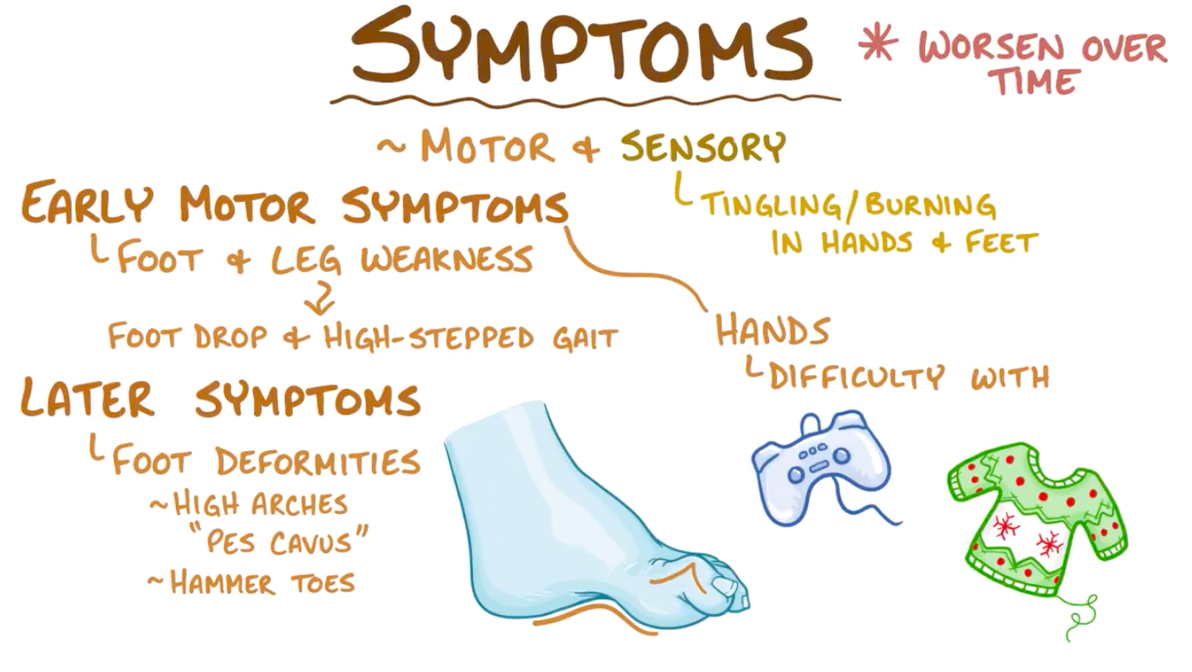
Symptoms of Charcot-Marie-Tooth disease are both motor and sensory.
CMT会累及人体的 运动 和 感觉。
Early motor symptoms include foot and leg weakness, which can cause a foot drop and a high-stepped gait. Over time muscle weakness and atrophy can cause foot deformities like high arches, called pes cavus, and hammer toes, which is when the middle joint of a toe bends upwards. Muscle atrophy and weakness can also affect the hands, resulting in difficulty doing things like playing a video game or knitting a holiday sweater.
早期的运动症状包括足和腿的无力,这会导致脚下垂和跨阈步态。随着时间的推移,肌肉无力和萎缩会导致脚部畸形,如高足弓和锤状趾,即脚趾的中间关节向上弯曲。肌肉萎缩和虚弱也会影响上肢,导致很难完成一些行为,如打游戏或织毛衣。
When sensory nerves are affected, it leads to tingling and burning sensations in the hands and feet. Because Charcot-Marie-Tooth disease is progressive, the symptoms gradually tend to worsen over time.
当感觉神经受到影响时,会导致手和脚的 刺痛 和 灼热感。因为CMT是渐进性的,症状会随着时间的推移而逐渐恶化。
诊断 & 治疗
Diagnosis
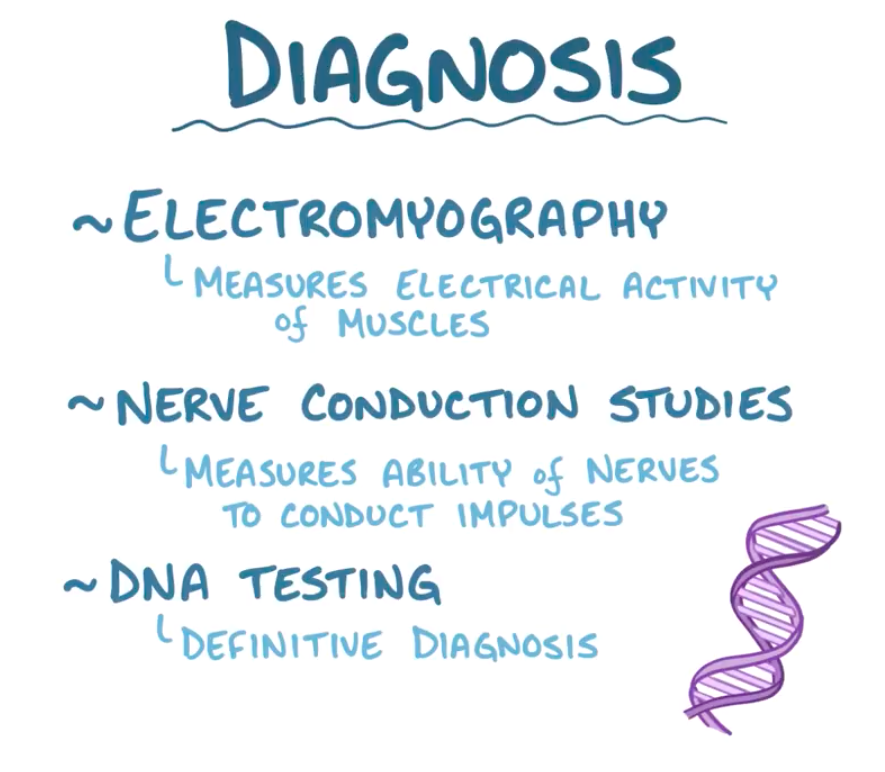
Charcot-Marie-Tooth disease can be diagnosed with electromyography, which measures the electrical activity of muscles, and nerve conduction studies, which measures the ability of nerves to conduct impulses. But ultimately, doing DNA testing offers a definitive diagnosis.
CMT可以通过肌电图来诊断;肌电图可以测量肌肉的电活动以及神经传导的能力。不过,DNA检测才是最终的金标准。
Treatment
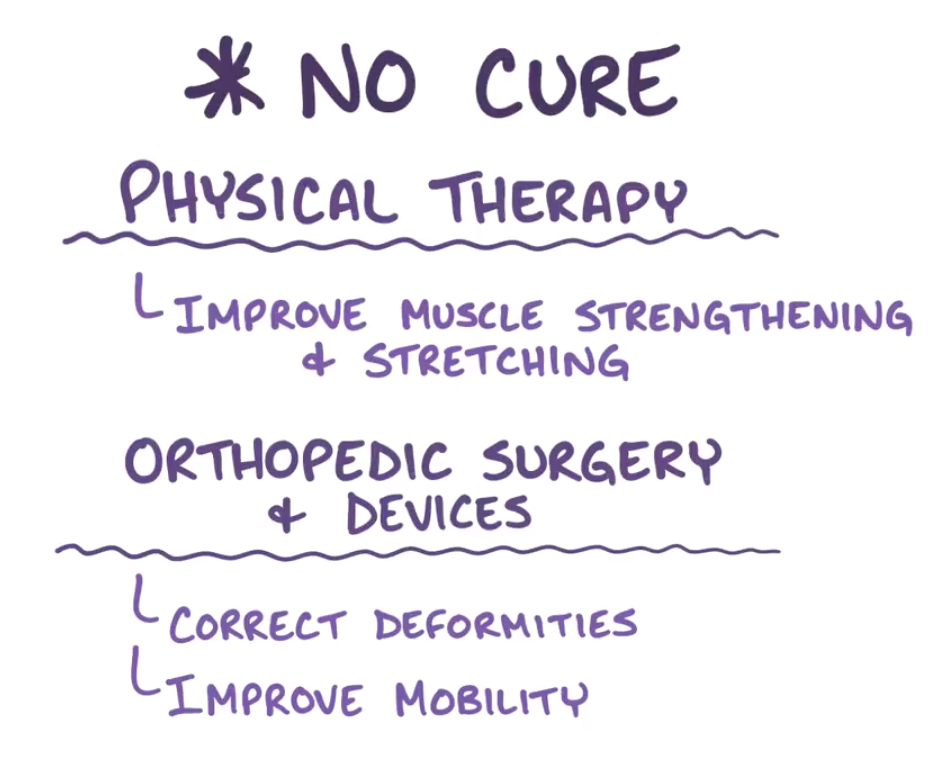
Unfortunately, there’s no medical cure for Charcot-Marie-Tooth disease. Physical therapy can help improve muscle strengthening and stretching, and orthopedic surgery and devices can help correct deformities and improve mobility.
不幸的是,目前还没有治疗CMT的药物;物理治疗可以帮助改善肌肉力量、拉伸肌肉,而骨科手术和设备可以帮助纠正畸形和改善活动。
小结

Quick Recap
All right, as a quick recap. The two main types of Charcot-Marie-Tooth disease are CMT1 which involves loss of myelin on peripheral neurons, and CMT2 which involves loss of peripheral neurons themselves. The result is a progressive loss of motor nerves to the feet and legs, and sensory nerves to the hands and feet.
OK!让我们快速回顾下。Charcot-Marie-Tooth 疾病包括两个主要类型: CMT1型,周围神经髓鞘损害; CMT2型,周围神经元本身的丢失。其结果是脚和腿的运动神经逐渐丢失,手和脚的感觉神经也逐渐丧失。
「口令」
Osmosis.org/learn/Charcot-Marie-Tooth_disease
