
审稿:Rishi Desai, MD, MPH,
Kyle Slinn, RN, BScN, MEd,
Evan Debevec-McKenney, Emma Solar
翻译:栗子;
医见:戈 长时;
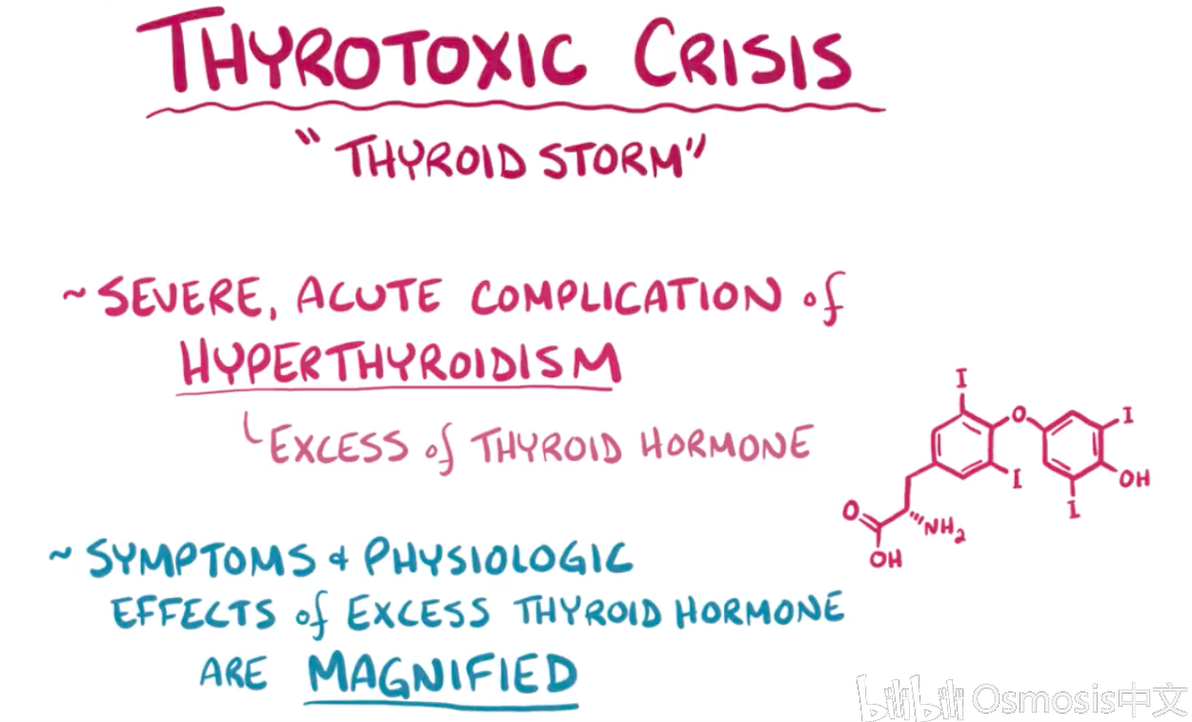
Thyrotoxic Crisis
Thyrotoxic crisis, more commonly called thyroid storm, is a severe, acute complication of hyperthyroidism.
甲状腺中毒危象,通常称为甲状腺危象,是甲状腺功能亢进的一种严重的急性并发症。
In hyperthyroidism, there's an excess of thyroid hormone, and in thyroid storm the symptoms and physiologic effects of having excessive thyroid hormones are suddenly magnified.
在甲亢中,有过量的甲状腺激素;而在甲状腺危象中,过量甲状腺激素的症状和生理效应突然被放大。
甲状腺 激素
Hypothalamus
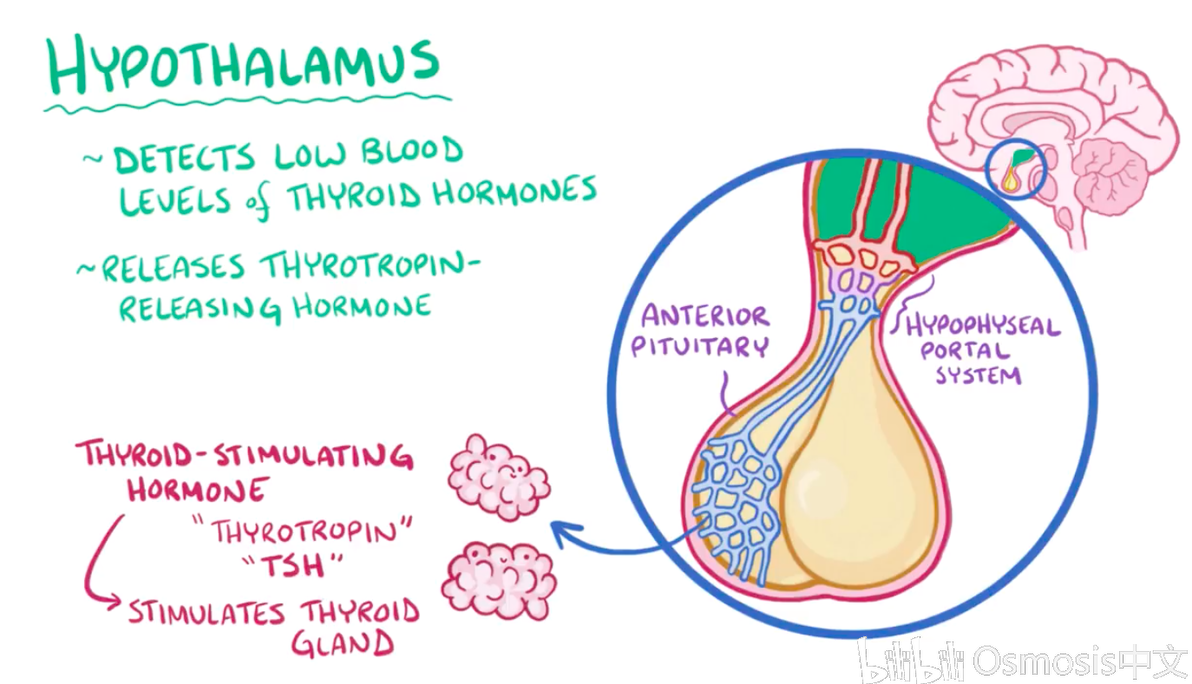
Normally, the hypothalamus, which is located at the base of the brain, detects low blood levels of thyroid hormones and releases thyrotropin-releasing hormone into the hypophyseal portal system - which is a network of capillaries linking the hypothalamus to the anterior pituitary.
正常情况下,位于大脑底部的下丘脑监测到血液中甲状腺激素降低,从而分泌 促甲状腺激素释放激素 到垂体门脉系统——连接下丘脑和垂体前叶的毛细血管网。
The anterior pituitary then releases thyroid-stimulating hormone, also called thyrotropin or simply TSH.
接着垂体前叶分泌促甲状腺激素,简称TSH。
Thyroid Gland
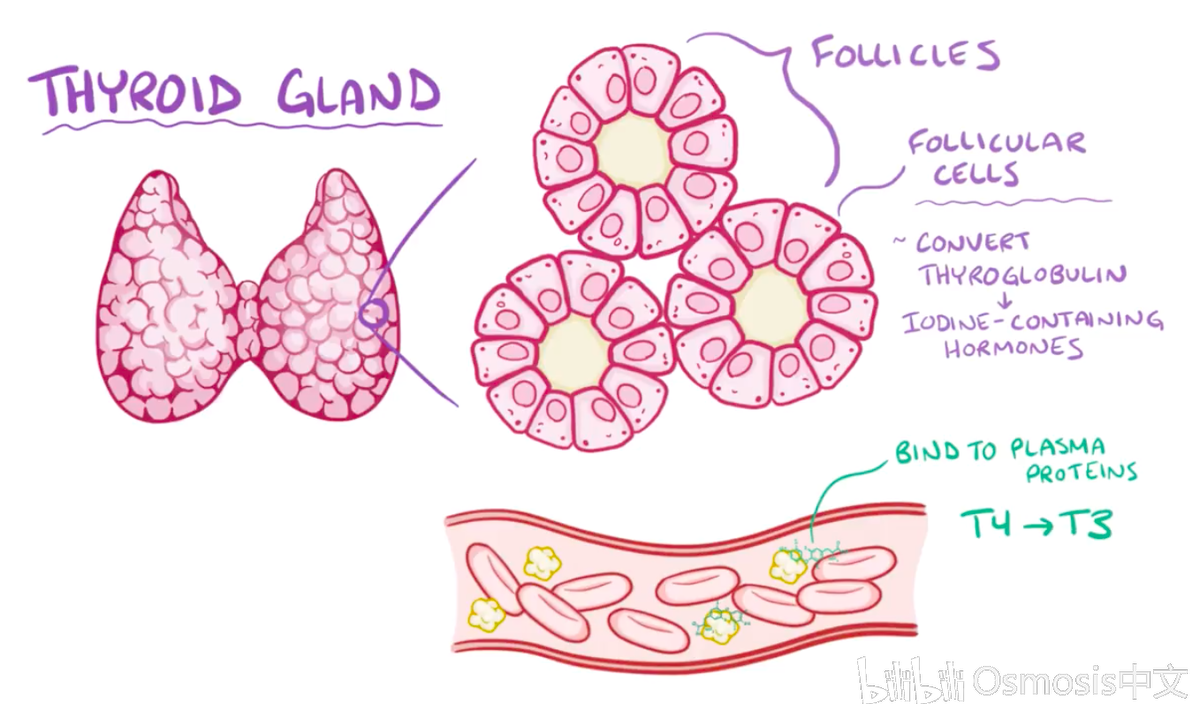
TSH stimulates the thyroid gland which is a gland located in the neck that looks like two thumbs hooked together in the shape of a “V”. The thyroid gland is made up of thousands of follicles, which are small spheres lined with follicular cells.
TSH刺激甲状腺,就是位于颈部的一个腺体,看起来像两个拇指以“V”的形状钩在一起。甲状腺是由成千上万的滤泡构成,这些滤泡是由滤泡细胞组成的小球体。
Follicular cells convert thyroglobulin, a protein found in follicles, into two iodine-containing hormones, triiodothyronine or T3, and thyroxine or T4.
滤泡细胞转化滤泡中的一种蛋白质即甲状腺球蛋白,成为两种含碘激素:三碘甲状腺原氨酸即T3,以及甲状腺素即T4。
Once released from the thyroid gland, these hormones enter the blood and bind to circulating plasma proteins. Only a small amount of T3 and T4 will travel unbound in the blood, and these two hormones get picked up by nearly every cell in the body.
一旦从甲状腺释放出来,这些激素就会进入血液中,并与循环血浆蛋白结合。只有少量T3和T4游离在血液中,然后这两种激素会被身体内几乎所有的细胞吸收。
Once inside the cell T4 is mostly converted into T3, and it can exert its effect.
一旦进入细胞,大部分T4转化为T3,并能发挥其作用。
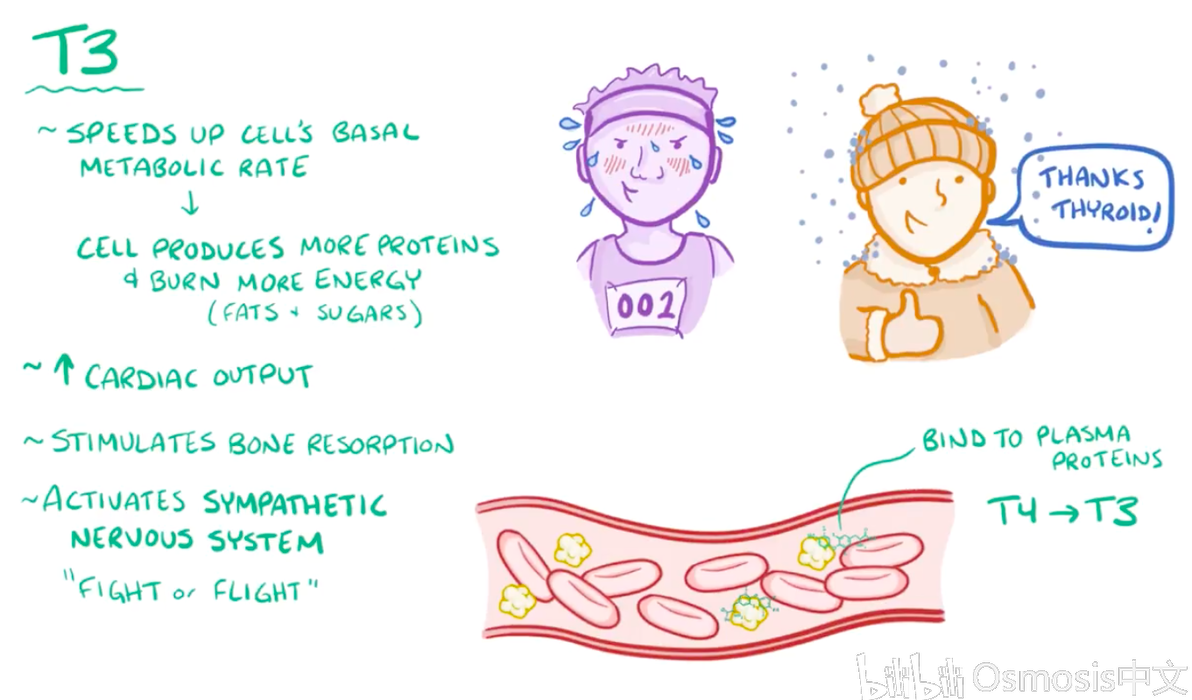
T3
T3 speeds up the basal metabolic rate. So as an example, they might produce more proteins and burn up more energy in the form of sugars and fats. It’s as if the cells are in a bit of frenzy.
T3可以加速基础代谢率。举个例子,细胞们可能生产更多蛋白质,以糖和脂肪的形式燃烧更多能量,像是有点发了狂。
T3 increases cardiac output, stimulates bone resorption - thinning out the bones, and activates the sympathetic nervous system, the part of the nervous system responsible for our ‘fight-or-flight’ response.
T3增加了心输出量,刺激骨髓重吸收(使骨骼变薄),并激活交感神经系统;交感神经系统是负责我们“战斗或逃跑”反应的神经系统的一部分。
Thyroid hormone is important - and the occasional increase is like getting a boost to fight off a hungry predator or to stay warm during a snowstorm!
甲状腺激素很重要,像是在抵抗饥饿的猛兽、或为在暴风雪中保持体温时,会偶尔增量,。
甲亢 病因
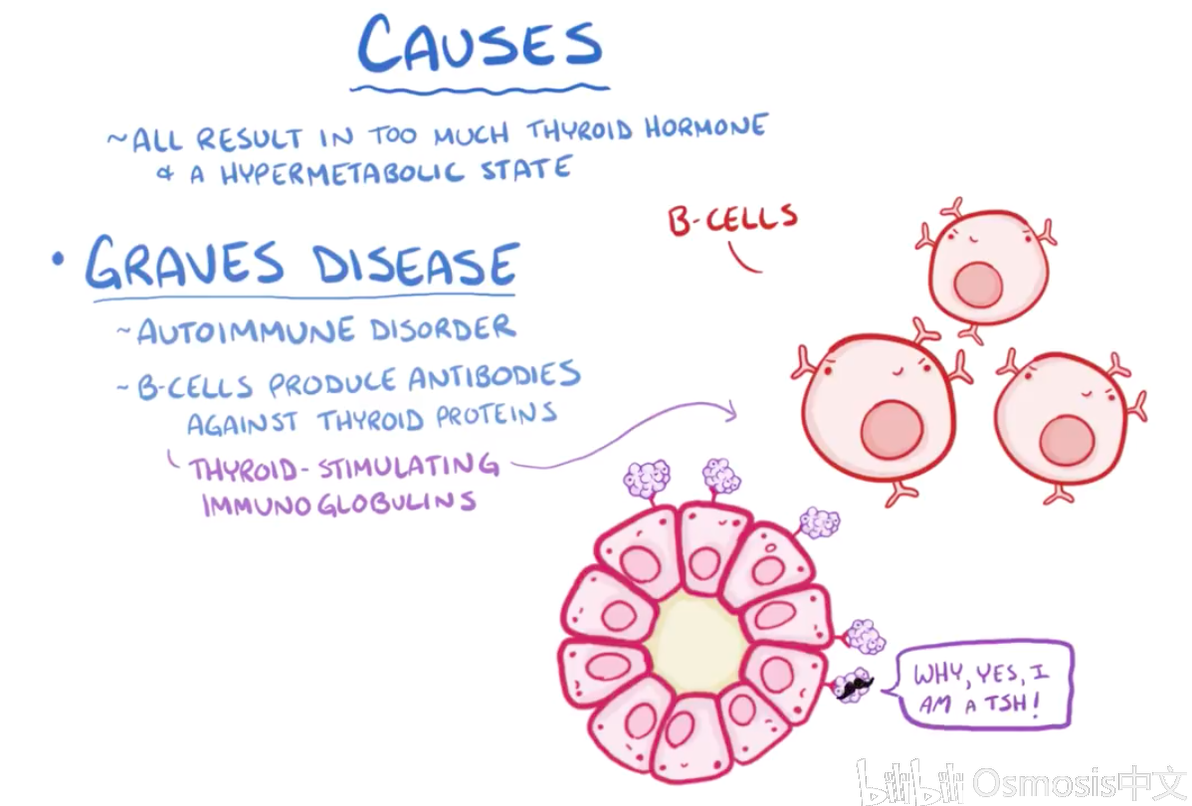
Causes - Graves Disease
Now, hyperthyroidism can happen a few different ways - all of them result in too much thyroid hormone and a hypermetabolic state, where cellular reactions are happening faster than normal.
现在,甲亢的产生有不同的原因——所有这些都会导致 甲状腺激素过多 和 代谢亢进,即细胞反应比正常情况发生得更快。
The most common cause is Graves disease, an autoimmune disorder where B cells produce antibodies against several thyroid proteins. These autoantibodies include thyroid-stimulating immunoglobulins, which bind to the TSH receptor on follicular cells and imitate TSH.
最普通的原因是 Graves病,一种由体内B细胞会产生抗体对抗 多种甲状腺蛋白 的自身免疫性疾病。这些自身抗体包括 甲状腺刺激免疫球蛋白,它与滤泡细胞上的TSH受体结合,并模仿TSH。
This results in growth of the thyroid gland and stimulates the follicular cells to produce excess thyroid hormone.
这导致了甲状腺的生长,并刺激 滤泡细胞 产生过量的甲状腺激素。
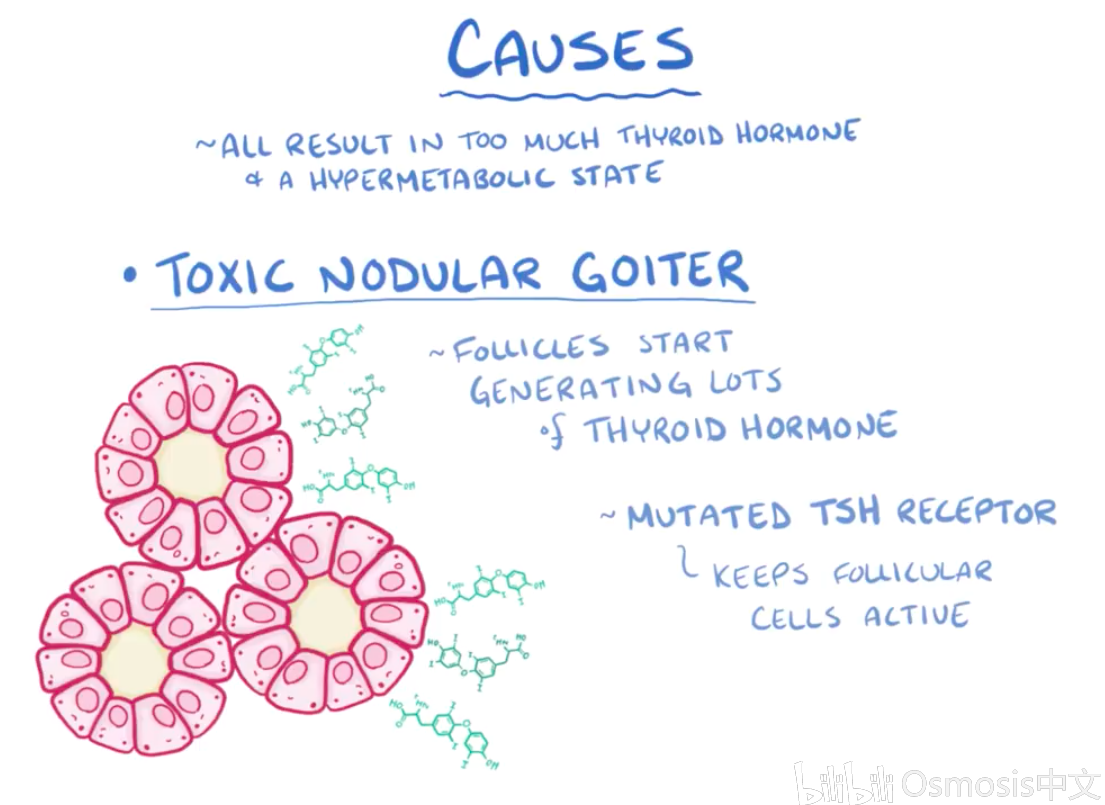
Causes: Toxic Nodular Goiter
Another cause is toxic nodular goiter, where one or more follicles start generating lots of thyroid hormone - in some cases it’s because of a mutated TSH receptor that inappropriately keeps these follicular cells active.
另一个原因是 毒性结节性甲状腺肿,其中一个或多个滤泡开始产生大量的甲状腺激素——在一些情况下,是由于突变的TSH受体 在不适当地保持这些滤泡细胞活跃。
甲状腺危象 病因
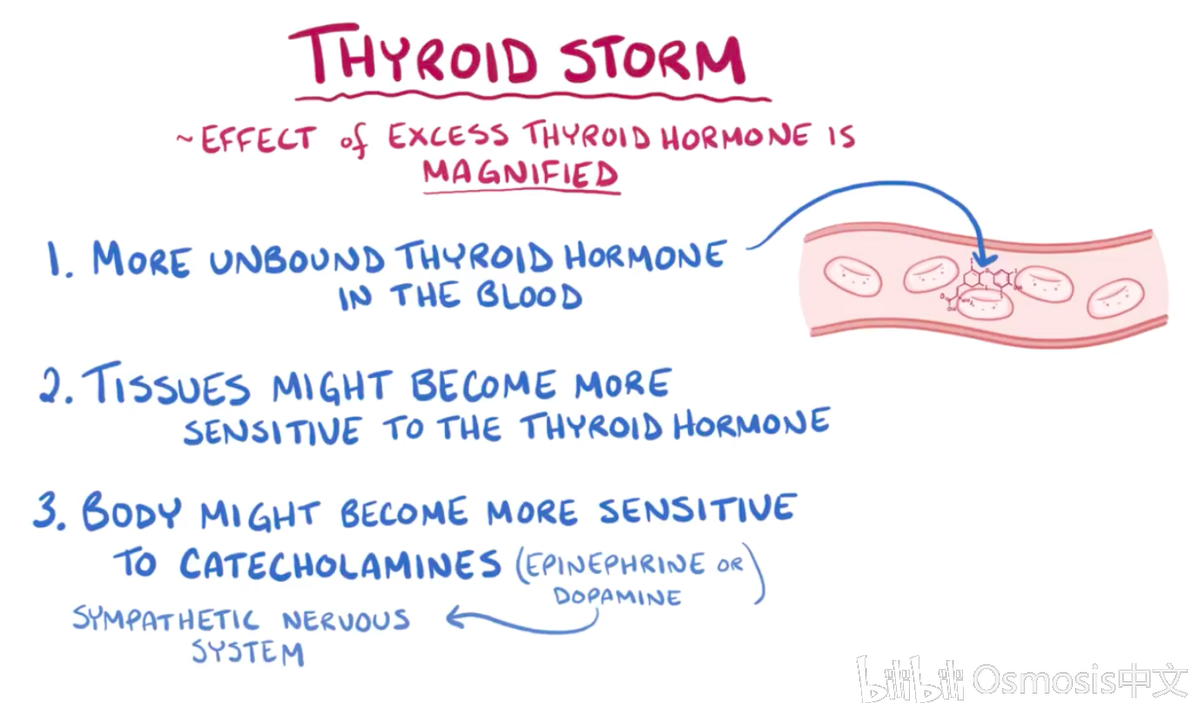
Thyroid Storm
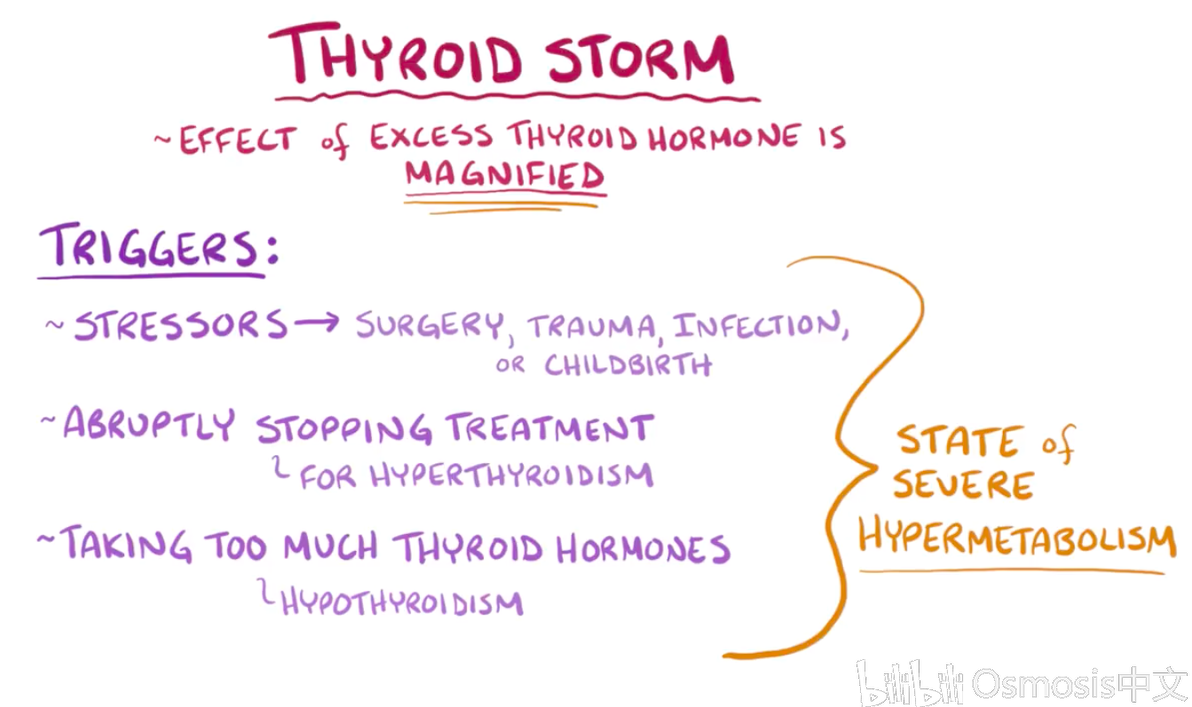
Regardless of the cause of hyperthyroidism, occasionally a person can develop thyroid storm, which is when the effect of having excessive thyroid hormones is suddenly magnified.
不管甲亢的原因如何,偶尔某些个体会发展为甲状腺危象,即过量的甲状腺激素的作用突然被放大。
The exact reason that this happens is unclear, but there are some proposed mechanisms.
发生这种情况的确切原因并不清楚,但有一些提出来的机制。
The first, is that there may be more unbound thyroid hormone in the blood which is the active form of the hormone.
第一,血液中可能有更多的游离甲状腺激素,这是这种激素的活跃形式。
The second, is that the level of unbound thyroid hormone may be unchanged, but the tissues might become more sensitive to the thyroid hormone.
第二,游离甲状腺激素水平可能保持不变,但组织可能对甲状腺激素变得更敏感。
Third, the body might become more sensitive to catecholamines like epinephrine or dopamine, which are part of the sympathetic nervous system.
第三,机体可能对 儿茶酚胺类激素 变得更敏感,比如肾上腺素、多巴胺,它们是交感神经系统的一部分。
诱因
Triggers
Triggers for thyroid storm include stressors like surgery, trauma, infection, or childbirth.
甲状腺危象的诱因包括手术、创伤、感染或分娩等压力源。
Other triggers are abruptly stopping treatment for hyperthyroidism or taking too much thyroid hormones, which is relevant for individuals that are hypothyroid.
其它诱因是突然停止甲亢的治疗、服用过量的甲状腺激素(与甲减的个体相关)。
The end result is the same - a state of severe hypermetabolism - so all of the effects of excessive thyroid hormones on the body are magnified.
最终结果是一样的:一种严重的高代谢状态,因此所有过量甲状腺激素对身体的影响都被放大了。
症状
Symptoms of Hyperthyroidism
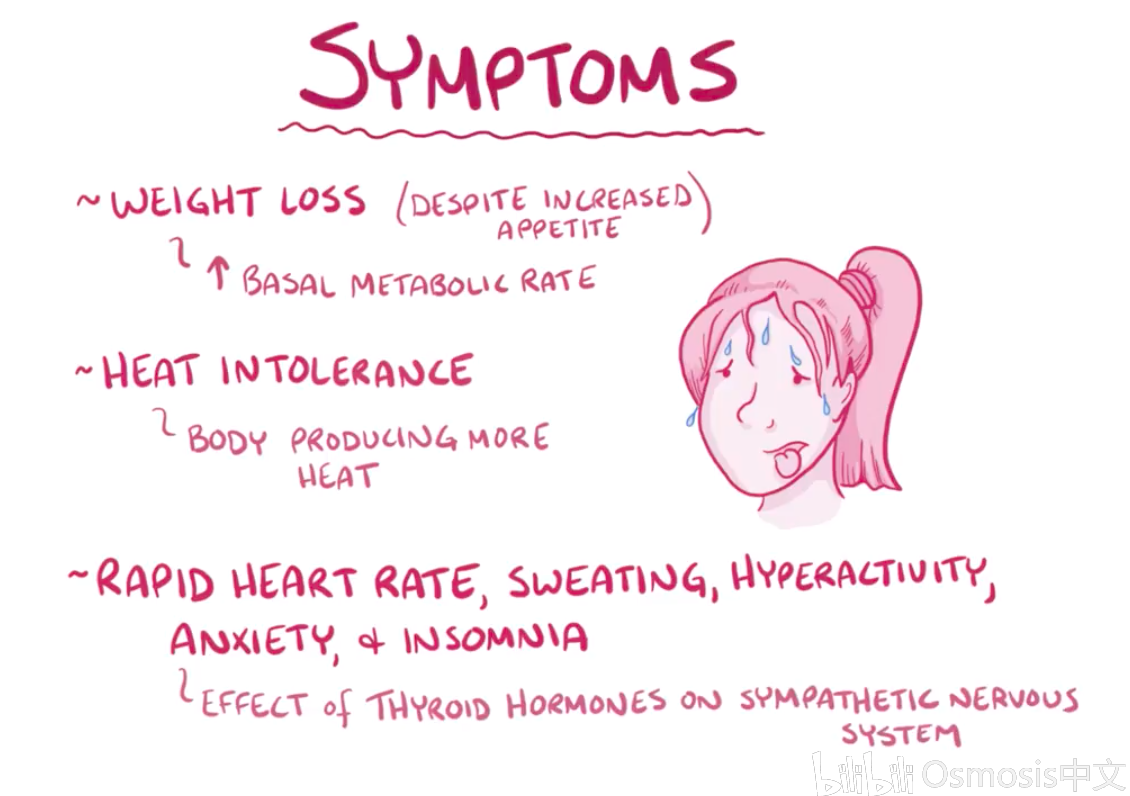
The symptoms of thyroid storm are mostly an exaggerated version of the symptoms of hyperthyroidism, which include weight loss despite an increase in appetite because of the higher basal metabolic rate; heat intolerance because the body is producing more heat; and rapid heart rate, sweating, hyperactivity, anxiety and insomnia because of the effect of thyroid hormones on the sympathetic nervous system.
甲状腺危象的症状大多是甲亢的症状的夸张版本。
甲亢症状一般包括:尽管由于基础代谢率较高引起食欲增加,但体重下降;由于机体产热过多而对热不耐受;由于甲状腺激素对交感神经系统的影响,而心率加快、出汗、多动、焦虑和失眠。
Symptoms of Thyroid Storm
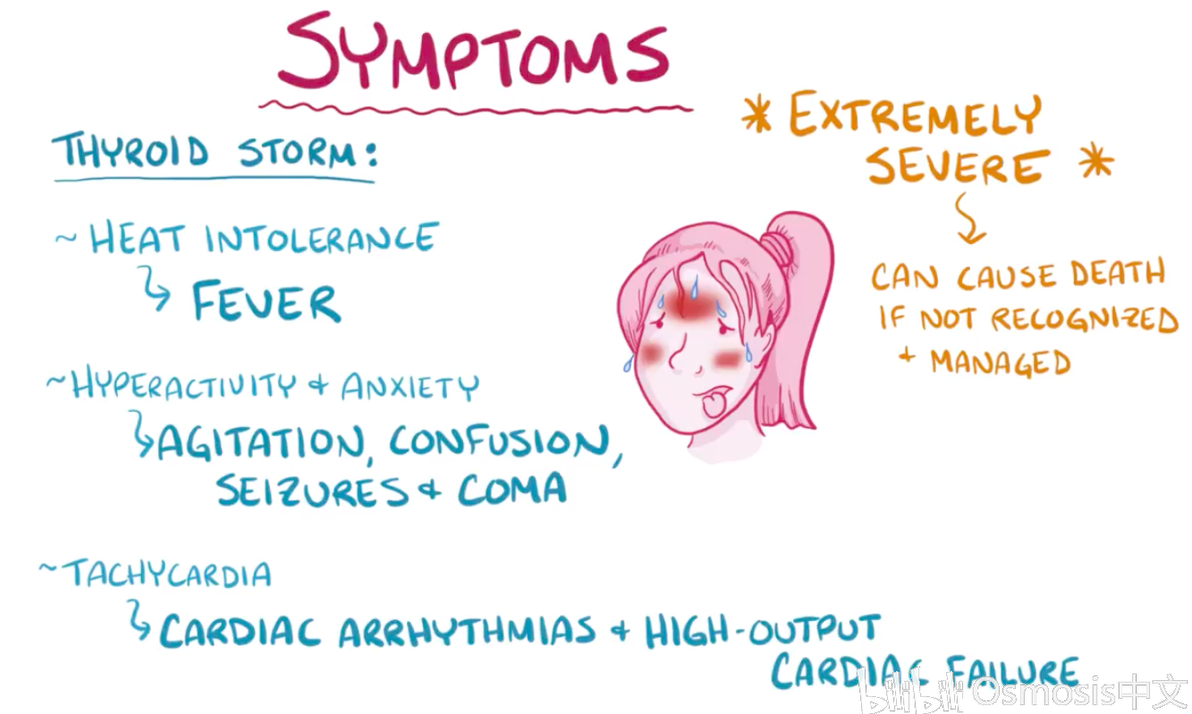
In thyroid storm, heat intolerance turns to fever. Hyperactivity and anxiety turn to agitation, confusion, and can go as far as seizures and coma. Cardiovascular symptoms like tachycardia can turn into cardiac arrhythmias and high-output cardiac failure.
在甲状腺危象中,热不耐受会变成发烧;多动和焦虑会变成躁动、混乱,甚至可以恶化为癫痫和昏迷。心血管症状如心动过速会变成 心律失常 和 高排出量心衰。
Thyroid storm can be extremely severe and can cause death if its not quickly recognized and managed.
甲状腺危象极其严重,如果没有尽快识别和处理,就会导致死亡。
诊断
Diagnosis
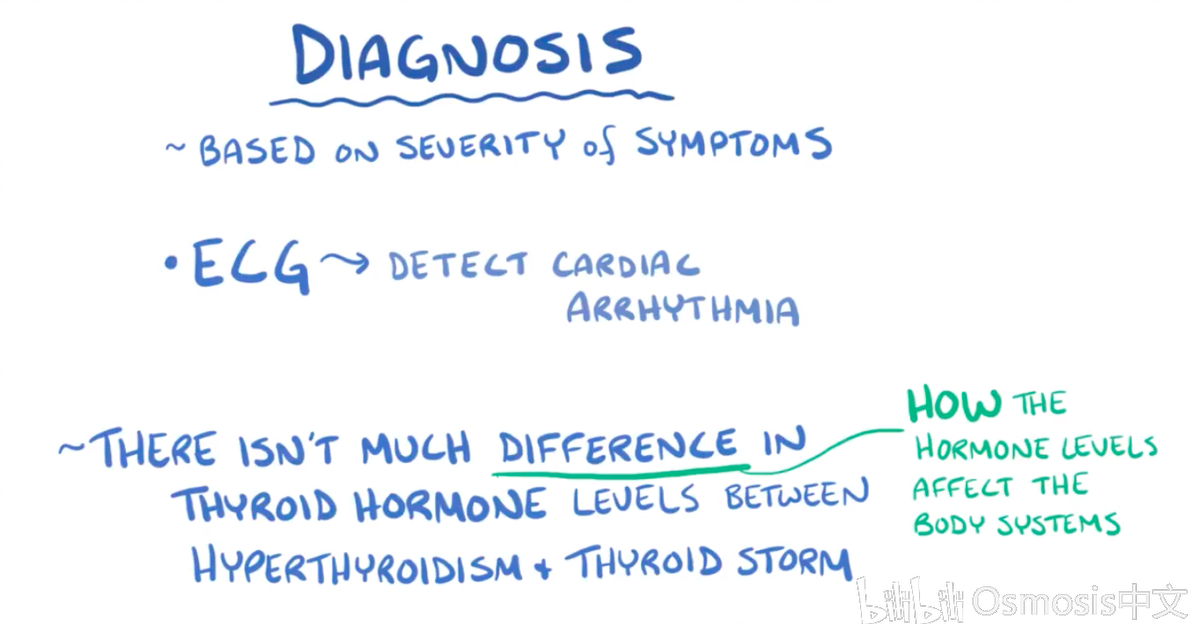
The diagnosis of thyroid storm is usually based on the severity of symptoms and can be confirmed by tests like an ECG to detect a cardiac arrhythmia.
甲状腺危象的诊断通常依据症状的严重程度,并可由心电图(检测心律失常)等测试来确诊。
Typically there isn’t much of a difference in thyroid hormone levels between hyperthyroidism and thyroid storm, the biggest difference is in how the hormone levels affect the various body systems.
甲亢 和 甲状腺危象 之间的甲状腺激素水平通常没有太大的区别,最大的差别在于激素水平是如何影响各个身体系统的。
治疗
Treatment
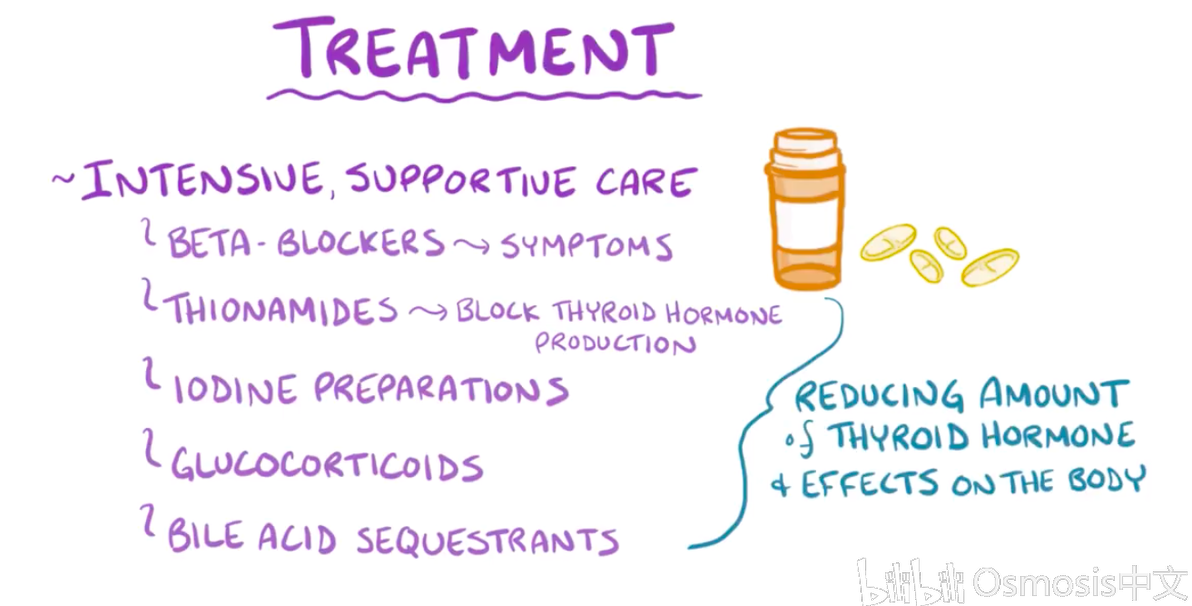
Treatment for thyroid storm requires intensive supportive care with various medications like beta-blockers to treat symptoms, thionamides to block thyroid hormone production, iodine preparations, glucocorticoids, and bile acid sequestrants, all of which are aimed at reducing the amount of thyroid hormone and its effects on the body.
甲状腺危象的治疗需要强化的支持性护理,施用不同种类的药物,如治疗症状的𝝱-阻滞剂、阻断甲状腺激素合成的硫代酰胺、碘制剂、糖皮质激素 和 胆汁酸螯合剂;所有这些都旨在减少甲状腺激素量及其对身体的影响。
If this approach doesn’t work, plasmapheresis can be tried - that’s where blood plasma is removed, thyroid hormone can be removed, and the remaining plasma is returned to the person.
如果这些方法不起效,可以尝试血浆置换:血浆中的甲状腺激素被移除,剩余血浆回输给患者。
小结
Quick Recap
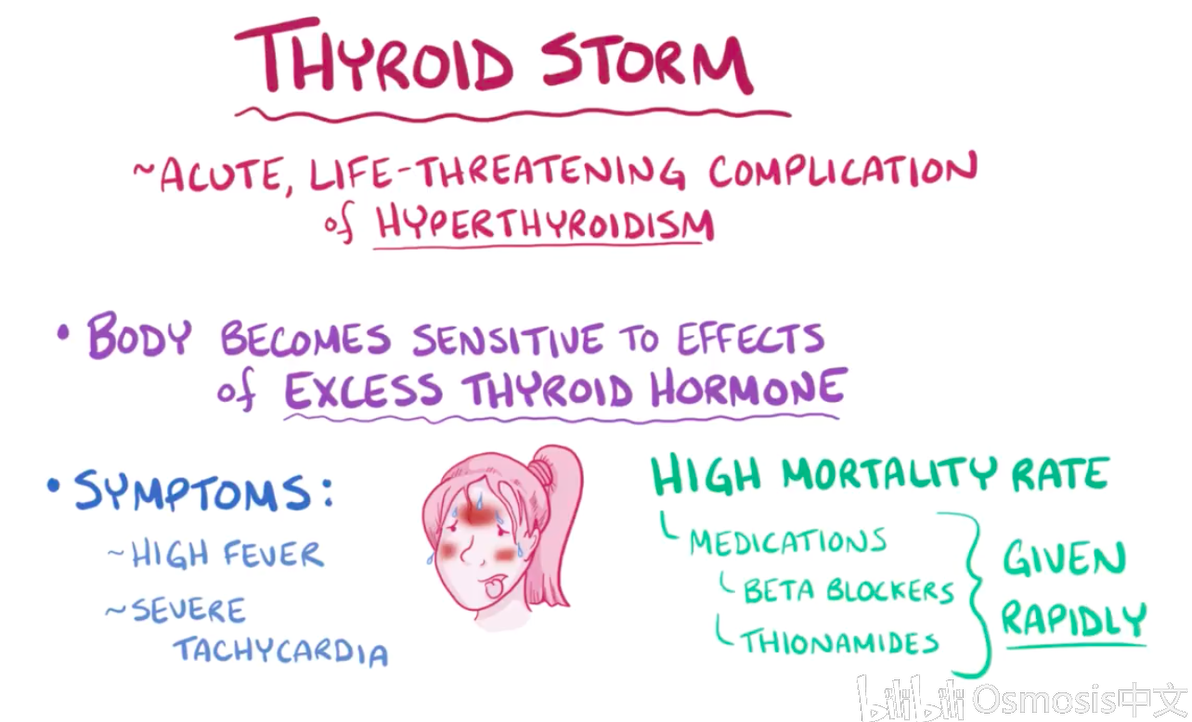
All right, as a quick recap, thyroid storm is an acute, life-threatening complication of hyperthyroidism - where the body becomes very sensitive to the effects of excess thyroid hormone.
好的,快速回顾一下:甲状腺危象是甲亢的一种急性的、危及生命的并发症,即身体对过量的甲状腺激素的影响变得非常敏感。
It can cause symptoms like a high fever and severe tachycardia, and because of its high mortality rate, medications like beta blockers and thionamides have to be given rapidly.
它会引起比如高热和严重心动过速的症状;由于其高致死率,必须迅速服用𝝱受体阻断剂和硫代酰胺。
医番【27.2524】降临
Osmosis.org/learn/Thyroid_storm
