

辛苦「翻译:冯琢熙 · 校对:ivlvn」~
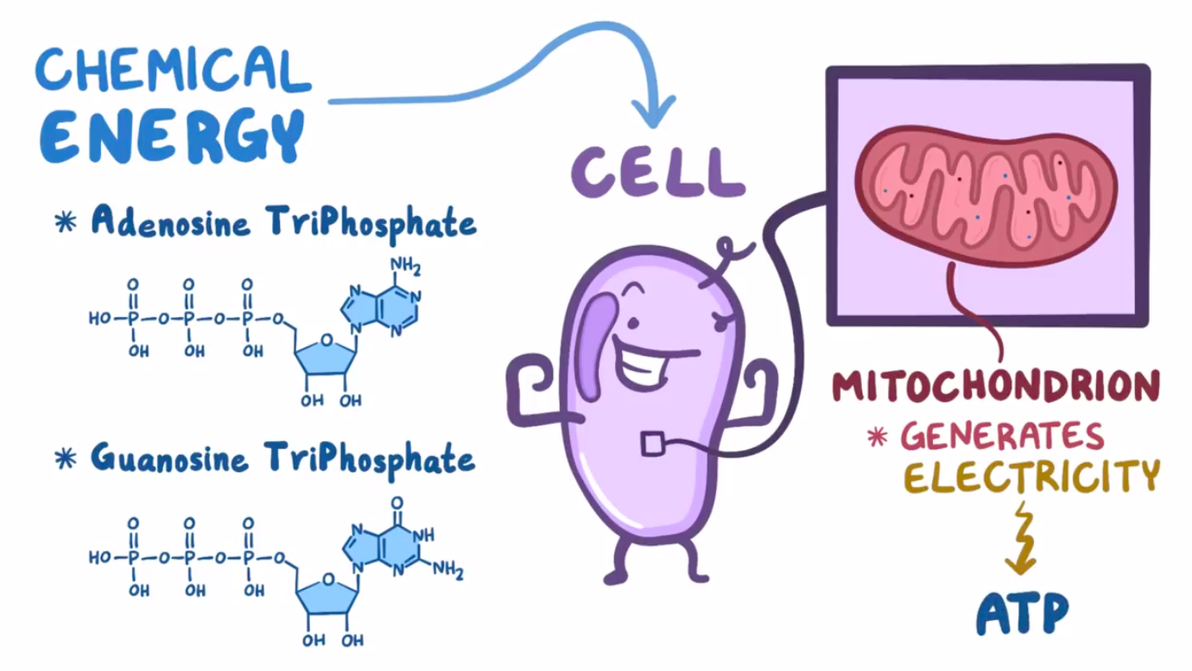
For cells that perform any function, any work, they have to have energy. You can't go jogging or a lifting weight if you are tired, because the cell won't work without the help of chemical energy. The made energy currency in the cells is adenine triphosphate, or ATP. But any nucleoside triphosphates, like Guanosine triphosphate, or GTP, will do just fine. For cells to make ATP, a process generating electricity has to take place in our mitochondria. Electricity is power. And thanks to electricity, ATP is made.
无论细胞执行什么样的功能、做什么工作,都需要能量。在你很累的时候你不能去跑步或举重。因为没有化学能的帮助,细胞便不能工作。三磷酸腺苷(ATP)就是细胞制造的能量货币。任何三磷酸核苷,例如三磷酸鸟苷(GTP)也可以起到相同效果。细胞要产生ATP,就需要在线粒体中经历一个产生电流的过程。电就是能量;多亏了电,ATP产生了。
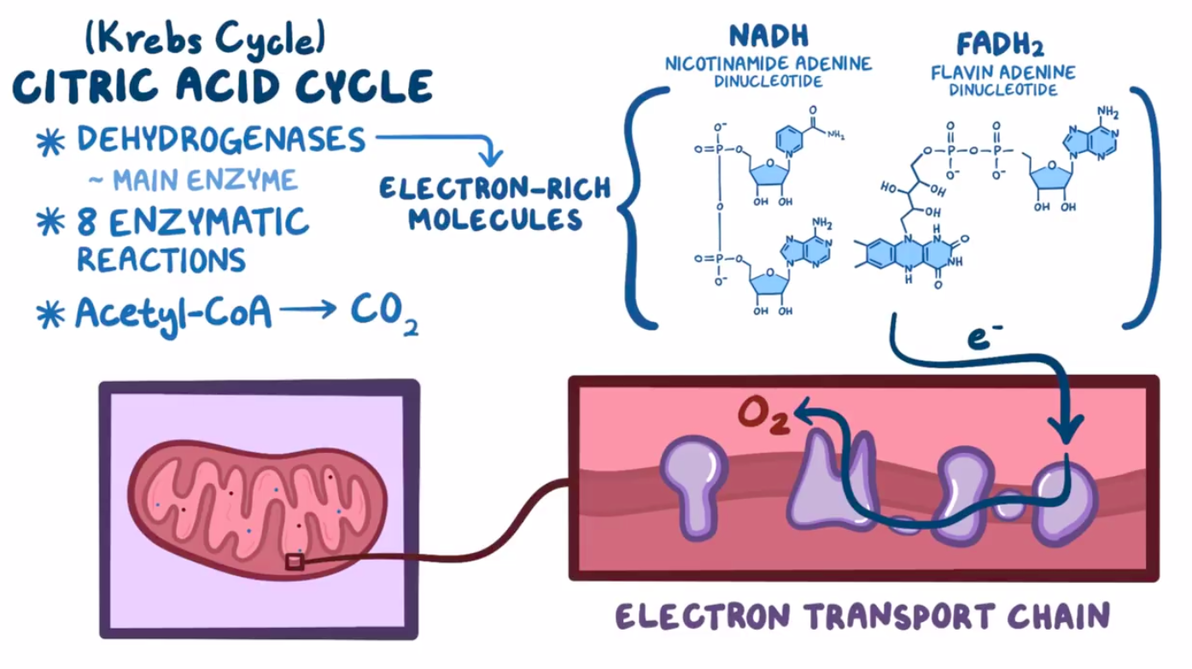
Now, to create electricity, electron-rich molecules have to deliver electrons to a chain of complexes, called the electron transport chain, which move them to a final acceptor, a molecule of oxygen. And there are two electron donor molecules. Nicotinamide adenine dinucleotide, or NADH, and flavin adenine dinucleotide, or FADH2.
要制造电流,富电子的分子需要携带电子,送到一列复合体上,称作电子传递链。电子传递链将电子送至最终受体——一分子氧气。我们有两种电子供体。烟酰胺腺嘌呤二核苷酸(NADH),黄素腺嘌呤二核苷酸(FADH2)。
But of course, the cell has to produce NADH and FADH2 in the first place. And they are produced by critical enzymes called dehydrogenase. Dehydrogenases are the main enzymes found in the citric acid cycle, also known as the Krebs cycle. In fact, the citric acid cycle is a set of 8 enzymatic reactions that start with a molecule called acetyl coenzyme A, usually just acetyl-CoA. And 4 of the enzymes, or half of them, are dehydrogenases. And in this process, acetyl-CoA gets converted into carbon dioxide.
细胞当然要事先产生NADH和FADH2,它们由特定的酶(脱氢酶)产生。脱氢酶是柠檬酸循环(也叫Krebs循环)中的主要酶。事实上,柠檬酸循环由一系列以一分子乙酰辅酶A(acetyl-CoA)为起始物的8个酶促反应组成其中一半,或4个酶都是脱氢酶。在这个过程中,乙酰辅酶A转变成二氧化碳。
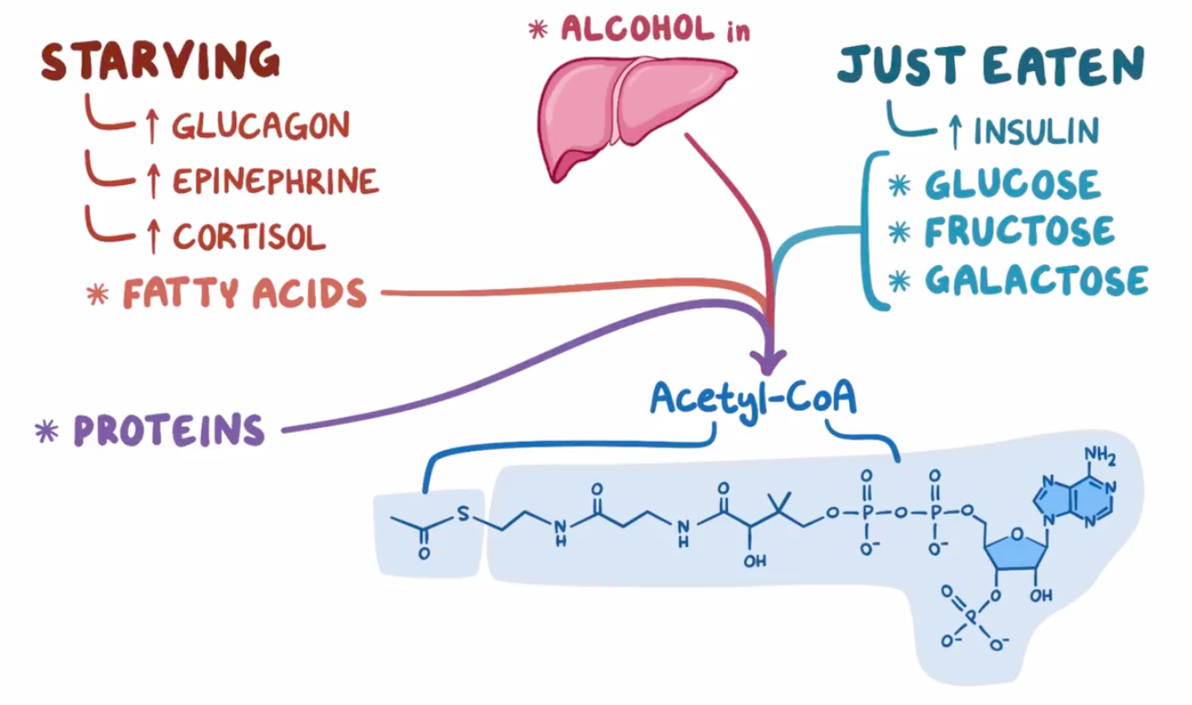
Acetyl-CoA comes from various sources depending on whether you've just eaten or are starving. Let's say that you are hungry and a bit angry, so you are feeling “hangry”. That's when stress hormones like glucagon, epinephrine and cortisol start to rise. In this "hangry" state, fatty acids from triglycerides become the primary source of acetyl-CoA. Now let's say you have a bowl of delicious French onion soup, and everything changes. Insulin is plentiful and you also have plenty of acetyl-CoA from breaking down glucose, fructose and galactose, with glucose playing the biggest role. Now, alcohol is also a source of acetyl-CoA in the liver where it's metabolized. In addition, proteins can also help contribute to acetyl-CoA production.
乙酰辅酶A有多种来源,取决于你刚吃饱还是处于很饿的状态。我们假设你很饿而且有点生气,所以你有点“hangry”。此时,应激激素例如胰高血糖素、肾上腺素、皮质醇等增多,在这种情况下,甘油三酯水解得到的脂肪酸称为乙酰辅酶A的主要来源。我们再假设你刚吃了一碗美味的法式洋葱汤,事情就变得不同了。胰岛素充足,你有足够的由葡萄糖、果糖、乳糖分解来的乙酰辅酶A,其中葡萄糖起最大作用。酒精在肝中代谢,也成为乙酰辅酶A的一个重要来源。不仅如此,蛋白质也有助于乙酰辅酶A的产生。
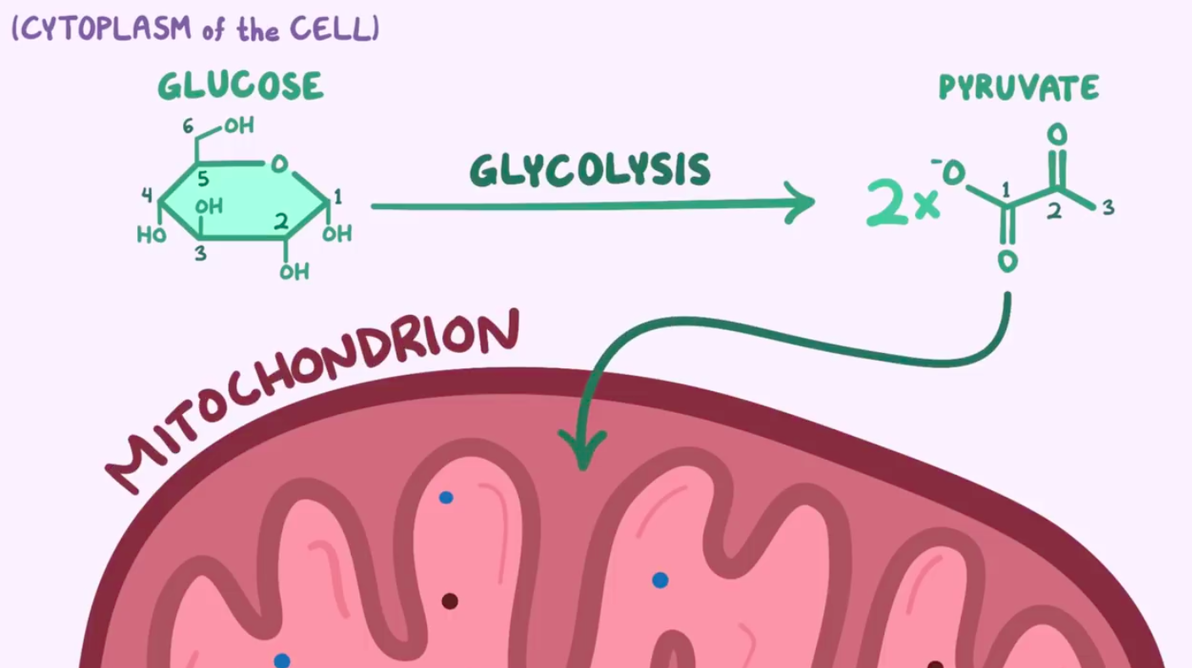
If we take the case of glucose, after a meal, one glucose, which is a 6-carbon molecule, splits into two 3-carbon pyruvate molecules through glycolysis, which happens in the cytoplasm of the cell. Each of the pyruvate molecules then enter the mitochondria.
如果以葡萄糖为例,餐后一分子6碳葡萄糖,通过糖酵解过程分裂成两分子3碳丙酮酸。这一过程发生在细胞质;每分子丙酮酸随后进入线粒体。
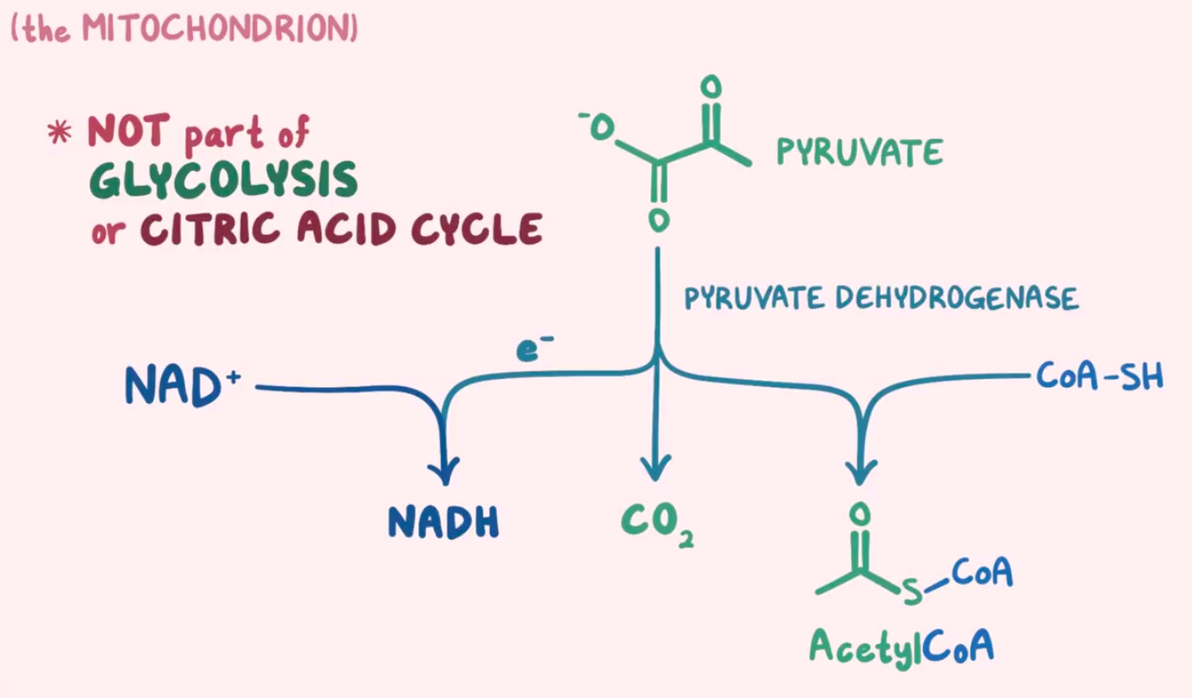
In the mitochondria, an enzyme called pyruvate dehydrogenase snatches the electron as well a carbon and 2 oxygens from pyruvate, and adds coenzyme A, making acetyl-CoA. The electron goes to a nearby NAD+ and makes NADH, while the carbon and 2 oxygens are released to form carbon dioxide, or CO2. This step links glycolysis to the citric acid cycle, but really isn't considered part of either process. Even cell with its source of NADH and CO2, and sure some similarity with enzyme to the citric acid cycle.
在线粒体中,丙酮酸脱氢酶从丙酮酸中抢夺电子、1个碳原子、2个氧原子,并加入辅酶A,生成乙酰辅酶A。电子进入附近的NAD+,产生NADH;碳原子和2个氧原子被释放,形成CO2。这一步连接了糖酵解和柠檬酸循环,却均不属于两个过程;即便细胞有NADH和CO2,酶也与三羧酸循环有相似之处。
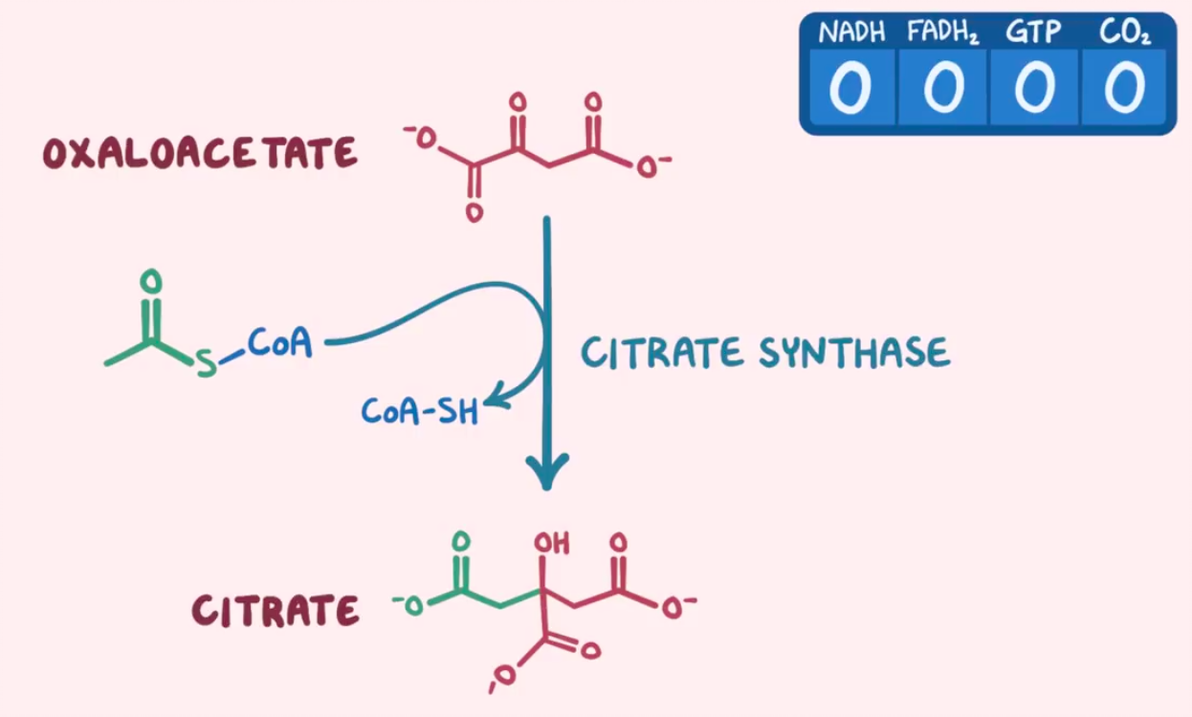
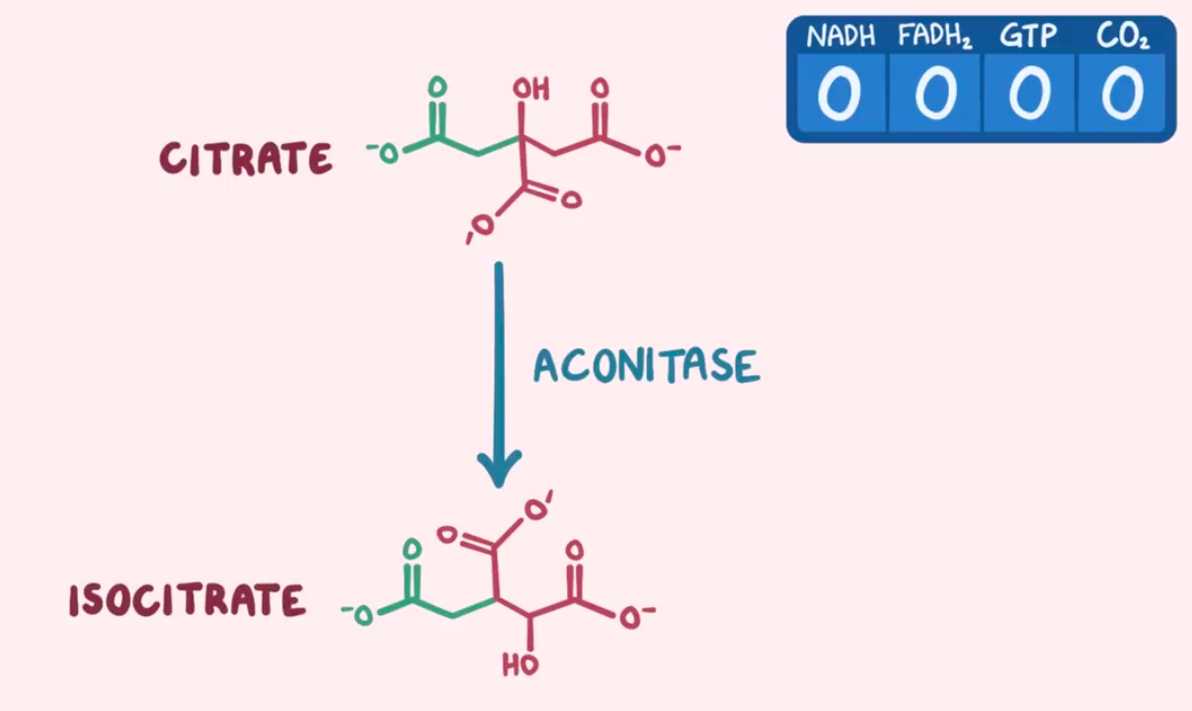
As we go through the citric acid cycle, we'll keep track to our total GTP, NADH, FADH2 and CO2 count with these counters. And just remember that this cycle has a ton of dehydrogenases. Alright, so the citric acid cycle starts when acetyl-CoA is joined to a 4-carbon molecule called oxaloacetate by an enzyme called citrate synthase, making a 6-carbon molecule, citrate. This process also releases coenzyme A. Next, another enzyme, aconitase, rearranges the chemical shape of citrate to make its isomer, isocitrate, without adding or removing any carbon molecules.
当我们经过柠檬酸循环的时候,我们会用这个计数器记录GTP、NADH、FADH2和CO2总数;请务必记住这个循环有大量的脱氢酶。好的,那么三羧酸循环从乙酰辅酶A加入4碳草酰乙酸开始,柠檬酸合酶催化这一过程,产生一分子6碳柠檬酸;这一过程也释放出辅酶A。接着,另一个酶,顺乌头酸酶重构柠檬酸,形成它的同分异构体——异柠檬酸。这一过程没有添加或移除任何碳原子。
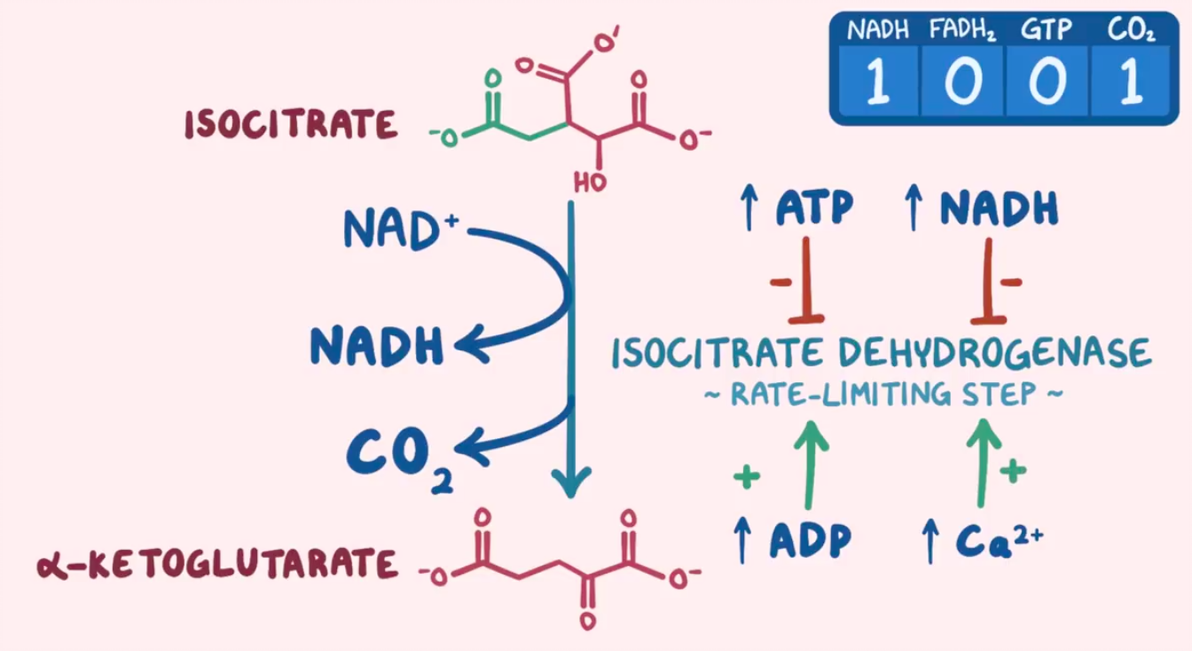
So far, we haven't made anything related to energy. But here comes the first dehydrogenase, called isocitrate dehydrogenase, which remove an electron as well as a carbon and two oxygens from isocitrate. The electron goes to a nearby NAD+, making our first NADH. And a carbon and oxygens give us our first CO2, leaving us with a 5-carbon molecule called α-ketoglutarate.
目前为止还与能量无关。现在我们迎来第一个脱氢酶,叫做异柠檬酸脱氢酶,从异柠檬酸中去除一个电子、1个碳原子、2个氧原子;电子进入邻近的NAD+形成第一个NADH。1个碳和2个氧形成第一个CO2。剩下一个5碳分子——α-酮戊二酸。
High levels of ATP as well as high levels of NADH in the cell can inhibit isocitrate dehydrogenase, signaling the cycle to slow down since the cell has plenty of energy. On the other hand, high levels of ADP, which is an ATP precursor stimulates this enzyme, signaling the cycle to speed up, since the cell needs more energy. In fact, isocitrate dehydrogenase is considered the rate limiting step of this whole cycle. Also, calcium levels rise during muscle contraction. And this contraction is work, which requires energy. So, as it turns out, calcium also activates the enzyme isocitrate dehydrogenase.
胞内高水平ATP 和NADH会抑制异柠檬酸脱氢酶,发信号给细胞使其减速,因为细胞已经有足够能量了;另一方面,高水平ADP(ATP前体物质)激活异柠檬酸脱氢酶,发信号给细胞使其加速,因为细胞需要能量。事实上,异柠檬酸脱氢酶被认为是整个循环的限速步骤;另外,肌肉收缩过程中钙离子水平上升。这一收缩可以做功,需要能量。事实证明,钙离子也激活异柠檬酸脱氢酶。
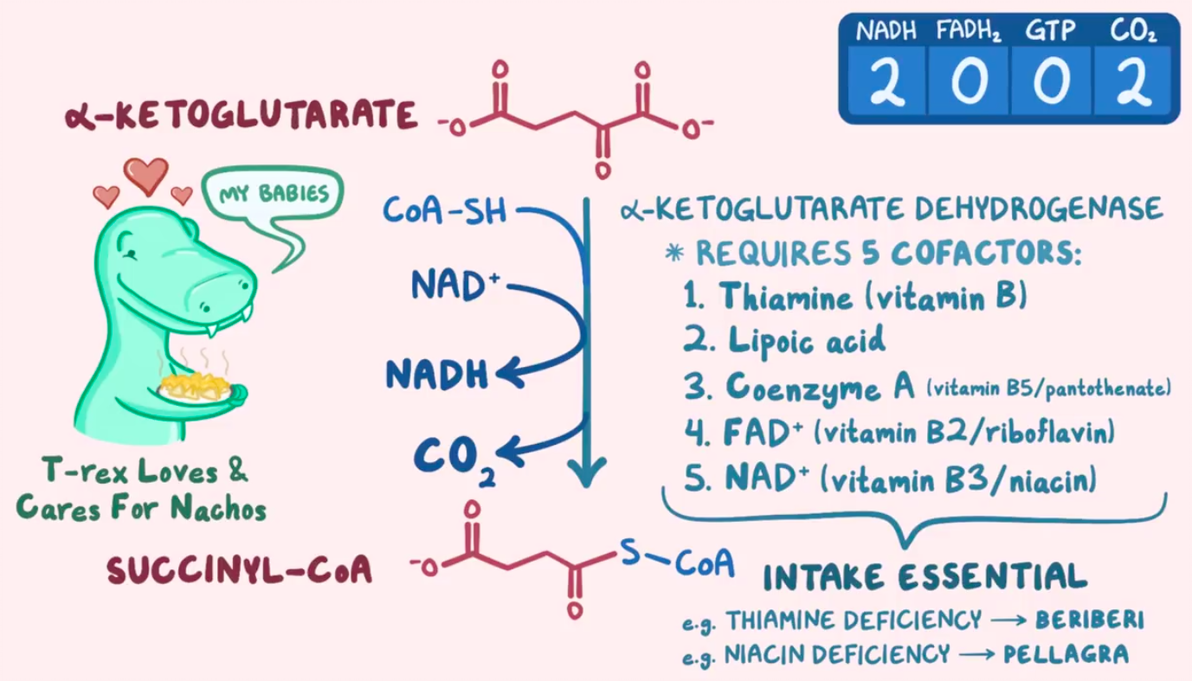
Next, another dehydrogenase called α-ketoglutarate dehydrogenase converts the 5-carbeon α-ketoglutarate to the 4-carbon succinyl-CoA, which releases our second molecule of NADH and carbon dioxide in the process, as well as adds our friend coenzyme A.
接着,α-酮戊二酸脱氢酶将5碳α-酮戊二酸转变成4碳的琥珀酰辅酶A,过程中释放第二个NADH和CO2,也加入一分子辅酶A。
This enzyme requires 5 sidekicks called cofactors to function. And you can remember them by the first letters of the following neumonic. T-rex Loves & Cares For Nachos, T for thiamine, or vitamin B, L for lipoic acid, C for coenzyme A, also called vitamin B5 or pantothenate, F for FAD+, also called vitamin B2, or riboflavin, and N for NAD+, also called vitamin B3 or niacin. So adequate intake of these vitamins is essential, because deficiencies can disrupt the citric acid cycle and impact over our health as a consequence.
这个脱氢酶正常运作需要5个辅因子。你可以通过下面的记忆方法记住它们的首字母:“霸王龙喜欢吃玉米片”。T代表硫胺素(维生素B);L 代表硫辛酸;C代表辅酶A,也叫维生素B5或泛酸;F代表FAD+,也叫维生素B2或核黄素;N代表NAD+,也叫维生素B3或烟酸;因此,摄取足量的以上维他命十分重要。因为这些微生物缺乏会扰乱柠檬酸循环,影响我们的健康。
For example, thiamine deficiency can lead to a disease called beriberi, in which the central nervous system and then the heart can't work properly. Likewise, niacin deficiency can cause a disease called pellagra characterized by the "4Ds": diaria, dermatitis dementia, and if the deficiency isn't corrected, death.
例如,维生素B 缺乏会导致脚气病。在这种情况下,中枢神经系统、接着心脏不能正常工作;同样的,烟酸缺乏会导致糙皮病。症状用“4个D”概括:腹泻、皮炎、痴呆,如果这一缺乏症没有及时纠正,会导致死亡。
Let's say that the cycle is working properly. Then the next step is the enzyme called succinate thiokinase removes the CoA from succinate-CoA, and turns it into a 4-carbon succinate molecule. It also couples a phosphate to a GDP molecule to the reaction, which ends up producing GTP.
我们假设柠檬酸循环正常运行,下一步由琥珀酸硫激酶从琥珀酸辅酶A中移除辅酶A,将其转化为4碳的琥珀酸分子。它同时将一分子磷酸基团与GDP相连,结果产生GTP。
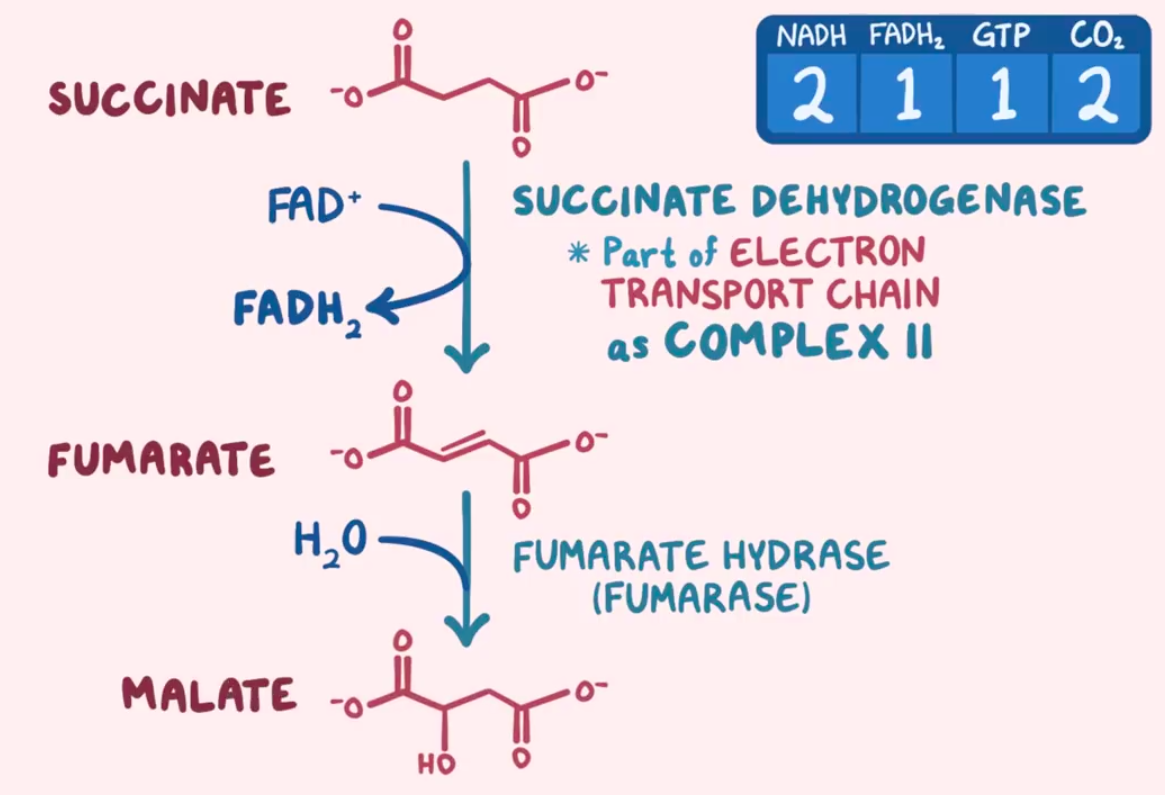
Alright, next the enzyme succinate dehydrogenase takes an electron from succinate and gives it to FAD+, making fumarate and FADH2 in the process. This time we're using FAD+ instead of NAD+ because succinate is kind of greedy and holds on to its electron tightly. Luckily for our cycle, FAD+ fight harder for that electron than NAD+ and it's able to snag those electrons. Also, it's worth knowing that succinate dehydrogenase is already part of the electron transport chain, and it goes by the name complex Ⅱ. Next in line is an enzyme called fumarate hydrase, or just fumarase, which adds a water molecule to fumarate, making malate.
接下来,琥珀酸脱氢酶从琥珀酸上夺一个电子,交给FAD+;该过程中产生延胡索酸和FADH2。这次我们用FAD+而不是NAD+,因为琥珀酸有些贪心,紧紧的抓住电子;幸运的是,FAD+比NAD+更努力的争夺电子,它能够捕捉这些电子;另外,值得一提的是琥珀酸脱氢酶也是电子传递链的一部分;它被称为复合体Ⅱ。接着,延胡索酸水化酶,或延胡索酸酶,向延胡索酸加一分子水,形成苹果酸。
Malate is then converted to oxaloacetate, by the enzyme malate dehydrogenase, making our third and final NADH in the process.
苹果酸接着被苹果酸脱氢酶转变成草酰乙酸。该过程中产生第三个也是最后一个NADH。
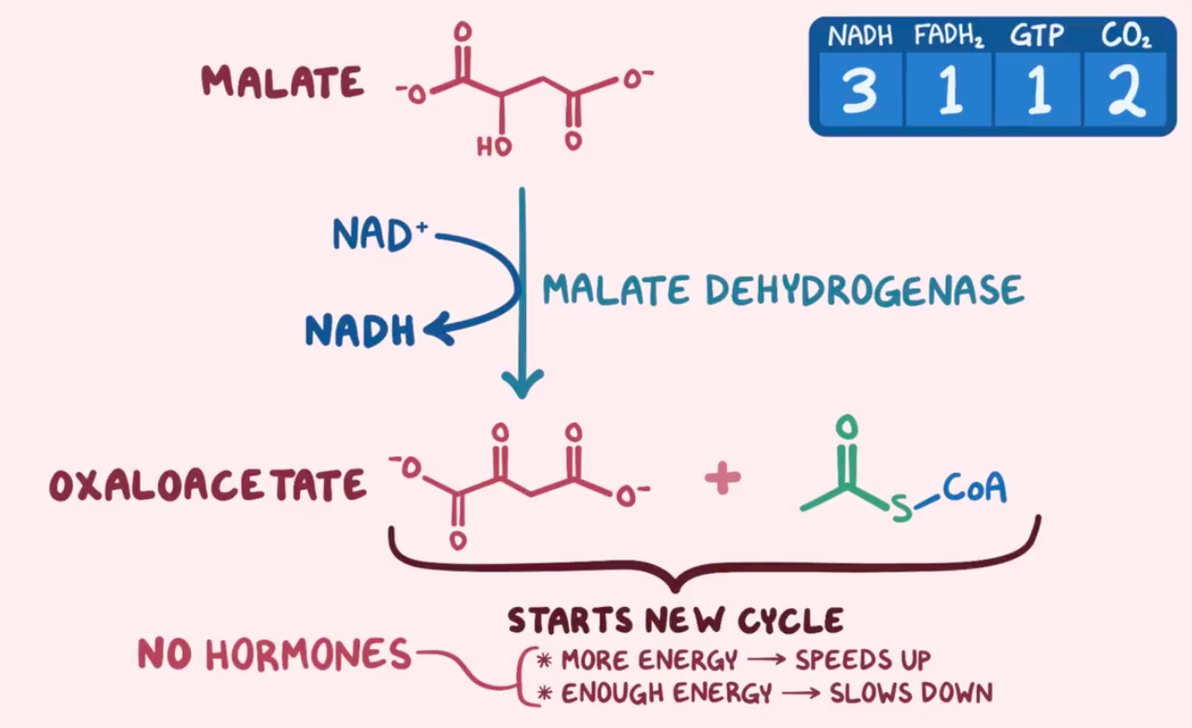
So now we come full circle, oxaloacetate can then join up with another new acetyl-CoA molecule, or just hanging around, waiting to start a new cycle. The control of the of citric acid cycle is based on the energy level of the cell, and has to run all the time. So, when it needs more energy, it speeds up. and when it has enough energy, it slows down. Hormones don't play a role in its regulation.
现在我们完成了全部循环,草酰乙酸能够与另一个新的乙酰辅酶A分子结合,或仅仅原地停留,等待开始新的循环。柠檬酸循环的调控基于细胞的能量水平,并且要一直运行。当细胞需要能量的时候,循环加速;当细胞有足够能量的时候,循环减速。激素在调控中不起作用。
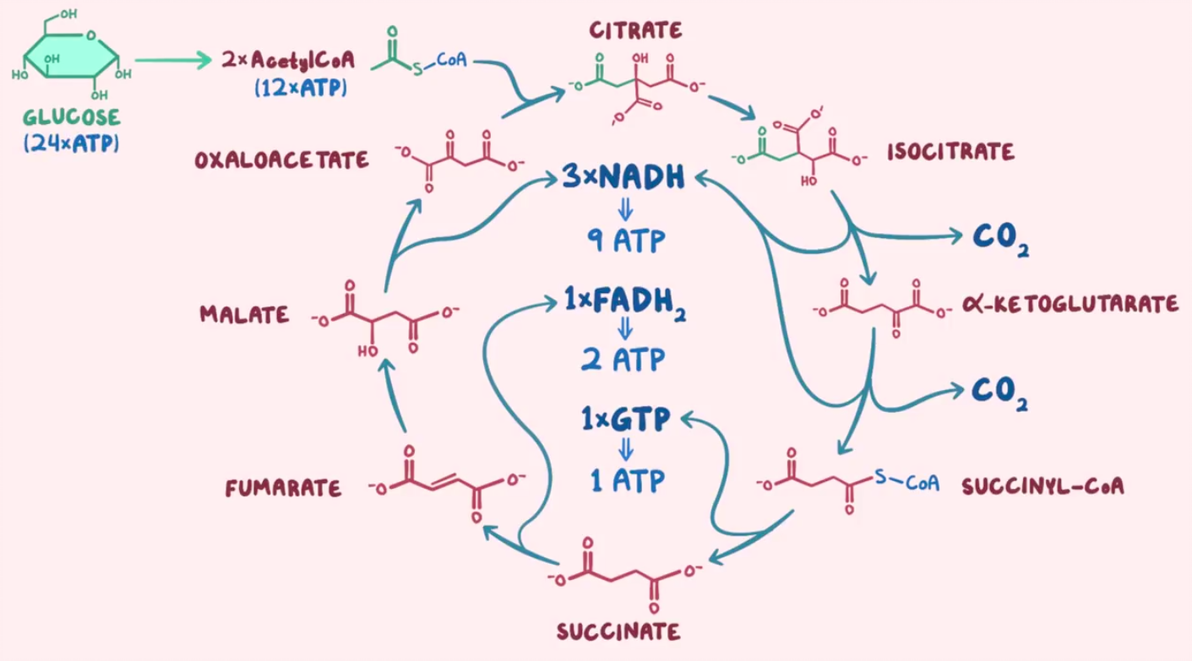
Alright, as a quick recap, in the end, from one acetyl-CoA molecule, we've made 3 NADH, 1 FADH2, 1 GTP and 2 carbon dioxides. The carbon dioxides leave the cell and are transported in the blood as bicarbonate, thanks to enzymes called carbonic anhydrases, they are then excelled by the lungs. In the electron transport chain, each NADH makes 3 ATPs, which totals to 9 ATPs. And each FADH2 makes 2 ATPs, which totals to 2 ATPs. our 1 GTP yields the energy equivalent of 1 ATP, so we've just got 1 there. And so, we make a total of 12 ATP molecules per acetyl-CoA. Also, since one glucose molecule splits into 2 pyruvates, each glucose molecule yields 24 ATP in the citric acid cycle.
好的,我们来快速复习一下:最终,从一分子乙酰辅酶开始,我们得到了3个NADH,1个FADH2,1个GTP和2个CO2;CO2离开细胞,在血液中以碳酸氢根的形式运输,这多亏了碳酸酐酶的存在,CO2在肺排出。在电子传递链中,每个NADH能产生3个ATP,总共产生9个ATP。每个FADH2产生2个ATP,总共2个ATP。1个GTP产生的能量和1个ATP相等,所以只有1个ATP。所以每分子乙酰辅酶A总共能得到12分子ATP。并且,由于一个葡萄糖分裂成2个丙酮酸,所以在柠檬酸循环中每个葡萄糖分子能产生24个ATP。
© Osmosis
~MEDUCALIX~
