
翻译:Jim;校对:itsmelan;
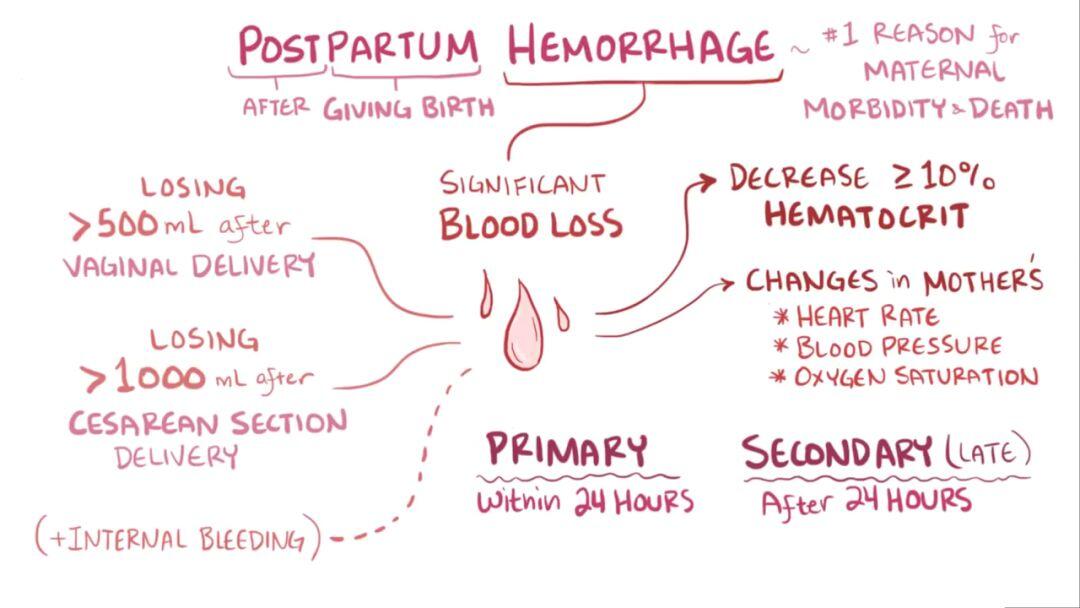
产后出血是一种分娩后的大失血, 是造成全世界孕妇产后发病和死亡的首要原因。 具体来说,产后出血指经阴道分娩后孕妇出血量超过500ml, 或剖腹产的孕妇出血量超过1000ml。
Postpartum hemorrhage is a significant loss of blood after giving birth, and it’s the number one reason for maternal morbidity and maternal death around the world. Specifically it’s defined as losing more than 500ml of blood after a vaginal delivery or more than 1000ml after a cesarean section delivery.
当然,分娩的过程可能会很混乱, 因此难以对失血量准确测量; 此外,分娩过程中还可能出现内出血的现象; 为了解决失血量难以评估的问题,产后出血的诊断标准还包括: 红细胞比容下降10%以上,母体心率、血压和血氧饱和度的变化。以上的这些额外诊断标准都提示了血液的大量丢失,分娩后24小时以内的大量出血被定义为原发性产后出血,而发生在分娩24小时以后的大量出血则被称为继发性产后出血或迟发型产后出血。
Of course, deliveries can be messy and it’s impossible to measure the precise amount of blood that’s lost. In addition, there’s the possibility of internal bleeding. So additional criteria to consider for postpartum hemorrhage include a decrease of 10% or more in hematocrit from baseline, and changes in a mother’s heart rate, blood pressure, and oxygen saturations - all of which suggest a significant blood loss. Significant bleeding in the first 24 hours after delivery is called primary postpartum hemorrhage, and after that it’s called secondary, or late, postpartum hemorrhage.
病因一:宫缩乏力
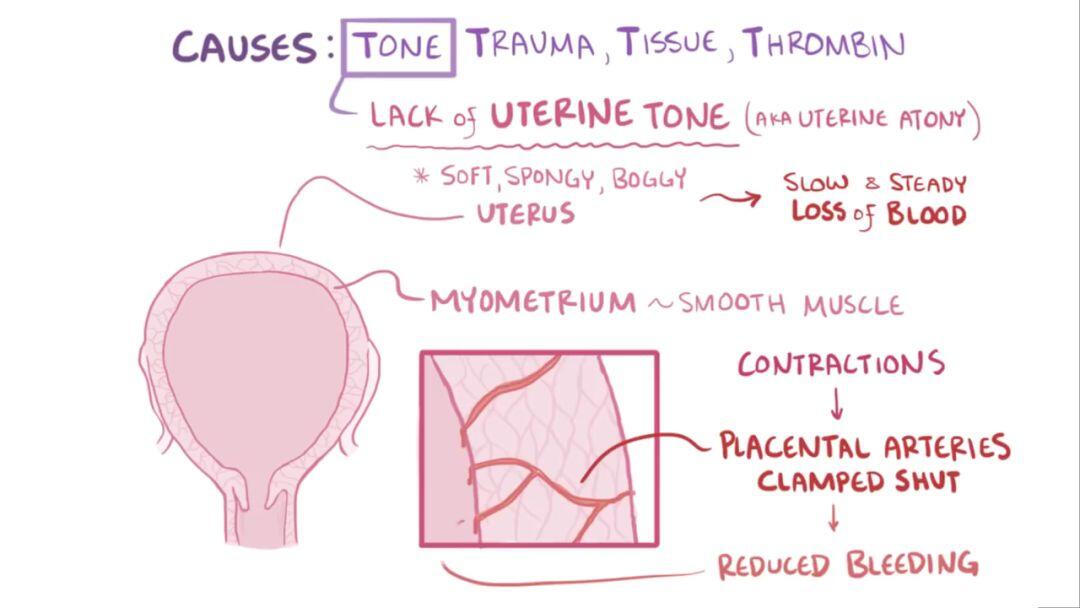
造成产后出血的最常见的原因可以归结于以下4个方面: 宫缩乏力、产道损伤、胎盘滞留和凝血功能障碍,可以简单地记忆为“4Ts"。Tone代指子宫张力缺乏或子宫乏力,也就是柔软的、海绵状的、水肿的子宫。这是产后出血的最主要原因,能够引起缓慢持续的血液丢失。
The most common causes of postpartum hemorrhage can be lumped into four groups which can easily be remembered as the “4 Ts”: Tone, Trauma, Tissue, and Thrombin. Tone refers to a lack of uterine tone or uterine atony – basically a soft, spongy, boggy uterus, and this is the main cause of postpartum hemorrhage, generally resulting in a slow and steady loss of blood.
子宫是一种肌性器官,被三层平滑肌所包裹,这种平滑肌也叫作子宫肌层,子宫肌层在分娩过程中收缩,从而缩短子宫颈管、扩大子宫颈口,最终将胎儿和胎盘娩出体外。在分娩之后,子宫肌层持续收缩并将胎盘动脉挤压到子宫壁上,使动脉被生理性结扎,从而减少子宫的出血。这种子宫肌层的收缩将持续到产后数周。
The uterus is a muscular organ wrapped by three layers of smooth muscle called the myometrium, which contracts during labor to dilate and efface the cervix and ultimately push out the fetus and placenta. After delivery, the myometrium continues to contract and this squeezes down on the placental arteries at the point where they are attached to the uterine wall, clamping them shut, thereby reducing uterine bleeding. The contractions continue for a few weeks after the delivery.
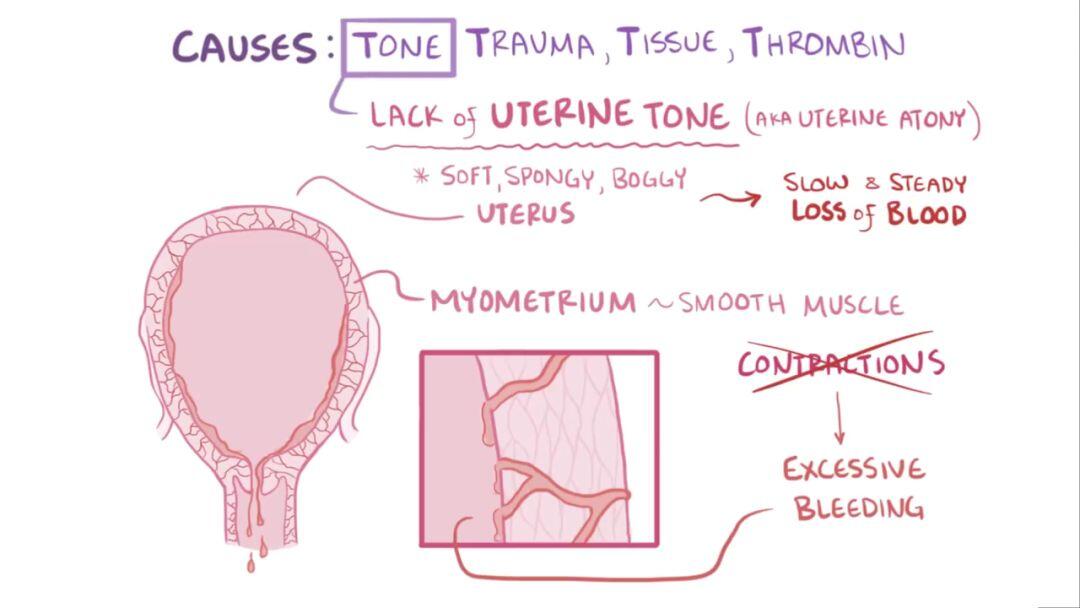
但是,对于子宫收缩乏力的患者,她们的子宫肌层在产后不能继续收缩; 没有压力作用于胎盘动脉,导致失血过多。
With uterine atony, though, the uterus fails to contract after birth, and those placental arteries don’t clamp down, leading to excessive bleeding.
宫缩乏力的原因
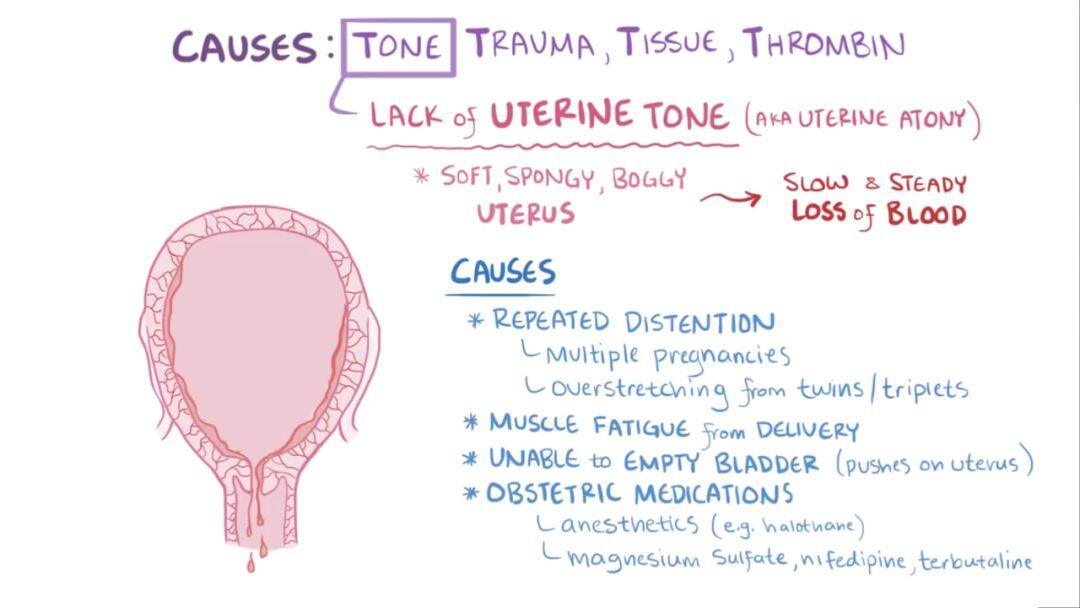
子宫收缩乏力可以由多种情况引起,如多胎妊娠分娩过程中宫口重复扩张、双胎或三胎妊娠所引起的子宫过度延展、或其他能够导致子宫延展过度的原因。 上述情况都将阻碍子宫肌层在产后的有效收缩,进一步引起子宫收缩力下降乃至宫缩乏力,宫缩乏力还可以发生在分娩过程中产程延长所引起的子宫肌肉疲劳。 不仅如此,膀胱排空障碍也能引起产后子宫收缩乏力,因为充盈的膀胱将推挤子宫,进而阻碍子宫的有效收缩。此外,一些产科常用药物如麻醉药(特别是氟烷)、硫酸镁、硝苯地平和特布他林等,也会影响产后子宫的正常收缩,增加宫缩乏力的风险。
Uterine atony can be caused by several things, repeated distention of the uterus as a result of multiple pregnancies, overstretching from twins or triplets, or any condition that causes too much uterine stretching can interfere with efficient uterine contractions and lead to diminished tone and eventual uterine atony. Uterine atony can also occur when the uterine muscles fatigue during the delivery process because of prolonged labor. It can also occur when a woman is unable to empty her bladder, since a full bladder can push against the uterus and interfere with uterine contractions. Finally, some commonly used obstetric medications such as anesthetics (especially halothane), magnesium sulfate, nifedipine, and terbutaline can all interfere with uterine contractions and increase the risk of uterine atony.
治疗宫缩乏力
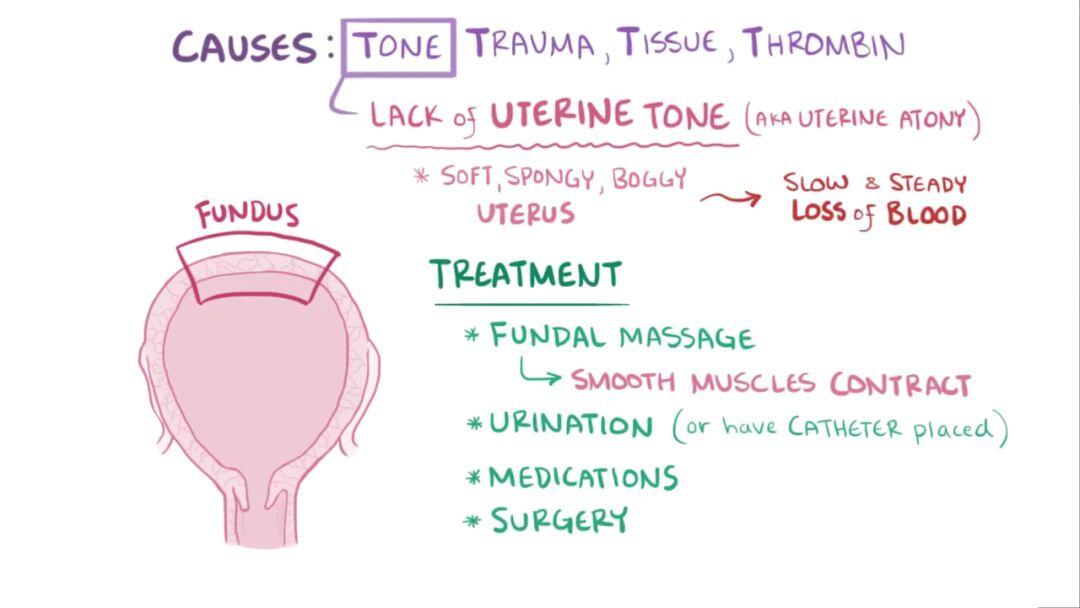
宫缩乏力可以通过宫底按摩进行治疗,也就是按摩子宫的底部(子宫的上半部分)。 这一部分将在分娩后下降到脐水平附近。 子宫底按摩能够促进子宫壁的平滑肌收缩和变硬, 由充盈膀胱所引起的宫缩乏力可以通过排小便得以缓解, 倘若无法自行排空膀胱可放置尿管进行导尿, 药物也可以用于促进子宫的收缩, 若病情需要,可通过外科手术进行止血。
Uterine atony can be treated by fundal massage, or massaging the fundus – the upper section of the uterus which is typically near the umbilicus right after birth. Fundal massage causes the smooth muscle in the wall uterine wall to contract and harden. If a full bladder seems to be interfering with contractions, a woman can urinate or have a catheter placed if she’s unable to void by herself. Medications to help firm up the uterus can also be given, and if necessary, the bleeding may be stopped surgically.
病因二:产道损伤
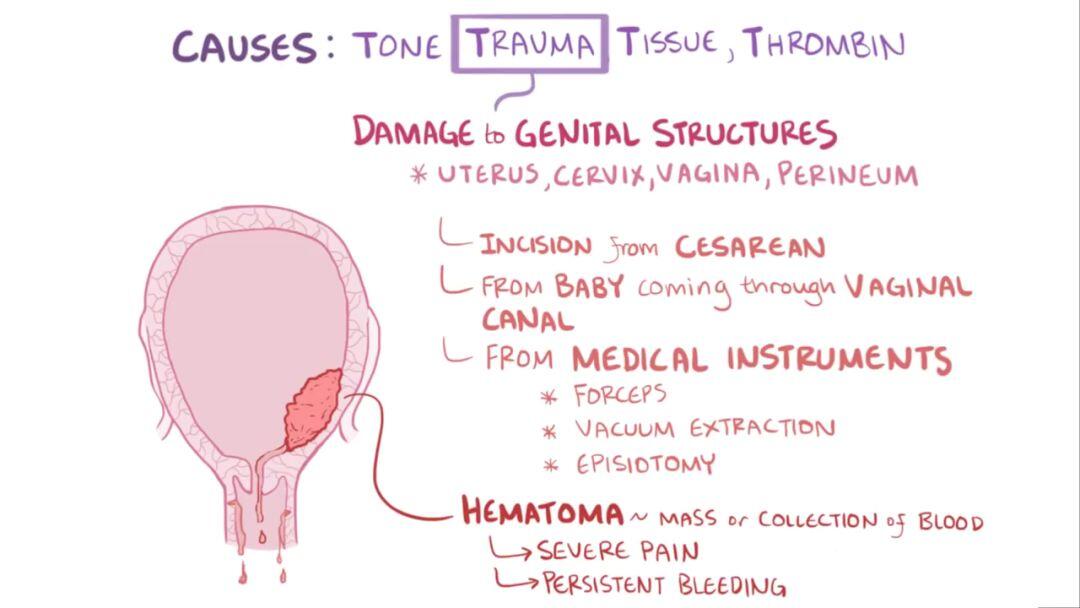
下一个“T” Trauma,代指的是任何生殖器结构的损伤, 包括子宫、宫颈、阴道或者会阴 这种损伤包括剖腹产中手术切口、胎儿从阴道分娩过程中的意外损伤、 或是由助产器械所引起的创伤, 例如产钳的使用、胎头吸引术、用于扩大外阴口的外阴切开术等, 都可能造成意外的子宫出血。
Alright the next ‘T’, trauma, refers to damage to any of the genital structures - the uterus, cervix, vagina, or perineum. This can include the incision from a cesarean delivery, incidental trauma from a baby coming through the vaginal canal, or trauma from instruments used in the delivery. For example, the use of forceps, vacuum extraction, or an episiotomy, a small cut used to enlarge the vaginal opening, can all cause unintended bleeding.
这种出血有时候会发生在一些较隐蔽的位置, 产后可局部形成血肿而在数小时内不被察觉。 察觉血肿的要点是:尽管子宫收缩有力, 下腹部仍有剧烈疼痛,并且有持续的鲜红色阴道出血。
Sometimes the bleeding is in a concealed location and a hematoma can form and go unnoticed for hours after delivery. A key to recognizing a hematoma is severe pain and persistent bright red vaginal bleeding in spite of a firmly contracted uterus.
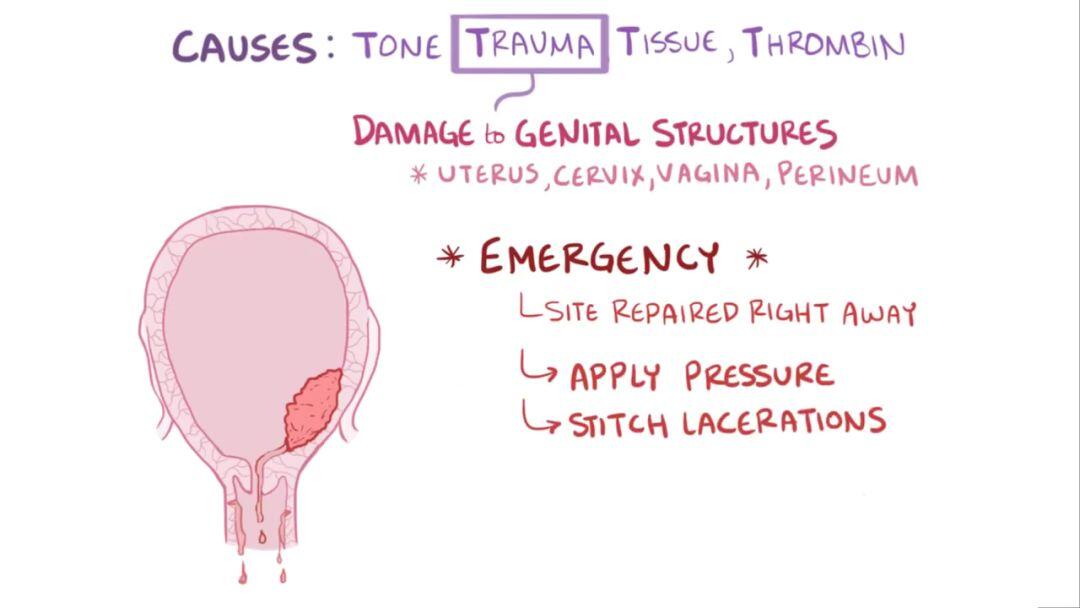
总的来说,任何创伤引起的出血都是紧急情况,一般需要通过加压和缝合撕裂伤来马上修复出血点。
In general, any trauma-related bleeding is an emergency and the site of bleeding has to be repaired right away - generally by applying pressure and stitching lacerations.
病因三:胎盘滞留
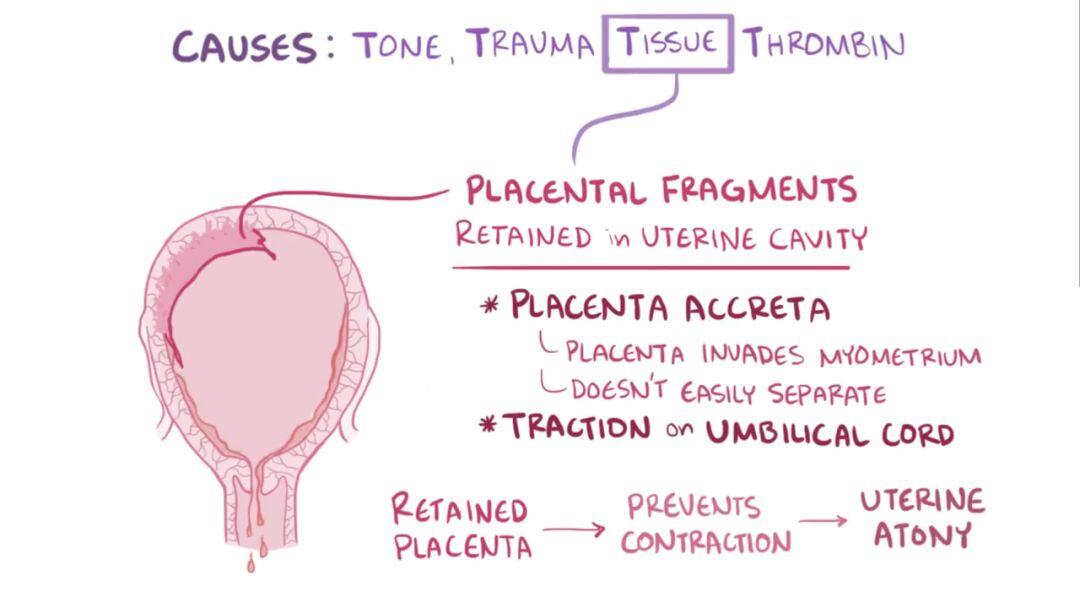
Tissue指胎盘组织部分残留在子宫腔中。 正常情况下,胎盘组织会在第三产程中从子宫壁上完整的脱落并娩出,但在某些疾病情况下,部分胎盘组织将在术后残留在子宫腔内无法自行排出。当发生胎盘植入时,胎盘组织将侵袭到子宫肌层组织,因此不易从子宫壁上脱离。 无论是胎盘植入还是过度的脐带牵引都能够造成胎盘组织的残留。胎盘组织残留会阻碍子宫的有效收缩,最终导致宫缩乏力。
Tissue refers to placental fragments retained in the uterine cavity. The entire placenta normally separates from the uterine wall in the third stage of labor, but occasionally a part of the placenta remains behind in the uterus. In placenta accreta, the placenta invades the myometrium so it doesn’t easily separate from the uterus. Placenta accreta or simply too much traction on the umbilical cord can both cause the placenta to be retained. This in turn prevents effective uterine contractions, and leads to uterine atony.
预防胎盘滞留
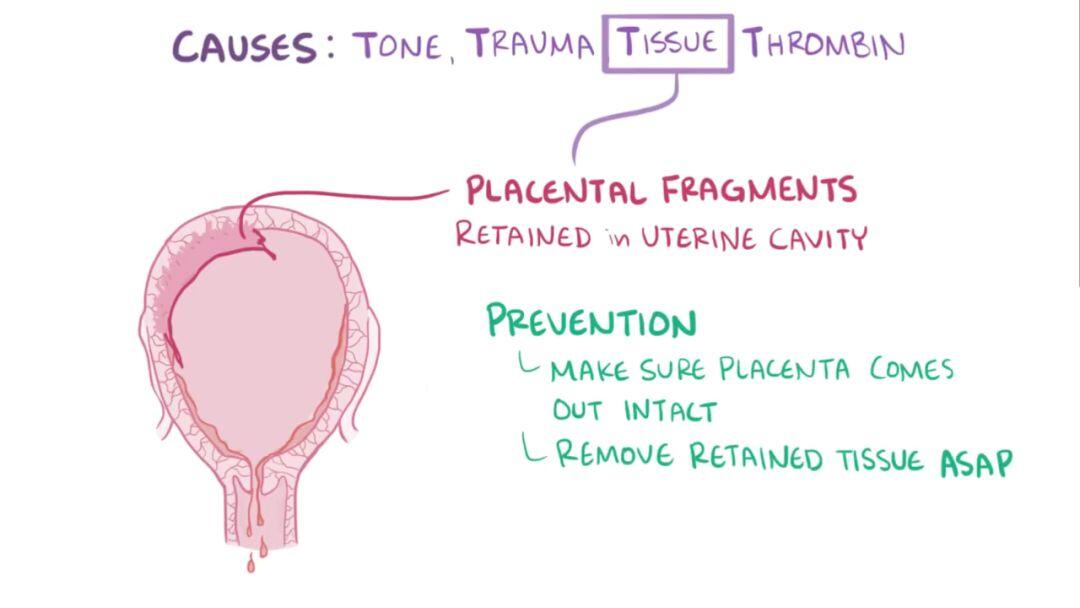
治疗目标首要的是通过确保胎盘完全排出预防其发生,并且在发现胎盘滞留后,尽早将残留组织从子宫壁上剥离并移出体外。
The goal here is to prevent this from happening in the first place by making sure that the placenta comes out completely intact, and removing any tissue that does get retained as soon as possible.
病因四:凝血功能障碍
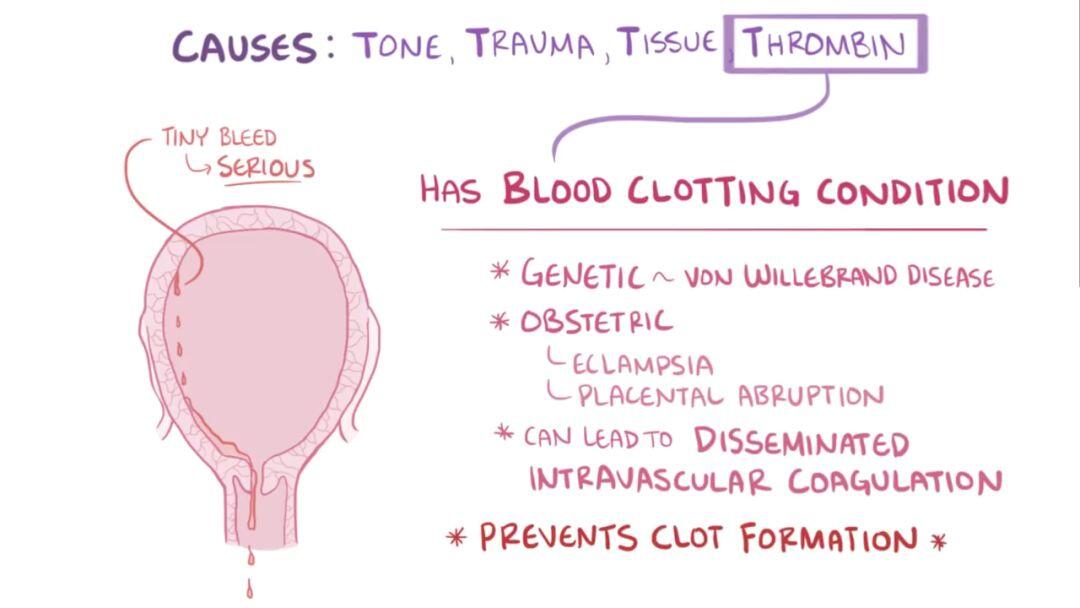
最后一个“T” Thrombin,指代母体自身的某些特殊情况妨碍了凝血过程, 例如血管性血友病等遗传病, 或是子痫、胎盘早剥等产科特殊情况, 能够导致机体的凝血障碍,最严重的情况甚至会, 发生弥漫性血管内凝血即DIC。 这些情况会使机体在出血时不能够形成正常的血凝块, 甚至使一次小出血进展为难以控制的大出血。 针对以上这些不同情况,治疗方法各异。
Thrombin, the final T, refers to the mother having some condition preventing blood clots from forming normally - for example, a genetic disorder like von Willebrand disease or an obstetric condition like eclampsia and placental abruption which may result in a clotting disorder, the most dangerous of which is disseminated intravascular coagulation or DIC. These are conditions that prevent a clot from forming normally when there’s a bleed, and this can make even a tiny bleed into a serious problem since it won’t easily stop. The treatment for each of these is specific to the specific underlying cause.
产科急症
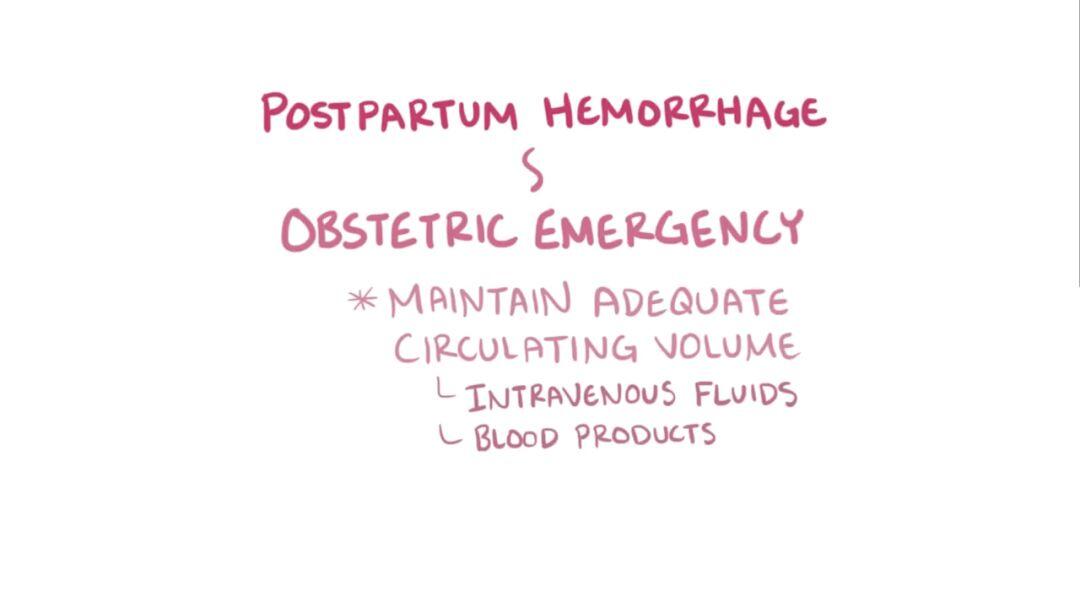
产后出血是一种产科急症, 维持充足的循环血量是首要原则。 不管由何种原因引起的产后出血,都可能需要静脉输液和血液制品来保证重要组织脏器的血液灌注量。
Postpartum hemorrhage is an obstetric emergency and maintaining adequate circulating volumeis a key priority. Regardless of the cause, intravenous fluids and blood products may be used to ensure that the vital organs are well perfused.
小结
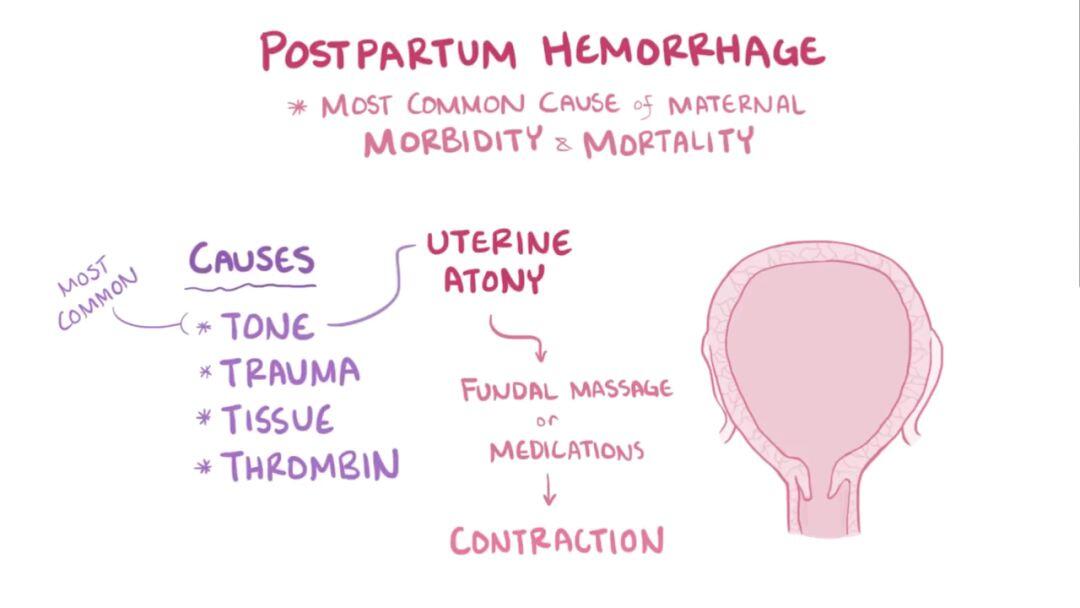
来简单地回顾一下本视频的内容,产后出血是全世界孕产妇发病和死亡的最主要原因。 产后出血的原因可归结于“4Ts”: 宫缩乏力、产道损伤、胎盘滞留和凝血功能障碍。 其中,最常见的病因是宫缩乏力,可通过宫底按摩和药物使用来促进子宫收缩。
As a quick recap, postpartum hemorrhage is the most common cause of maternal morbidity and mortality around the world, and the causes are the 4 T’s: Tone (atony), Trauma, Tissue, and Thrombus (coagulopathy). The most common cause - uterine atony - can usually be managed with fundal massage and medications to help the uterus contract.
MEDUCALIX
