
在低磷血症Hypophosphatemia中,Hypo-的意思是低,phosphat-指的是磷酸盐,-emia指的是在血中。低磷血症,意味着血液中磷酸盐含量低,通常低于2.5毫克/分升。
翻译:陈告退;压制:Meducal;
低磷血症
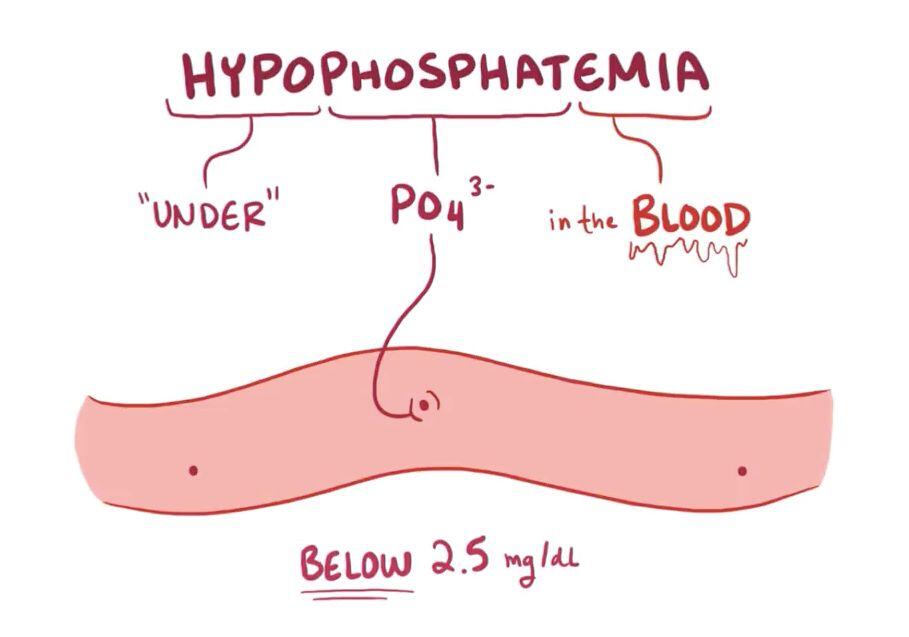
Hypo- means under, phosphat- refers to phosphate, and -emia refers to the blood, so hypophosphatemia means having a low phosphate level in the blood, typically below 2.5mg/dL.
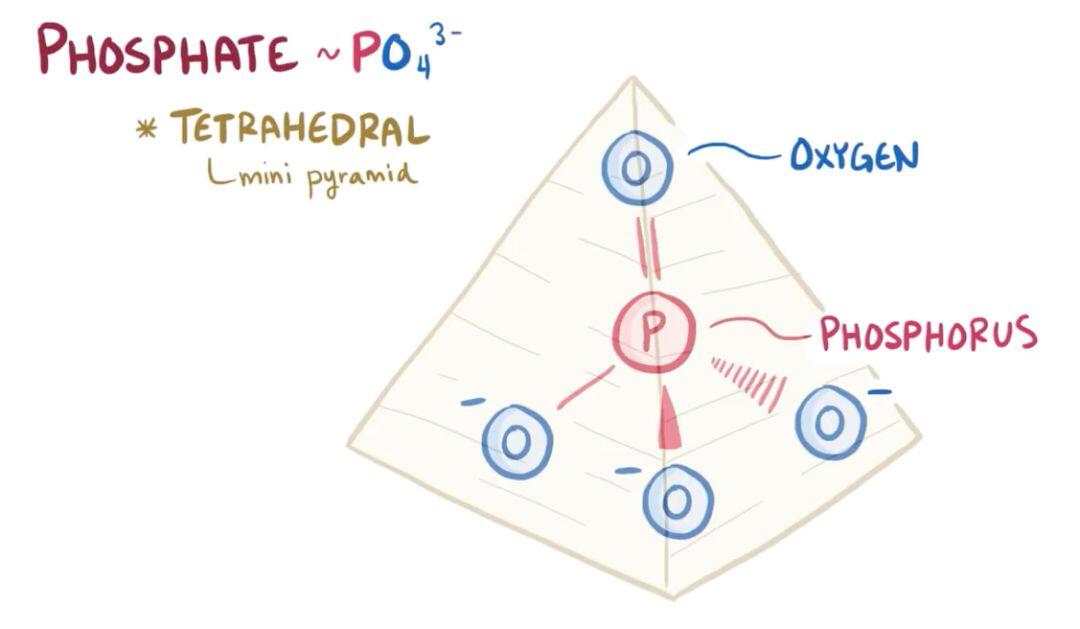
磷酸盐由一个位于中心的磷原子和四个氧原子组成,形成四面体结构中,像一个小金字塔,电荷为-3,写作 PO43-。
Phosphate is made up of one central phosphorus atom surrounded by four oxygen atoms in a tetrahedral arrangement, like a mini pyramid, and has a charge of minus 3 and is written PO43-.
人体内的磷酸盐
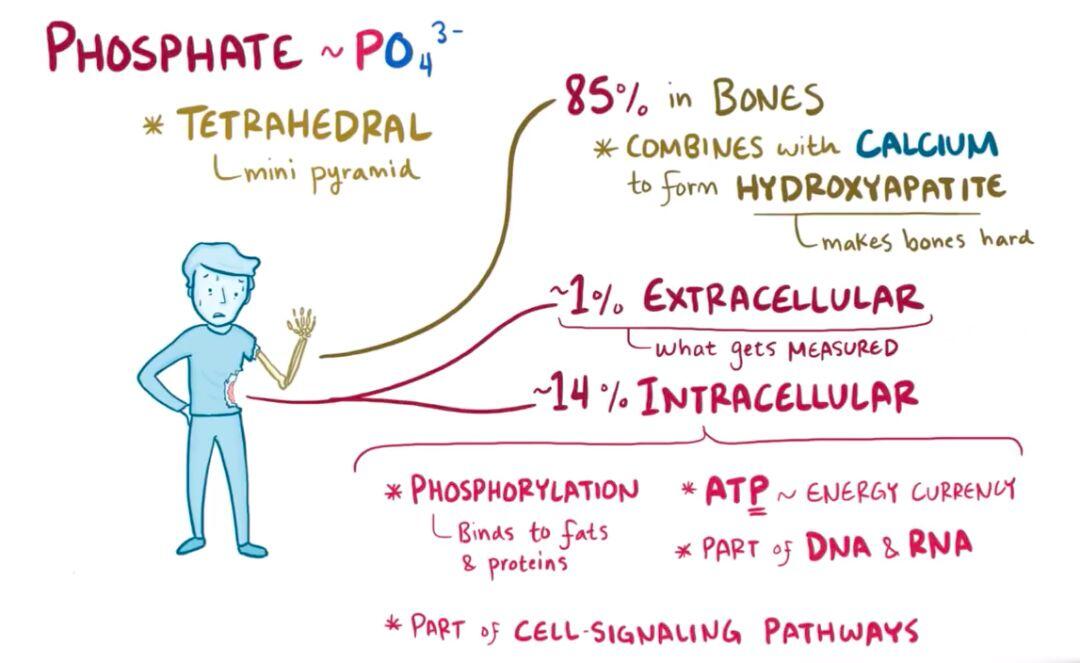
在人体中,约85%的磷酸盐储存在骨骼中,它在骨骼中与钙结合形成一种叫做羟基磷灰石的坚硬化合物,这就是为什么骨头比较坚硬的原因。而游离的磷酸盐中,一部分(1%)是在细胞外液,即在细胞外血液内,这是被测量的那部分,而大多数(14%)在细胞内。
它在细胞内做各种各样的事;负责磷酸化,与脂肪和蛋白质结合;形成三磷酸腺苷(ATP,细胞中最常见的能量货币)的高能键;它也是连接单个核苷酸的DNA和RNA主干的一部分;还是细胞信号分子的一部分,如环腺苷一磷酸(cAMP)。简言之,磷酸盐对人体十分重要。
In the body, about 85% of the phosphate is stored in the bones, where it combines with calcium to make a tough compound called hydroxyapatite which is the stuff that makes bones hard. Of the remaining phosphate, a tiny amount is extracellular, or outside cells like in the blood, so this is the bit that gets measured, and the majority is intracellular, or inside cells, where it does all sorts of things. It’s responsible for phosphorylation, where it binds to fats and proteins. It forms the high energy bonds of adenosine triphosphate or ATP, which is the most common energy currency in the cell. It’s part of the DNA and RNA backbone that links individual nucleotides together, and is also part of cellular signaling molecules like cyclic-adenosine monophosphate or cAMP. Bottom line - phosphate is super important.
甲状旁腺激素影响磷酸盐与钙离子水平
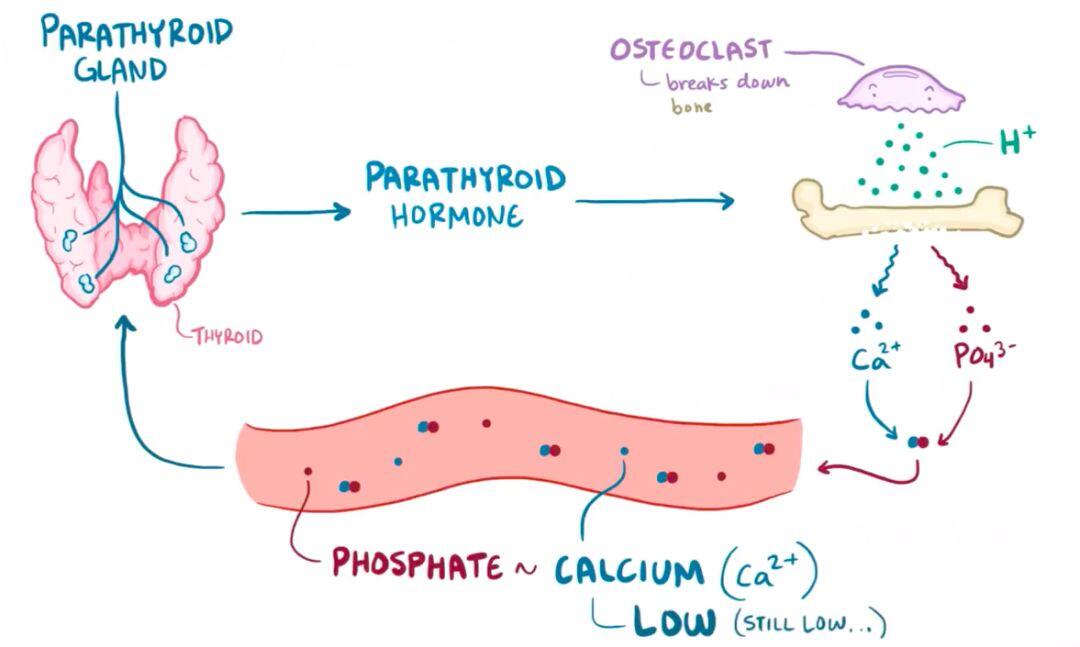
大部分磷酸盐和骨骼中的钙结合在一起,因此磷酸盐含量与体内游离钙的含量密切相关。如果钙水平下降,那么在甲状腺内的四个甲状旁腺,释放甲状旁腺激素,导致骨骼中释放钙和磷酸盐离子。
甲状旁腺激素通过刺激破骨细胞来释放氢离子,溶解坚硬的矿化羟基磷灰石。一旦带正电的钙和带负电的磷酸盐被从骨头中释放出来,他们就又像一对患难情侣般紧紧抓住对方,也就是说,游离钙的水平并没有上升很多。
Because most of phosphate is locked up with calcium in the bones, the levels of phosphate are heavily tied with the levels of ionized calcium in the body. If calcium levels fall, the four parathyroid glands buried within the thyroid gland release parathyroid hormone which frees up both calcium and phosphate ions from the bones. It does this by stimulating osteoclasts, the cells that break bone down, to release hydrogen ions which dissolves the hard, mineralized hydroxyapatite. As soon as the positively-charged calcium and negatively-charged phosphate are released from the bones, they grab onto each other again like a pair of star-crossed lovers, meaning that the ionized calcium level doesn’t really go up very much at all.
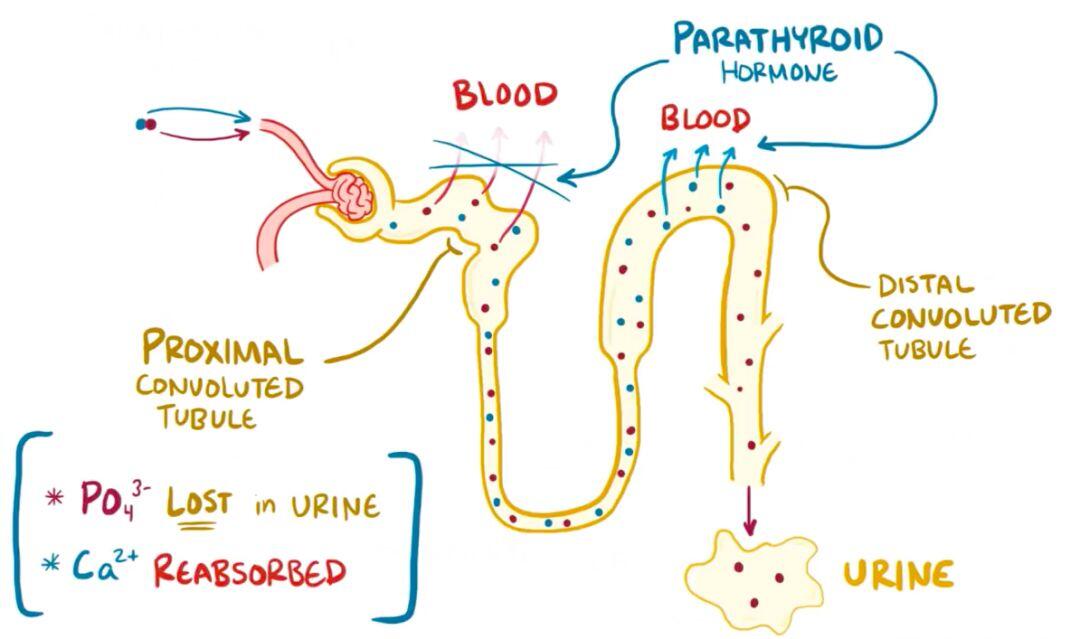
后来,他们到达了肾小管的肾单位处;在近曲小管这里,磷酸盐通常通过钠-磷协同转运蛋白被重新吸收到血液中。
然而,甲状旁腺激素会阻止这一过程,把磷酸盐留在腔内,最终通过尿液排出。而钙仍然在腔内,但甲状旁腺激素也会影响远曲小管增加钙的再吸收。
所以最终导致的结果是磷酸盐在尿液中丢失,而游离钙被保留在血液中,致使游离钙含量上升,而磷酸盐含量下降!
Now, these two make their way to the nephron of the kidney, and at this point in the proximal convoluted tubule, phosphate usually gets reabsorbed back into the blood via sodium-phosphate cotransporters. It turns out, though, that parathyroid hormone also shuts this down. This means that phosphate is left in the lumen and eventually gets sent out in the urine. Now, that calcium’s still in the lumen, though, but parathyroid hormone also affects the distal convoluted tubule and increases calcium reabsorption. So when the dust settles, as a result of parathyroid hormone, phosphate is lost in the urine while ionized calcium is kept in the blood, so ionized calcium levels rise and phosphate levels fall!
病 因
由于上述因素,低磷血症有以下5种病因:
1. 磷酸盐流失过多
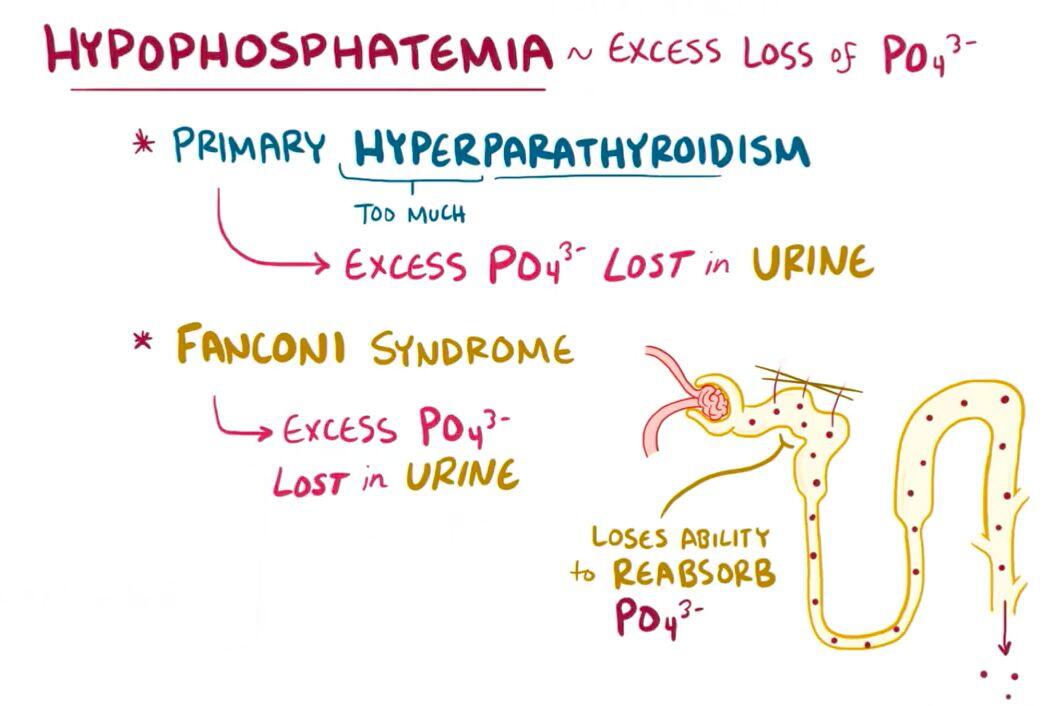
如原发性甲状旁腺功能亢进,导致甲状旁腺激素过多,造成过多的磷酸盐从尿液中排出。
另一个例子是范可尼综合征,也就是近曲小管基本上失去了重吸收各种溶质(包括磷酸盐)的能力导致磷酸盐通过尿液排出。
With all of this in mind, hypophosphatemia can develop a few different ways. The first possibility is by having excess losses of phosphate. This can result in conditions like primary hyperparathyroidism which result in too much parathyroid hormone, which leads to excess phosphate being excreted in the urine. Another example is Fanconi syndrome, which is where the proximal convoluted tubule essentially loses its capacity to reabsorb a variety of solutes - including phosphate, once again letting it get excreted in the urine.
2. 胃肠道吸收不足
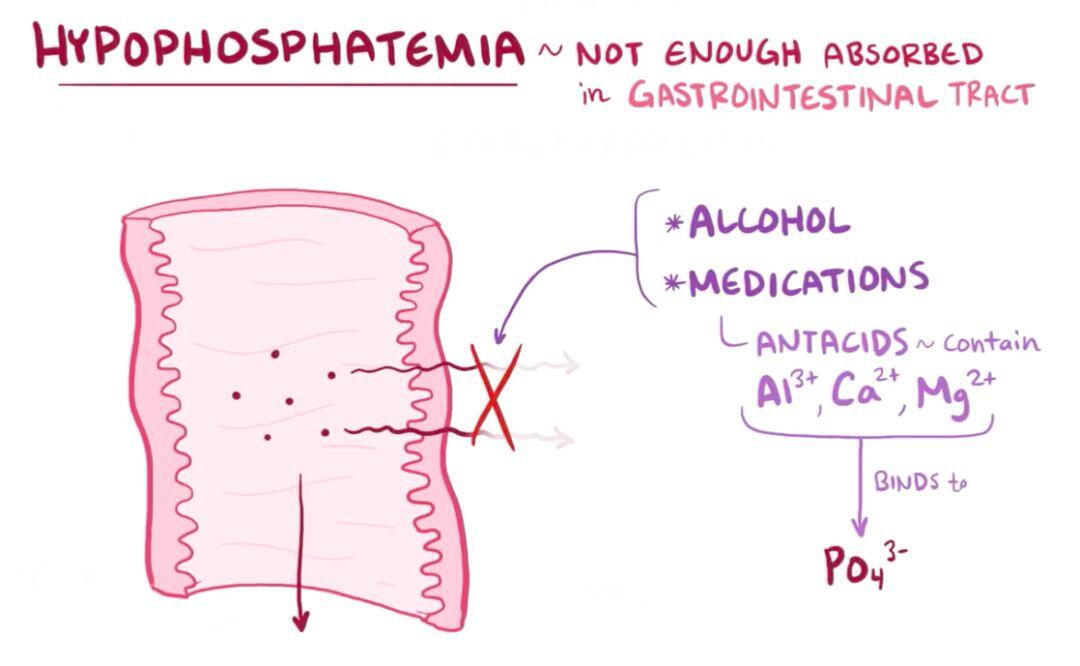
磷酸盐离子通常会被消化道吸收,但有些物质如酒精或药物会削弱磷酸盐的吸收,意味着磷酸盐会被排出体外。这包括含铝、钙或镁的抗酸剂。这些正离子,可与带负电荷的磷酸盐结合,而阻碍其吸收。
Another possibility is not absorbing enough through the gastrointestinal tract, because usually phosphate ions are absorbed in the GI tract, but some substances like alcohol or a medication can impair that phosphate absorption, which means it gets excreted. This includes antacids that contain aluminum, calcium, or magnesium, all of which are positive ions that can bind with the negatively charged phosphate and block absorption.
3. 饮食中没有摄取足够的磷酸盐
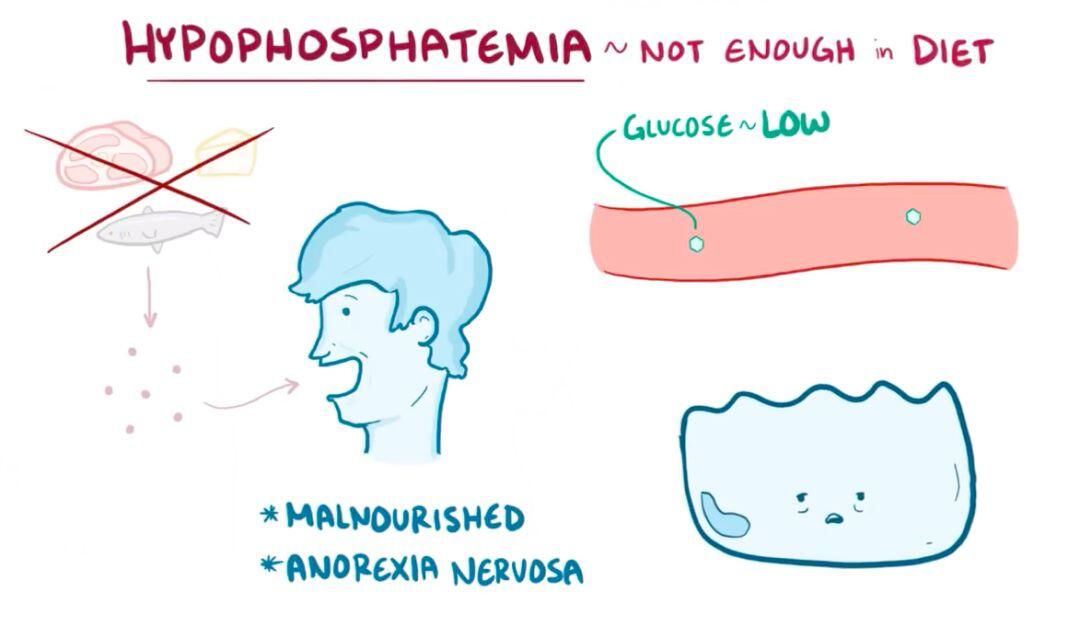
虽然这不是很普遍,因为磷酸盐几乎普遍存在于所有食物中。唯二例外是饥饿和严重营养不良的人,或是不吃食物的人,如神经性厌食症患者。在这两种情况下,人的血糖水平都会很低,造成细胞新陈代谢大大减慢。
Alternatively, a person may simply not be getting enough phosphate in the diet, although this is unusual because it’s found in nearly all foods. The exception is someone that’s starving and severely malnourished, or someone who is actively depriving themselves of food, like in anorexia nervosa. In both of these situations, blood glucose levels are low and as a result cellular metabolism slows down considerably.
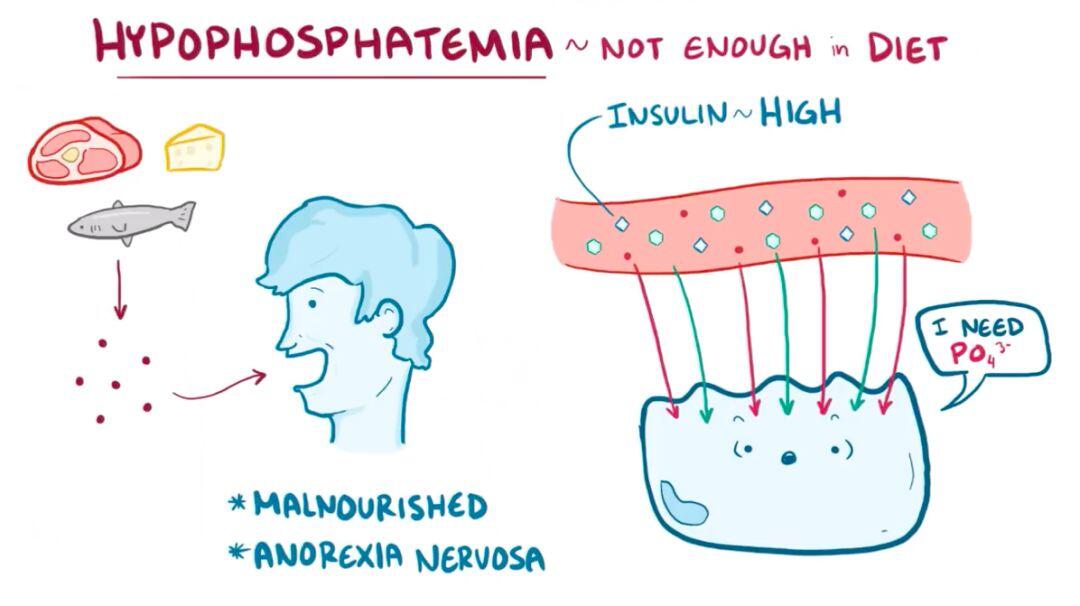
当处于这种状态的人突然又开始健康进食后,如在医院环境中,他们的血液中突然增加了很多葡萄糖,相应地,胰岛素通常会飙升,于是葡萄糖被送进细胞里。
这会导致细胞产生对磷酸盐的需求,因为葡萄糖代谢的第一步,是让己糖激酶将磷酸盐与葡萄糖结合;同时,生产ATP分子也需要大量的磷酸盐。
When an individual in this state starts to suddenly eat healthy meals again, like in a hospital setting, then they all the sudden get a bunch of glucose in their blood, and in response insulin usually skyrockets in order to push that new found glucose into the cells. This causes a demand for phosphate in cells because the first step in glucose metabolism is to have the enzyme hexokinase attach phosphate to the glucose. Also, production of ATP molecules themselves requires a lot of phosphate.
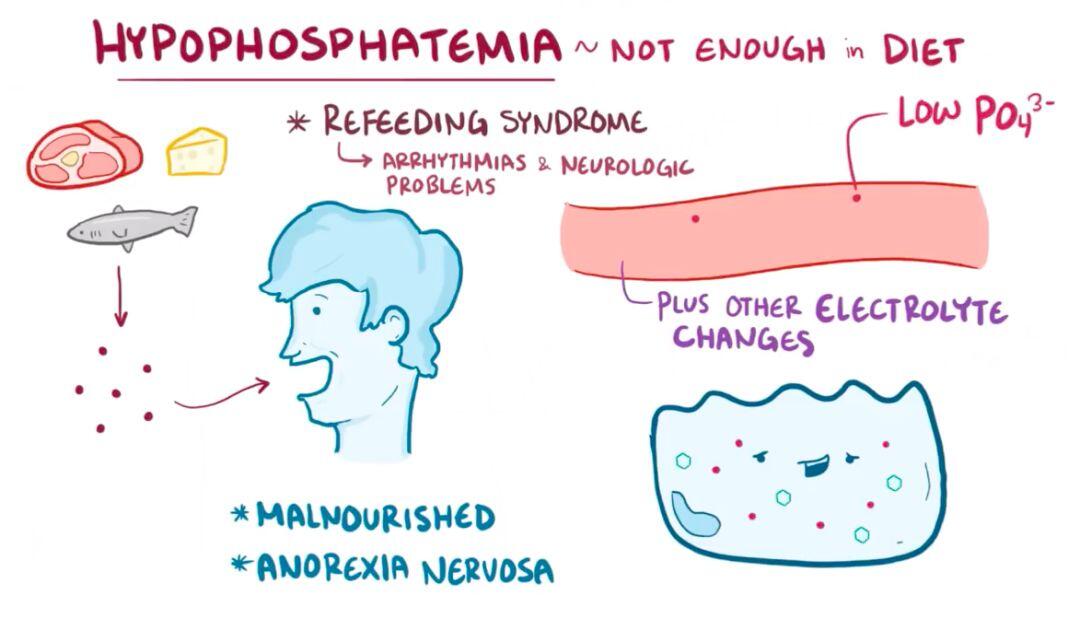
细胞进而从血液中提取磷酸盐,导致此前一直保持相对正常的磷酸盐水平,开始急剧减少。这被称为再喂养综合征,会导致其它电解质水平迅速改变,将患者置于易发心律失常和神经问题的危险境地中。
Now, this means that phosphate gets extracted from the blood, which causes phosphate levels, which have remained relatively normal until this point, to plummet. This is called refeeding syndrome, and it can cause levels of other electrolytes to rapidly change as well, putting these people at serious risk of developing cardiac arrhythmias and neurologic problems.
4. 糖尿病
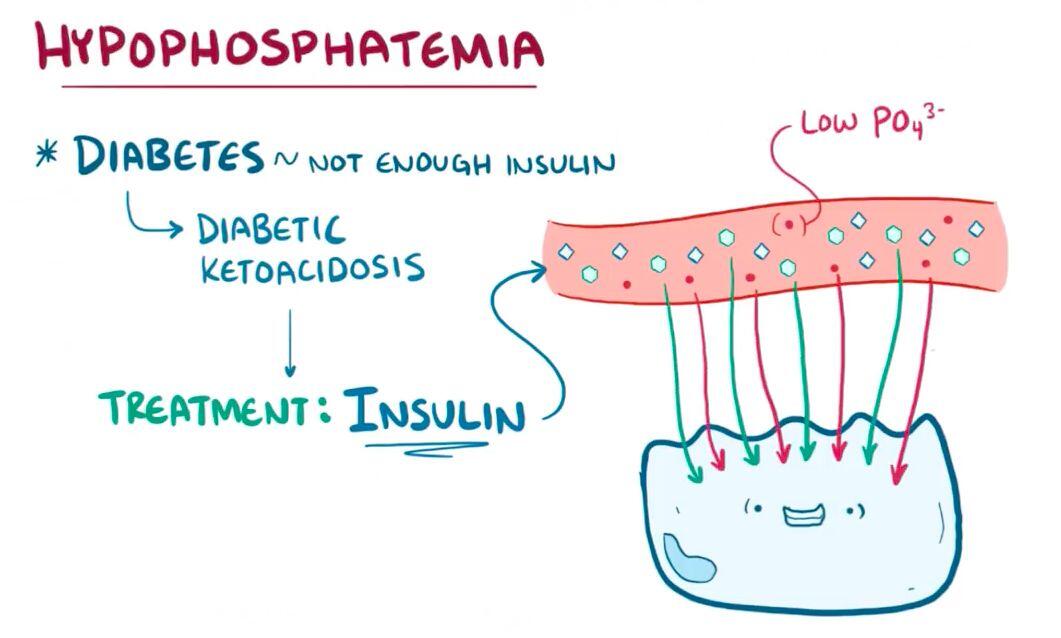
类似地,糖尿病患者体内胰岛素分泌不足,即使被血糖包围着,细胞实际上仍处于“饥饿状态”。有时,这些人会患上糖尿病酮症酸中毒。为治疗这种并发症,需注射胰岛素,就像之前一样,胰岛素促使细胞从血液中提取葡萄糖和磷酸盐,因而血液中的磷酸盐水平会迅速下降。
Similarly in diabetes, individuals can’t make enough insulin, so the cells are effectively “starving” even though they are surrounded by glucose in the blood. Sometimes these individuals can develop diabetic ketoacidosis, and to treat that complication, individuals are given insulin, and just like before, insulin causes the cells to extract glucose and phosphate from the blood, and the blood phosphate levels can fall quickly.
5. 呼吸性碱中毒
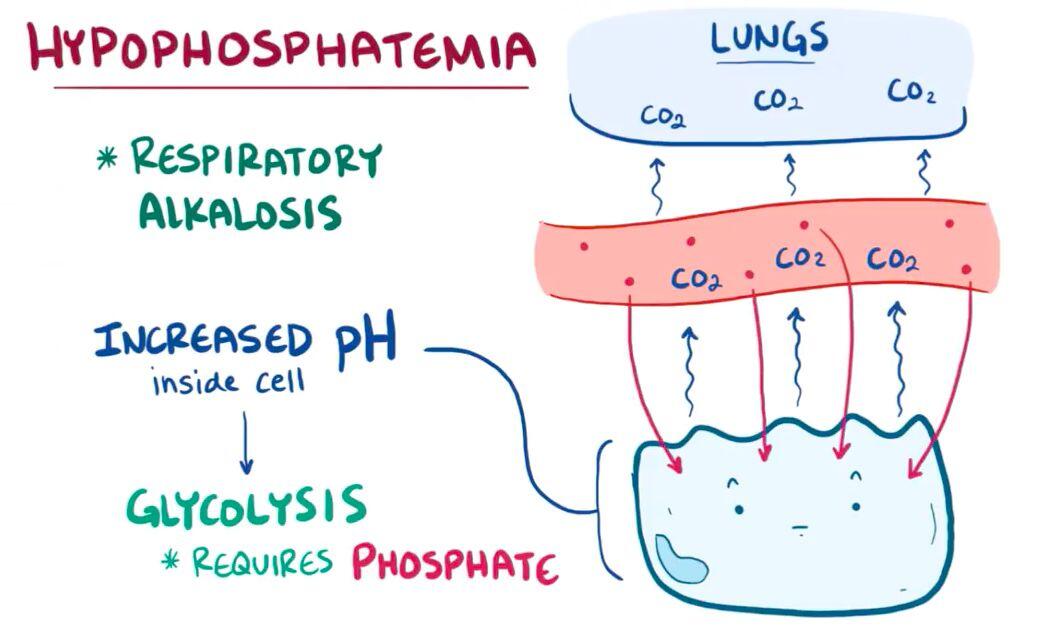
低磷血症的最后一个原因是呼吸性碱中毒,因为它会在CO2被呼出肺部时,造成细胞外CO2水平下降,进一步导致细胞内CO2自由扩散到细胞外,提高了细胞的pH值,进而加剧糖酵解,而糖酵解是一个需要大量磷酸盐的代谢过程。
类似于再喂养综合征,细胞会从血液中索取磷酸盐,从而导致低磷血症。
A final cause of hypophosphatemia is respiratory alkalosis because it causes extracellular CO2 levels to decrease as it gets ventilated out of the lungs. This causes intracellular carbon dioxide to freely diffuse out of the cell, raising the cellular pH which stimulates glycolysis, a metabolic process that requires a lot of phosphate. Similar to the process in refeeding syndrome, when cells need phosphate, they simply pull it out of the blood, causing hypophosphatemia.
症 状
大多数轻度低磷血症患者无症状,但严重低磷血症会引起肌肉无力、骨质疏松或骨软化、横纹肌溶解症(一种由肌肉破坏和神志改变造成的肾脏损伤)。此外,由原发性甲状旁腺功能亢进引起的低磷血症,可能出现由相关高钙血症引起的症状。
Most people with mild hypophosphatemia have no symptoms, but severe hypophosphatemia can cause muscle weakness, weak bones or osteomalacia, and rhabdomyolysis which is a type of kidney damage due to muscle breakdown, as well as an altered mental status. In addition, hypophosphatemia, that occurs due to primary hyperparathyroidism, may show symptoms caused by the associated hypercalcemia.
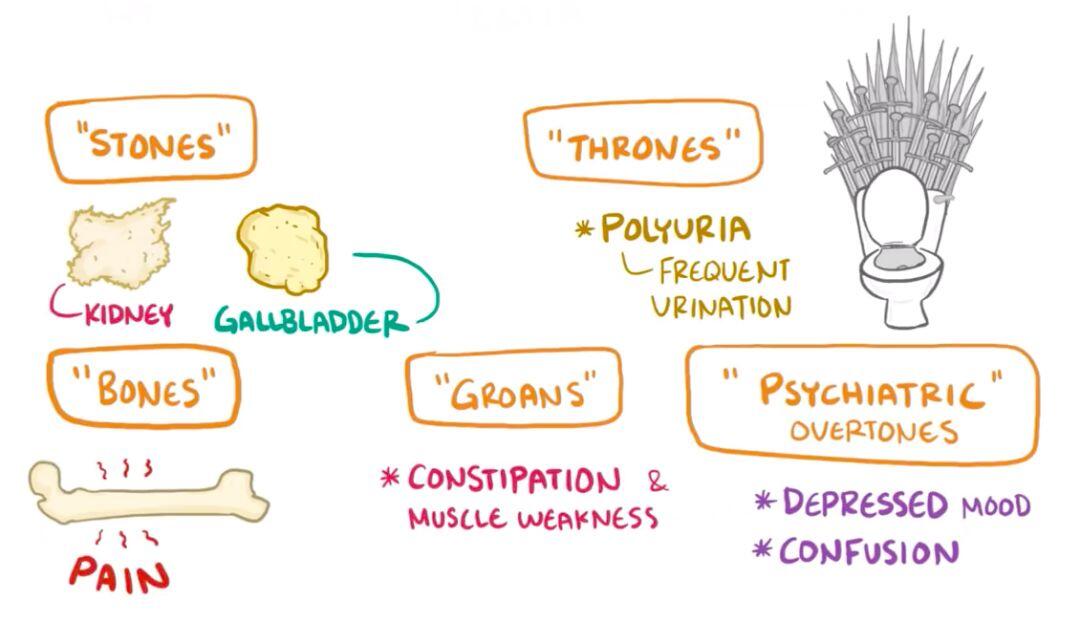
要记住这些症状,最常见的记忆方法是“结石、马桶、骨头、呻吟、和精神病预兆”——结石是钙基肾结石或胆结石;马桶指的是多尿、尿频,由钠和水的再吸收受损造成;骨头指的是为释放钙离子,由长期激素驱动脱钙引起的骨骼疼痛;呻吟是便秘和肌肉无力,这两种情况的部分原因是肌肉收缩减少;最后,精神病预兆指的是抑郁情绪和精神错乱等症状。
A common mnemonic to remember these symptoms is “stones, thrones, bones, groans, and psychiatric overtones.” Stones is for calcium-based kidney stones or gallstones that can form, thrones refers to the toilet to remind you of the polyuria or frequent urination that results from impaired sodium and water reabsorption. Bones is for bone pain that results after chronic hormone-driven demineralization in order to release calcium. Groans is for constipation and muscle weakness, both of which are partly due to decreased muscle contractions. Finally, psychiatric overtones refers to symptoms like a depressed mood and confusion.
诊 疗
低磷血症的诊断是基于磷酸盐水平低于2.5 mg/dL。治疗包括静脉注射或口服磷酸盐,密切监测血液水平。营养不良情况下,重要的是于一段时间内逐步增加热量和补充品摄入,以免引发再喂养综合征。
Diagnosis of hypophosphatemia is based on the phosphate level being below 2.5 mg/dL, and treatment involves giving intravenous or oral phosphate and close monitoring of blood levels. In cases of malnutrition, it’s important to gradually increase caloric intake and supplements over several days to avoid refeeding syndrome.
小 结
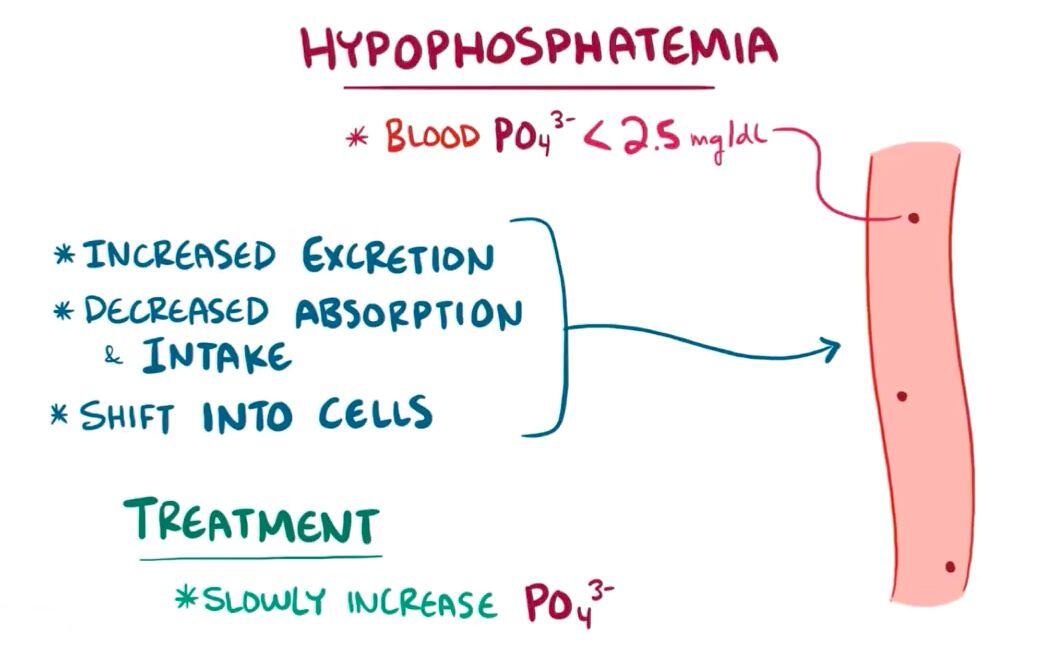
低磷血症,指的是血磷水平低于2.5毫克/分升;这可能是由于排泄增加,吸收和摄入减少,或磷酸盐从血液转移到细胞内部。不论病因如何,治疗通常是让磷酸盐水平缓慢增长,以恢复正常。
Alright, as a quick recap, hypophosphatemia describes a blood phosphate level below 2.5 mg/dL, which can result from increased excretion, decreased absorption and intake, or a shift of phosphate from the bloodstream to the inside of cells. Regardless of the cause, the treatment is typically a slow increase in phosphate levels to bring them back to normal once again.
别忘了上Quizlet
https://quizlet.com/_5r85zc
可以打小怪兽!
👾 👾 👾

Meducal:为医学打Call!
