


亨廷顿舞蹈症,简称HD,是一种罕见的神经退行性疾病,病因为重复的DNA序列引起异常蛋白质形成,导致运动异常和认知障碍——
制作:Osmosis;翻译:雪球滚滚;编辑:Meducal
亨廷顿舞蹈症
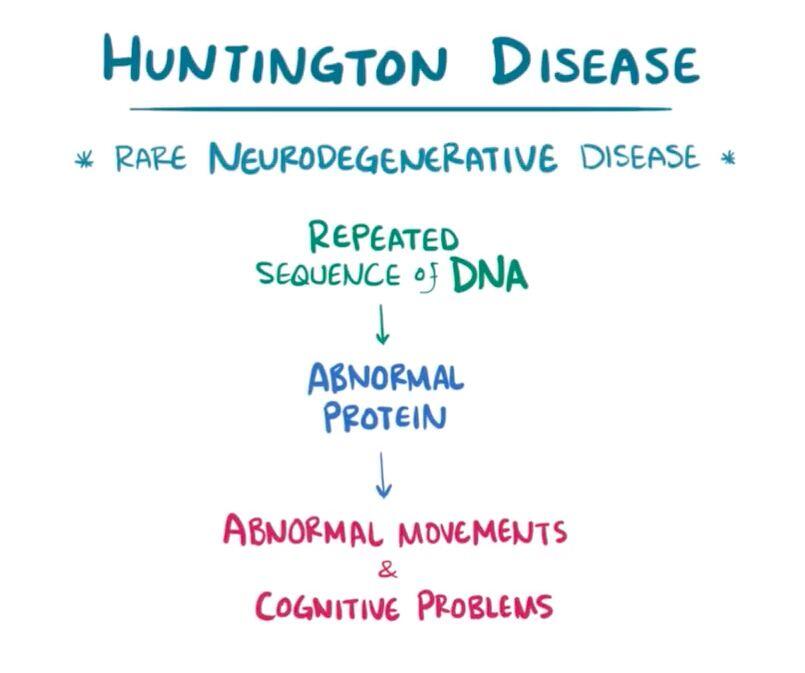
Huntington disease, or HD, is a rare neurodegenerative disease that involves a repeated sequence of DNA that causes an abnormal protein to form, leading to abnormal movements and cognitive problems.
常染色体显性遗传病
亨廷顿舞蹈症是一种常染色体显性遗传病,意味着可以代代相传。通常,患病家族每一代都有受累个体,因为患者(男性或女性)有50%的机会将致病基因遗传给孩子,从而导致子代患上这种疾病。
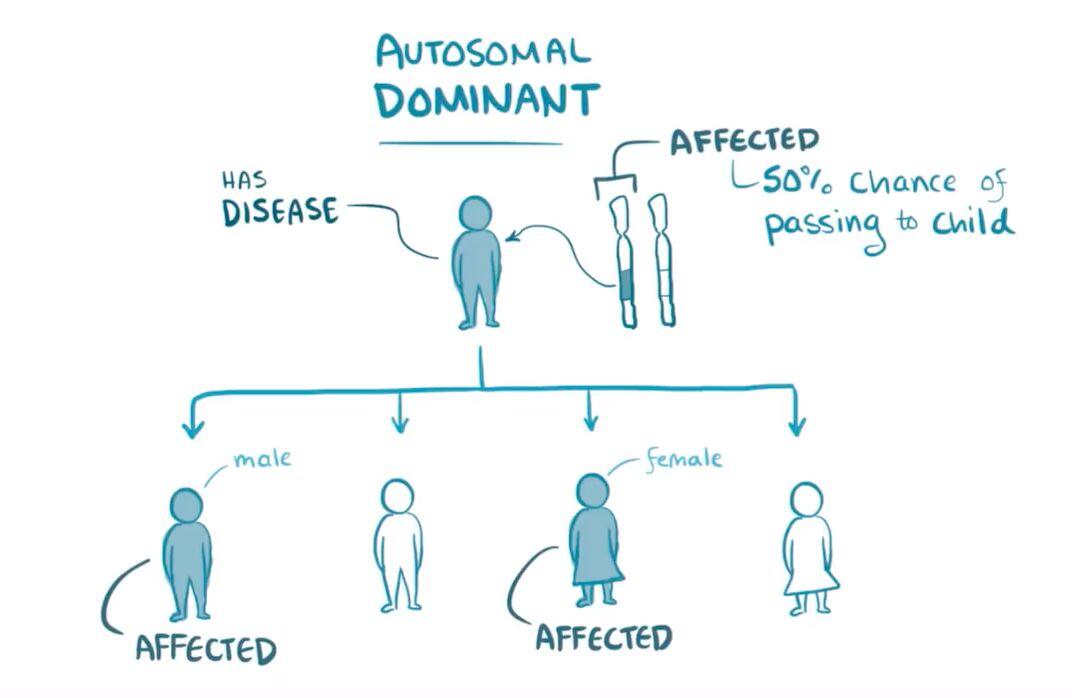
Huntington disease is an autosomal dominant genetic disorder, which means that one affected copy of a gene is enough to cause disease. Affected people are typically present in each generation, because an affected person (male or female) has a 50% chance of passing on the affected gene to a child, which causes that child to have the disease.
HTT基因
在大多数人体内,位于4号染色体上的huntingtin或HTT基因,含有一段三核苷酸重复序列,即核苷酸CAG连续重复拷贝10-35次;而HD患者,重复序列拷贝达到36次以上。
因为CAG序列对应的是谷氨酰胺 glutamine 氨基酸,所以在HD患者体内,huntingtin蛋白质上会有36个以上连续的谷氨酰胺。因此,HD除了是一种三核苷酸重复紊乱疾病,更准确地说,是一种多聚谷氨酰胺病。
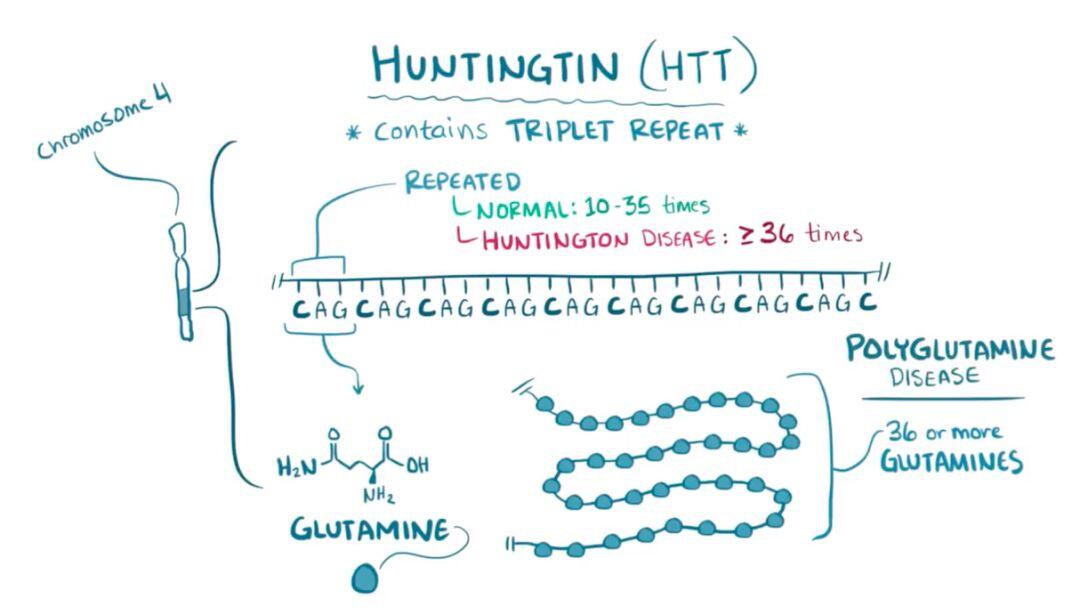
In most people, a gene called huntingtin or HTT on chromosome 4, contains a triplet repeat, where the nucleotides C, A, and G are repeated 10-35 times in a row. In people with Huntington disease, this repeat goes on for 36 or more times in a row. CAG codes for the amino acid glutamine, so people with Huntington disease patients will have 36 or more glutamines in a row in the huntingtin protein. So, in addition to being a triplet repeat disorder, HD is, more specifically, a “polyglutamine” disease.
谷氨酸增多
虽然异常增多的谷氨酰胺导致HD症状的机制还没有完全弄清楚,但一些线索表明,突变的蛋白质聚集在基底神经节尾状核和核壳层的神经元细胞内,导致神经元细胞死亡。
神经元细胞死亡可能与兴奋性毒性有关,即这些神经元细胞接受过度信号传递,引起细胞内钙离子浓度升高。
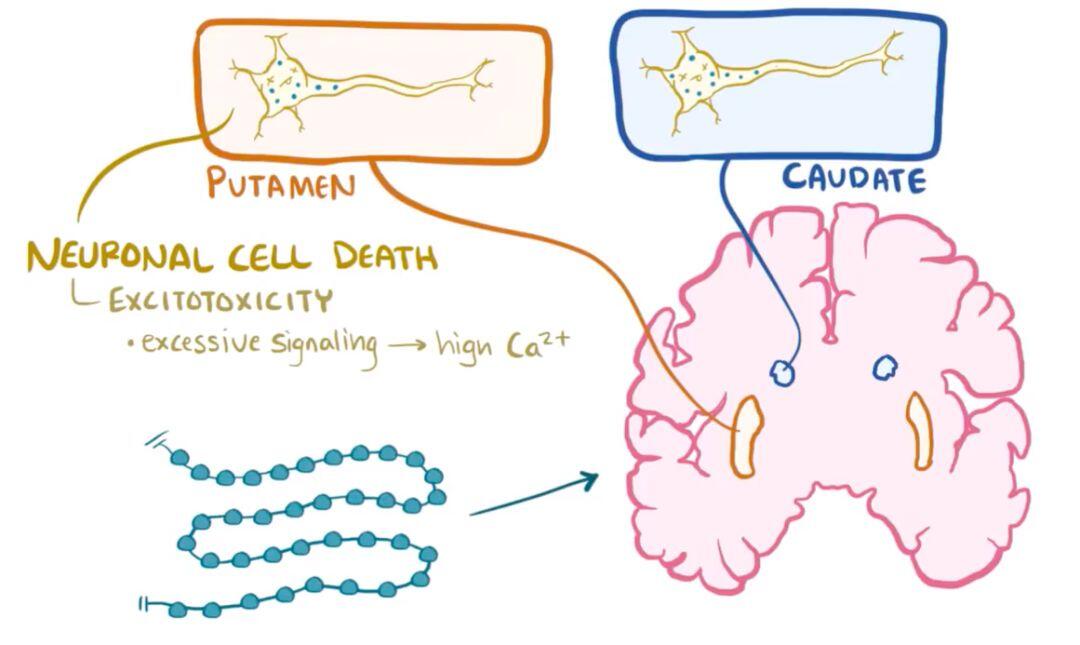
The specific way in which extra glutamines causes HD symptoms isn’t fully worked out, but some clues are that the mutated protein aggregates within the neuronal cells of the caudate and putamen of the basal ganglia causing neuronal cell death. Cell death might be related to excitotoxicity – which is excessive signaling of these neurons, which leads to high intracellular calcium.
DNA复制受影响
多余的CAG序列不仅影响huntingtin蛋白,也影响了DNA本身的复制。当HTT基因复制时,DNA聚合酶基本上无法识别校对CAG序列,意外地导致CAG序列重复。
在受精卵发育为胎儿最终长大成人的过程中,在成人精子与卵子产生前,会有几十次细胞分裂,每次都进行了一轮DNA复制,有很大几率导致重复异常增多,重复增加的次数越多越不稳定。
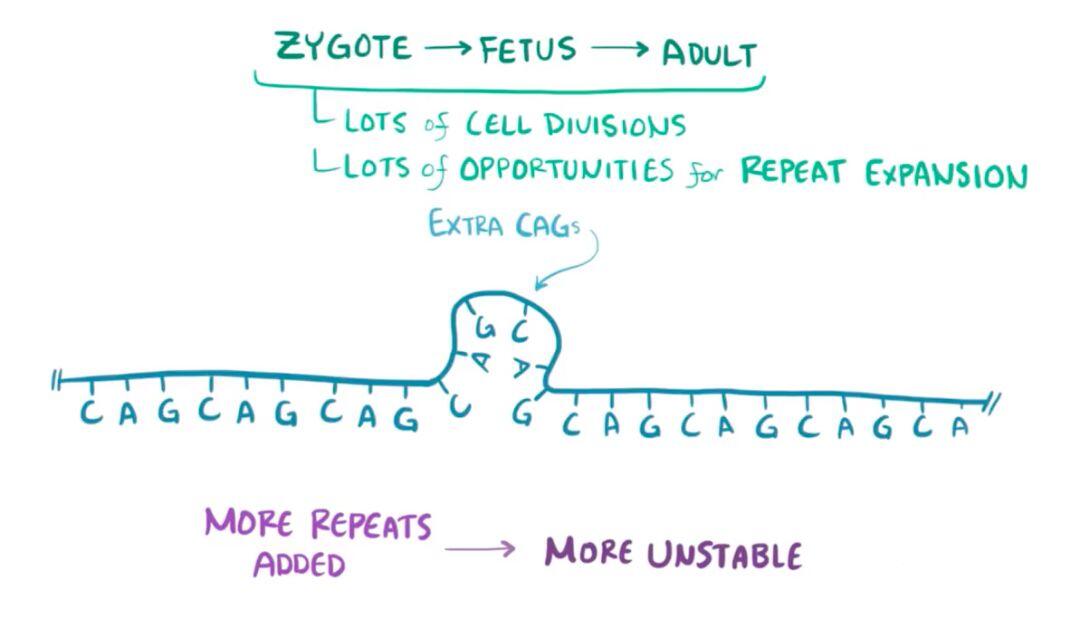
The expanded CAG repeats not only affect the huntingtin protein - they affect DNA replication itself. When copying the HTT gene, DNA polymerase can basically lose track of which CAG it’s on and accidently add extra CAGs. Since as a zygote develops into a fetus and eventually into a full adult, by the time sperm and eggs are created, several dozen cell divisions, each with a round of DNA replication have taken place, and so there have already been ample opportunities for repeat expansion, and the more repeats that’re added, the more unstable it gets.
这种先天性的基因遗传导致的异常,意味着HD患者的后代遗传得到的CAG重复序列比父母多。蛋白质重复数量越多,发病年龄越早。HD家族中连续后代中有发病提前倾向,称为早现现象 anticipation。
即使CAG序列重复只达到27-35次偶尔也会产生异常,这些被称为突变前等位基因 pre-mutation alleles。尽管不会引起疾病,但仍可能会发展为36次以上CAG序列重复的突变。
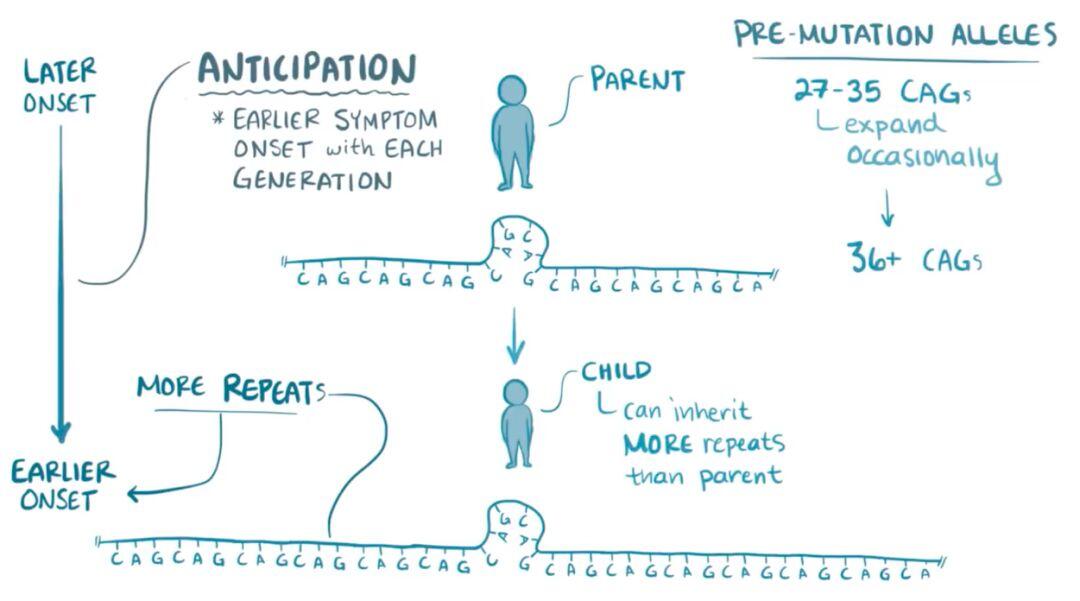
This expansion of the originally inherited gene means a child of a parent with HD can inherit even more CAG repeats than the parent did. The higher the number of repeats in the protein, the earlier the age when a person starts having symptoms. This phenomenon is called anticipation, which means that Huntington disease families often show earlier symptom onset with each generation. Even repeats of 27-35 CAGs can expand occasionally; these are called “pre-mutation” alleles, since they don’t cause the disease, but they’re set-up for developing a mutation of 36 or more CAGs.
重复序列扩增
这种序列重复增加称为重复序列扩增 repeat expansion,精子产生时发生异常的几率比卵子多,因此当父亲为受累个体时,会发生早现现象和新的疾病等位基因。
HD外显率为100%,意味着,尽管有些体内CAG序列重复次数在36-40间的受累个体,在偶然情况下没有症状表现,但只要达到36次以上就算罹患HD。基于HD的外显性,HD测试即检测CAG重复序列的数量十分有助于确定高危人群 at-risk individual是否会发展为HD。
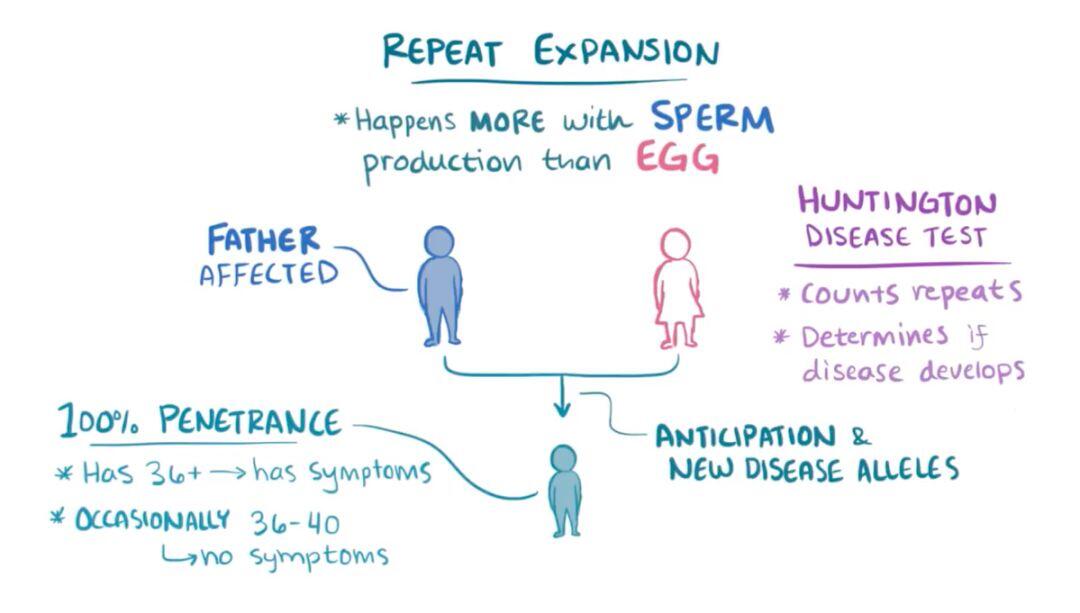
This process of adding more repeats is called repeat expansion and it happens way more in the production of sperm than of eggs, so both anticipation and new disease alleles generally happens when the father is the affected parent. HD basically has 100% penetrance, meaning that, in this case, if they have 36+ repeats, they have the disease, although occasionally people with 36-40 repeats don’t have any symptoms. Because of this penetrance, the test for HD, which counts the number of CAG repeats, is really good at determining whether HD will develop in an at-risk individual.
症 状
好了,HD的症状表现为进行性中枢系统障碍 Progressive CNS Disturbances,包括运动障碍、认知障碍、和精神异常。
发病年龄平均为40岁左右,不过记住,发病年龄取决于CAG序列重复的数量。随着时间的推移,如果由尾状核和壳核构成的背侧纹状体内死亡的神经元细胞越来越多,会引起该区域的脑组织减少,进而导致侧脑室 lateral ventricles 扩大。
Now the symptoms of HD involve progressive CNS disturbances including movement, cognitive, and mood symptoms. The average onset is around 40 years old, although remember the age of onset depends on the number of CAG repeats. Over time, if enough of the neurons die in the caudate and putamen, which together form the dorsal striatum, then it can cause actual loss of brain tissue volume in that area and expansion of the lateral ventricles.
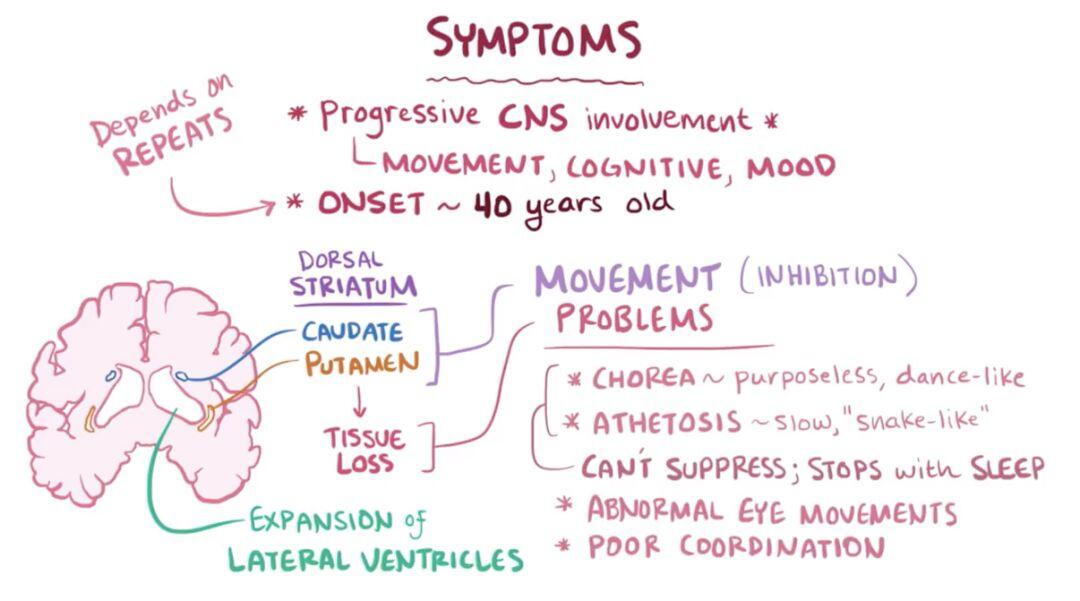
这个区域对人体运动功能产生重要作用(尤其是抑制运动),这就是为什么基底节神经元细胞死亡会导致运动障碍的原因,运动障碍包括表现为不自主的舞蹈样震颤动作的舞蹈病 chorea 以及动作缓慢、扭动 writhe 剧烈的手足徐动症 athetosis,这些“蛇一般”的运动主要影响手指。这些无意识的动作不受意识控制,仅在睡眠时停止。其他运动障碍包括眼球运动异常和协调能力差。
These areas play an important role in movement(particularly inhibiting it), and that’s why neuronal death in the basal ganglia causes movement problems like chorea which are purposeless, dance-like jerking movements, and athetosis which are slower, writhing, “snake-like” movements mainly affecting the hands. These involuntary movements can’t be consciously suppressed and stop only with sleep. Other motor problems include abnormal eye movements and poor coordination.
这些区域的脑组织减少也会导致心理问题,如痴呆、人格改变和抑郁。
Loss of tissue in these regions can also lead to psychological problems as well, like dementia, personality changes, and depression.
治 疗
尽管这可能有点过于简单化,但罹患HD患者的大脑内GABA和乙酰胆碱 acetylcholine 的水平减少,多巴胺水平增高。
多巴胺水平的增高解释了为什么神经抑制剂 dopamine receptor(多巴胺受体拮抗剂 antagonists)和丁苯那嗪 tetrabenazine(中枢多巴胺耗竭剂 depletes dopamine)被用来治疗亨廷顿舞蹈症患者的舞蹈症。
不幸的是,这些药物治疗并不能影响整体生存年限,患者通常在诊断出患病10-20年后死亡,死因通常是吞咽障碍引起的吸入性肺炎 aspiration pneumonia 或自杀。
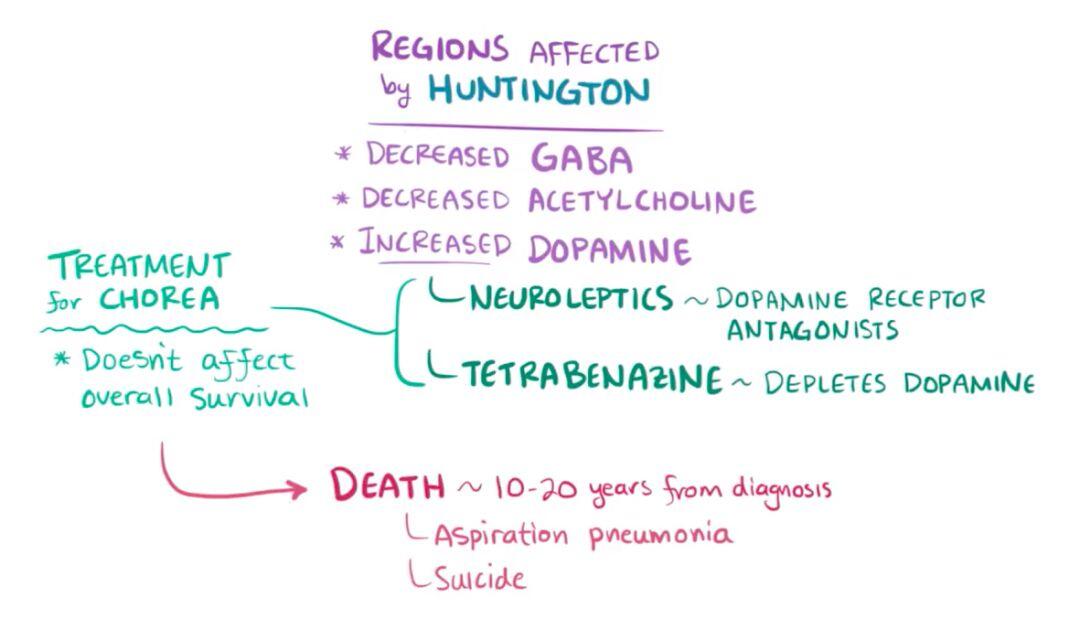
Even though this might be over simplifying things a bit, the brain regions affected by HD have decreased GABA and acetylcholine, and increased dopamine levels. This increased dopamine helps explain why neuroleptics, which are dopamine receptor antagonists, and tetrabenazine which depletes dopamine, are used to treat chorea in patients with Huntington disease. Unfortunately, these and other pharmacologic treatments don’t affect overall survival, and death usually happens within 10-20 years of diagnosis, often by aspiration pneumonia on account of dyscoordinated swallowing, or suicide.
除HD外,还有数十种三核苷酸重复紊乱疾病 triplet repeat disorders,其中一些为在不同基因上发生CAG序列重复拷贝增多,还有一些为不同类型碱基序列拷贝增多异常。如肌强直性营养不良 myotonic dystrophy(CTG重复),Friedreich型共济失调 Friedreich ataxia(GAA重复),脆性X染色体综合征 fragile X syndrome(CGG重复)。
There are actually several dozen other triplet repeat disorders in addition to huntington disease, some of which also have CAG as the repeated nucleotides but in a different gene, others of which, though, have different repeats, like myotonic dystrophy (a CTG repeat), Friedreich ataxia (a GAA repeat), and fragile X syndrome (a CGG repeat).
小 结
亨廷顿舞蹈病,是一种常染色体遗传病,由HTT基因表达产生36个以上CAG碱基序列拷贝异常增多,该异常导致基底节神经细胞死亡,引起运动障碍包括舞蹈症和手足徐动症以及抑郁、痴呆等精神类疾病。
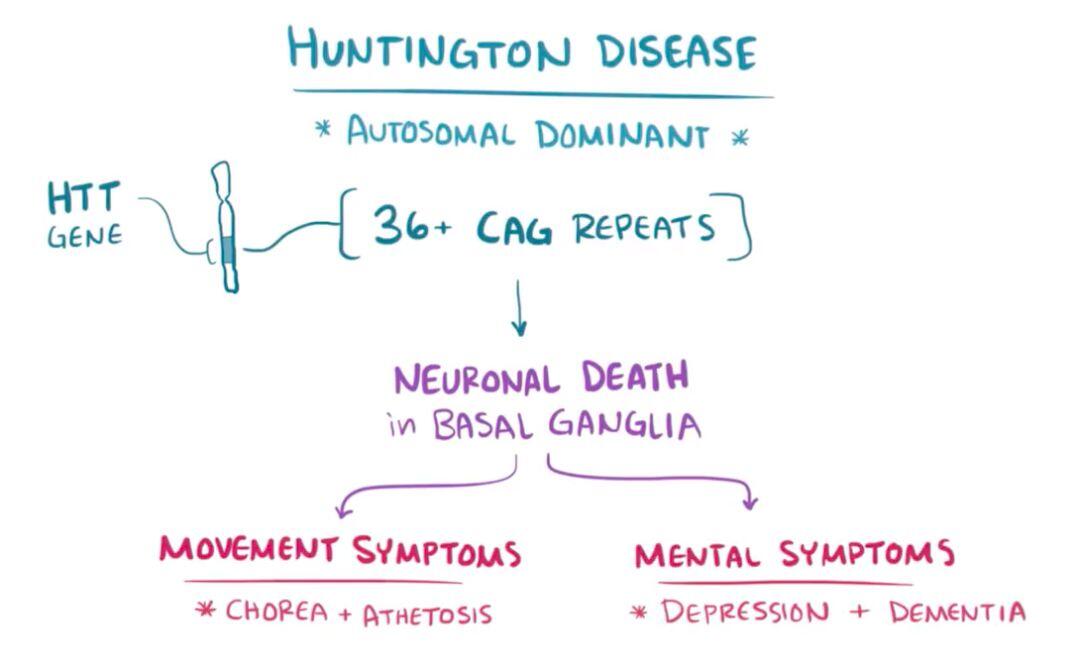
Alright so as a quick recap - Huntington disease is an autosomal dominant disease caused by having 36 or more trinucleotide repeats of CAG in the huntingtin gene, which causes neuronal death in the basal ganglia, causing movement symptoms like chorea and athetosis as well as mental symptoms like depression and dementia.
前方高能预警!!!
👾
👾
👾
别忘了上Quizlet
https://quizlet.com/_5q0dtm
有很多词兽等着你!
Biu!Biu!Biu!

Meducal:为医学打Call!
下 期 见
🤟🏼
