
出品:Osmosis医学
翻译:黄新鑫;校对:ivlvn
难词要点:https://quizlet.com/_5liedn
"深静脉"即走行于肌肉间以回流至心脏的静脉,相对的,浅表静脉即显露在表面的静脉。血栓则是一个血凝块,因此深静脉血栓(DVT)即在深静脉内形成的血凝块。
“Deep vein” refers to the veins that typically run between muscles as they travel back towards the heart, as opposed to superficial veins that you can see on the surface, and “thrombosis” refers to a blood clot. So a deep vein thrombosis or DVT is a blood clot in one of those deep veins.
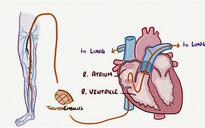
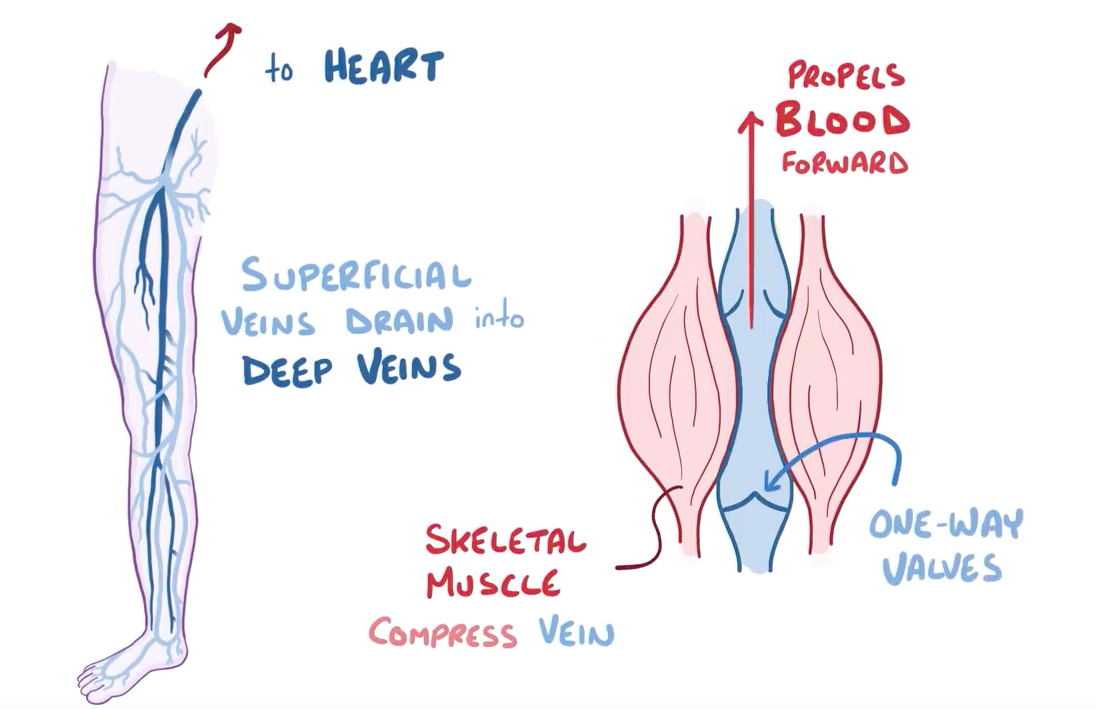
通常来说,人体所有组织器官的血流回流至心脏都是通过不断汇合的静脉系统完成的。浅表静脉回流至深静脉系统是通过骨骼肌的肌肉泵作用完成的。它具体的机制是通过围绕在血管周围的肌肉挤压静脉来推动血流回流,而静脉则通过单向瓣膜来阻止静脉逆流的。最终,所有的血液都回流至上腔静脉和下腔静脉最终抵达右心房。接着,血液从右心房进入右心室并被泵入肺动脉最终进入肺。
Normally, blood makes it back to the heart from all of the tissues and organs through a network of veins that merge over and over. Superficial veins drain blood into deep veins, which rely on the skeletal muscle pump to move blood forward. The way it works is that the surrounding skeletal muscles compress the vein and propel blood forward, and the veins prevent blood from moving backwards by using one-way valves. Ultimately, all of the blood ends up in the superior or inferior vena cava and dumps into the right atrium. From there, the blood goes into the right ventricle and gets pumped into pulmonary artery and eventually into the lungs.
病理
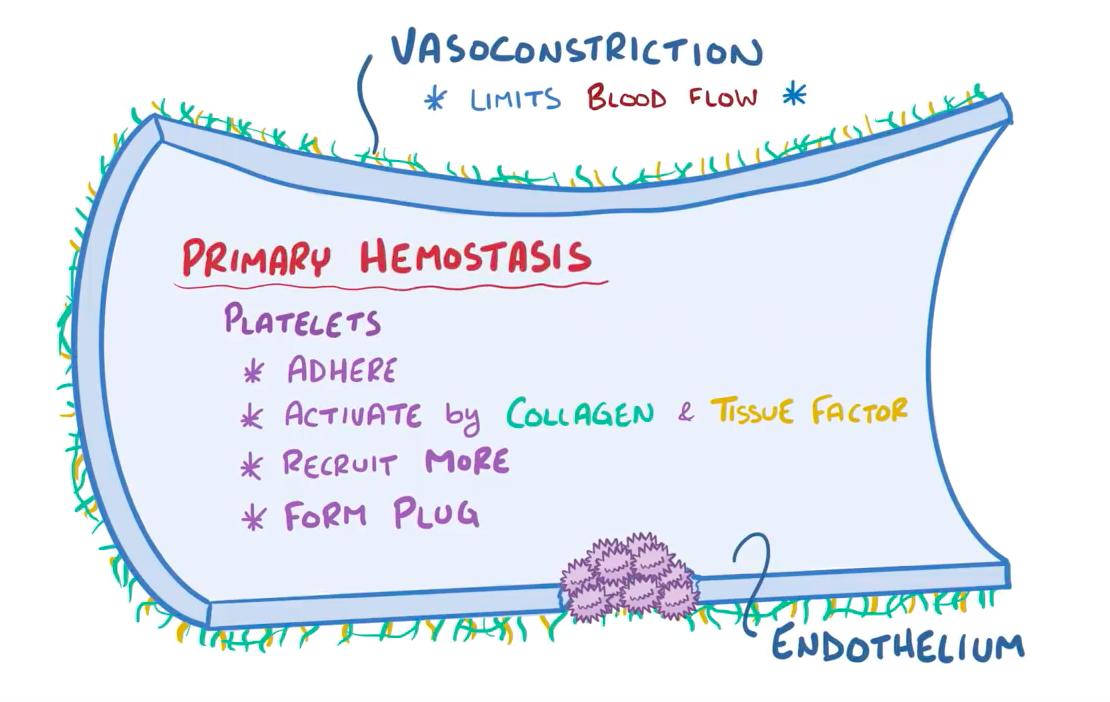
深静脉血栓最常见于双下肢,尤其是小腿。血栓可以在浅表静脉或者是深静脉中形成当然也可以在全身各个部位形成。通常,这一过程由血管内皮损伤开始。之后立即发生的事件是血管收缩,以限制血流量。接着,血小板粘附至损伤的血管壁并且被胶原和组织因子(平常被完好的血管壁隔离在血管内)活化。这些血小板随即招募其他的血小板来形成血小板血栓。这一过程即初期止血。
A deep vein thrombosis most commonly develops in the lower legs, below the knee, although a blood clot can form in both superficial and deep veins, and also in other parts of the body as well. Normally, the process starts with damage to the endothelium, or inner lining of blood vessel walls, after which there’s an immediate vasoconstriction or narrowing of the blood vessel which limits the amount of blood flow. After that, some platelets adhere to the damaged vessel wall, and become activated by collagen and tissue factor, proteins that are normally kept separated from the blood by an intact endothelium. These platelets then recruit additional platelets to form a plug. The formation of the platelet plug is called primary hemostasis.
之后,凝血级联反应被激活。首先,血液里有一系列的凝血因子,它们大部分都是肝脏合成的蛋白质。它们平时处于休眠状态,随血流流动。当某一个凝血因子被活化即发生蛋白水解反应时,凝血级联过程就开始了。然后这一活化的凝血因子激活另一个未活化的凝血因子,以此类推。最后一步是纤维蛋白原活化为纤维蛋白。纤维蛋白聚集成网包绕这血小板。这一加强血小板血栓强度的过程即为二期止血,最终使得伤口上的血栓很牢固。
After that, the coagulation cascade is activated. First off in the blood there’s a set of clotting factors, most of which are proteins synthesized by the liver, and usually these are inactive and just floating around in the blood. The coagulation cascade starts when one of these proteins gets proteolytically cleaved. This active protein then proteolytically cleaves and activates the next clotting factor, and so on. The final step is activation of the protein fibrinogen to fibrin, which deposits and polymerizes to form a mesh around the platelets. So these steps leading up to fibrin reinforcement of the platelet plug make up the process called secondary hemostasis and results in a hard clot at the site of the injury.
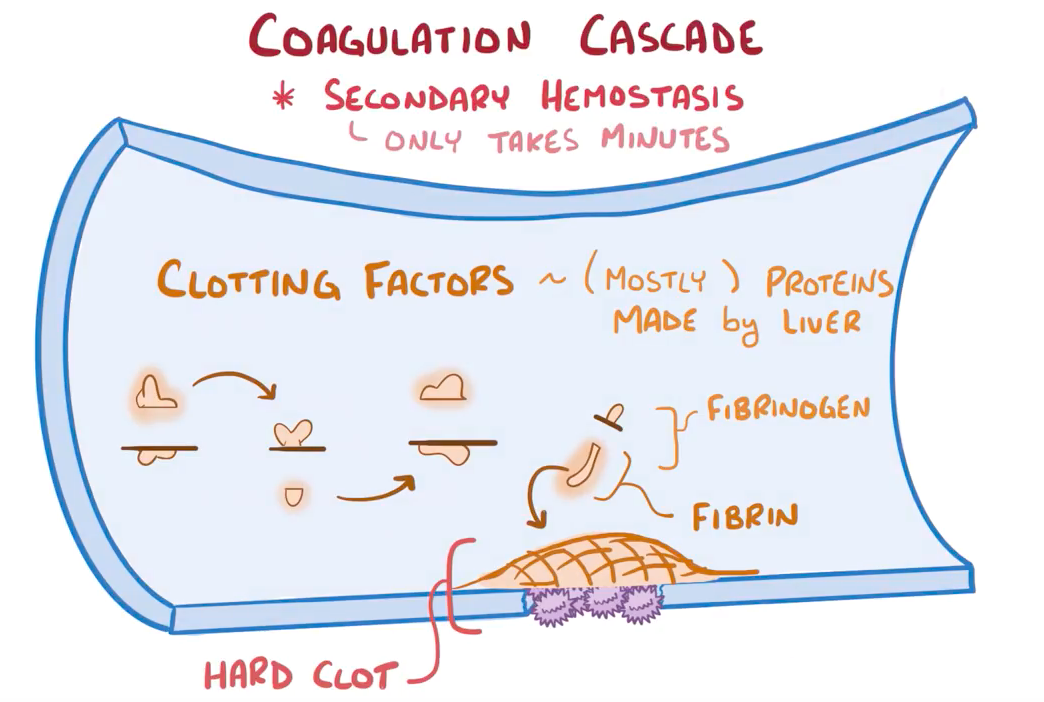
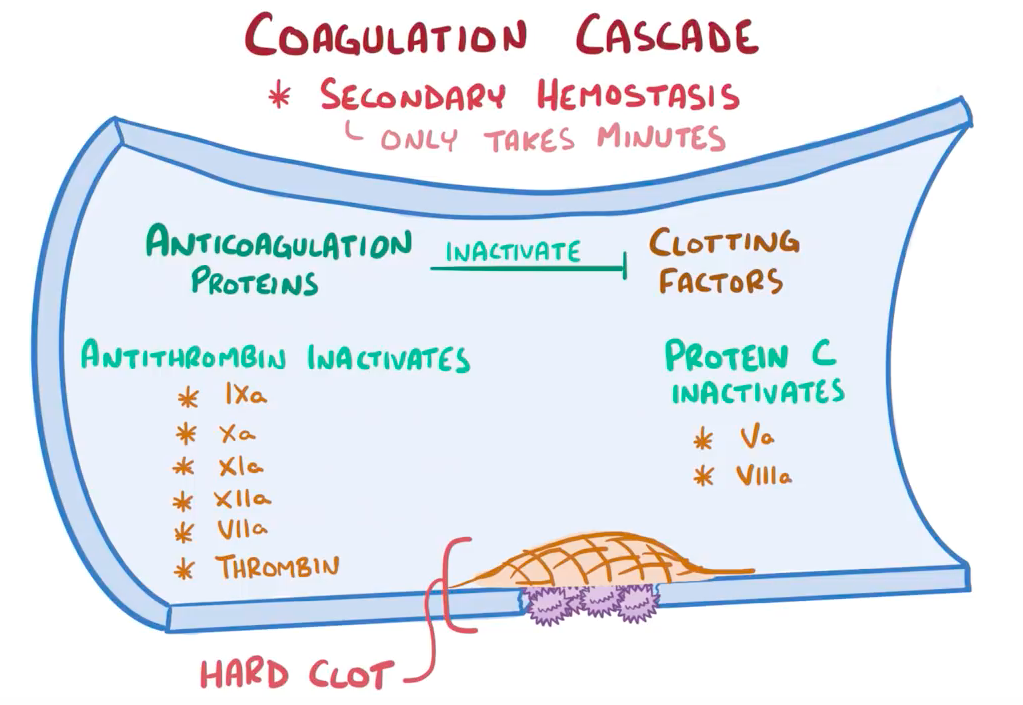
从伤口暴露至血凝块形成的这一级联放大反应仅需要几分钟就可以完成。因此这一级联反应的活化同时需要抗凝因子的精密调控。这些抗凝因子主要是作用于关键的凝血因子并且可以使它们失活。比如说,抗凝血酶可以使活化的九因子、十因子、十一因子、十二因子、七因子以及凝血酶失活。蛋白C可以使活化的五因子和八因子失活。
The cascade has a huge degree of amplification and takes only a few minutes from injury to clot formation. So the activation of the cascade is carefully controlled by anticoagulation proteins that target and inactivate key clotting factors. For example, antithrombin inactivates Factors IXa, Xa, XIa, XIIa, VIIa and thrombin while protein C inactivates Factors Va and VIIIa.
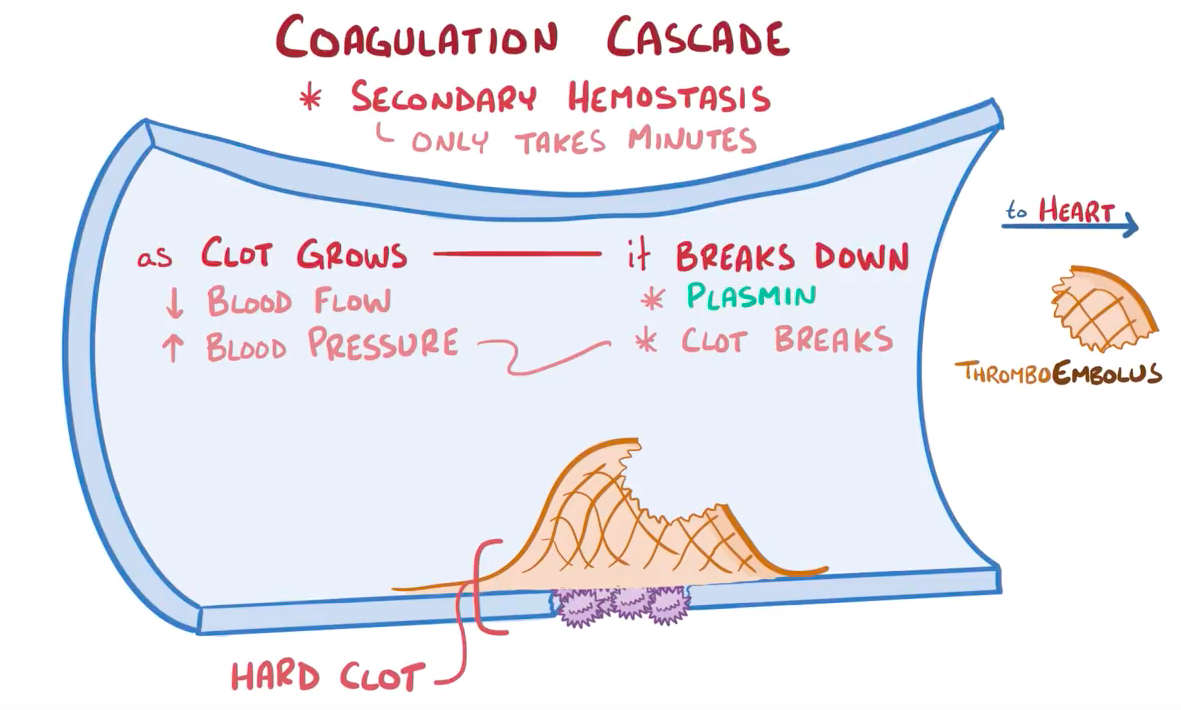
随着血凝块体积增大,限制了通过的血流量,使得静脉压增高。通常情况下血栓开始溶解,比如说纤维蛋白溶解酶可将纤维蛋白溶解成D二聚体的片段。但是有时候,随着静脉压增加,一部分血栓可以脱落下来形成血栓栓子,并且随着血流到达心脏。
As the clot grows in size, it limits the amount of blood able to pass by, and pressure in the vein increases. Usually the clot might start naturally breaking down, for example, enzymes like plasmin break down fibrin into fragments called D-dimers. But sometimes, the increased pressure in the vein can cause a part of the main clot to break free, becoming an embolus which can travel downstream towards the heart.
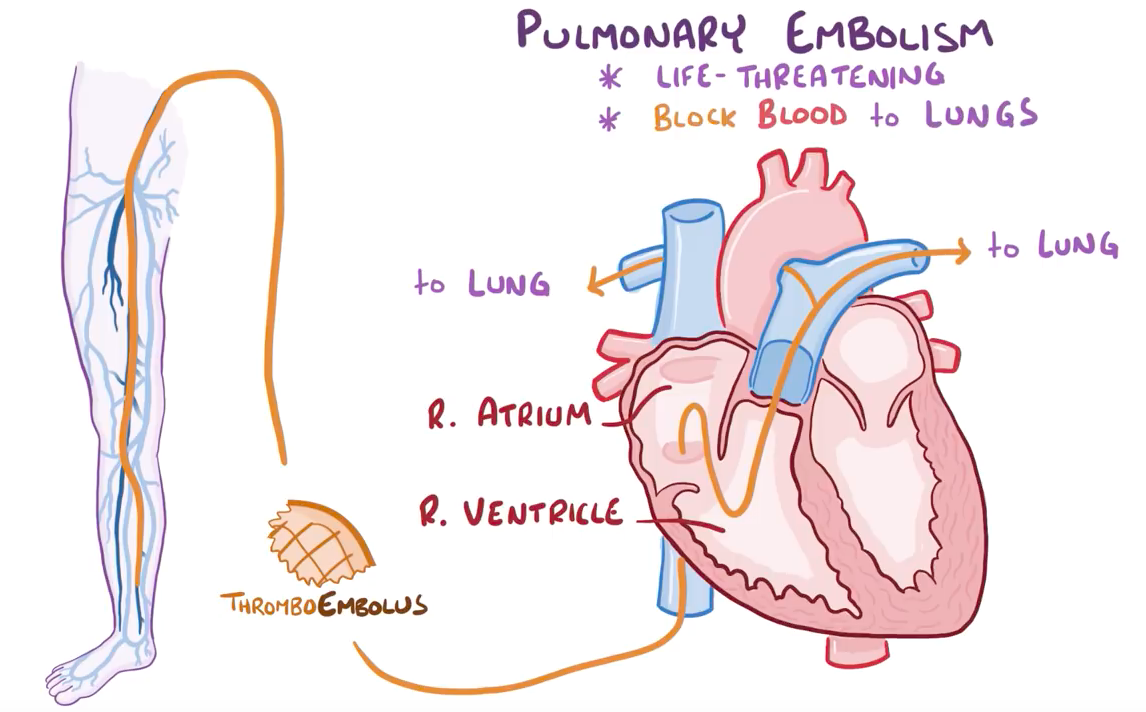
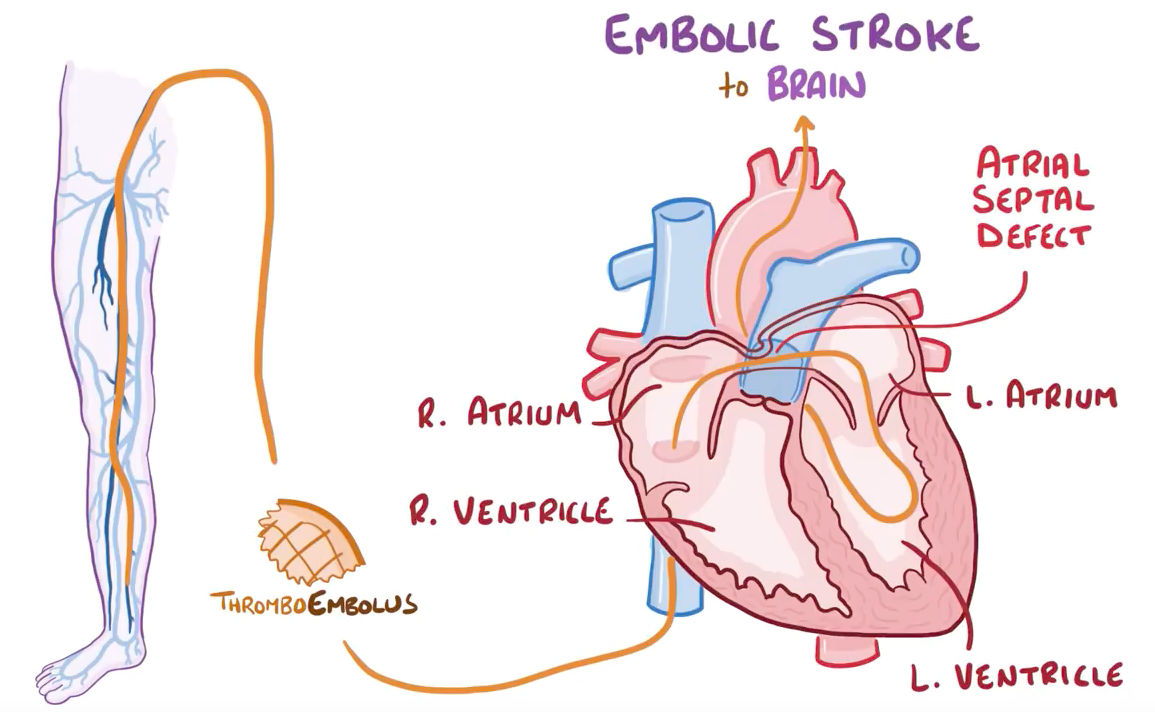
这就是血栓栓子的形成过程,它可以从血栓形成的部位随血流到达右心房、右心室,最终被泵入肺循环中造成肺栓塞。肺栓塞是危及生命的事件,因为它阻断了血液在肺循环的摄氧过程。
When that happens, a thromboembolus - a blood clot on the move - can move from the spot of clot formation and get into the right atrium, and then into the right ventricle, and get pumped into the lungs where it can get lodged some place - causing a pulmonary embolism. This is a life-threatening situation because it literally blocks blood from getting into the lungs to pick up oxygen.
在某些房间隔缺损的患者中,即右心房与左心房之间有一个小的缺口。在这些患者中,栓子可能从右心房直接进入左心房,而不需要通过肺循环了。不幸的是,进入左心室的栓子可以到达身体各个部位的血管,当进入大脑阻断脑组织的血供时,就会导致栓塞性脑卒中。
Now, sometimes, individuals might have an atrial septal defect, a small opening between the right and left atrium. In these individuals, it’s possible for a blood clot to go from the right atrium to the left atrium bypassing the lungs completely. Unfortunately, the clot goes into the left ventricle and can get pumped out to the body often heading towards the brain and cutting off a blood vessel serving the brain, causing an embolic stroke.
病因
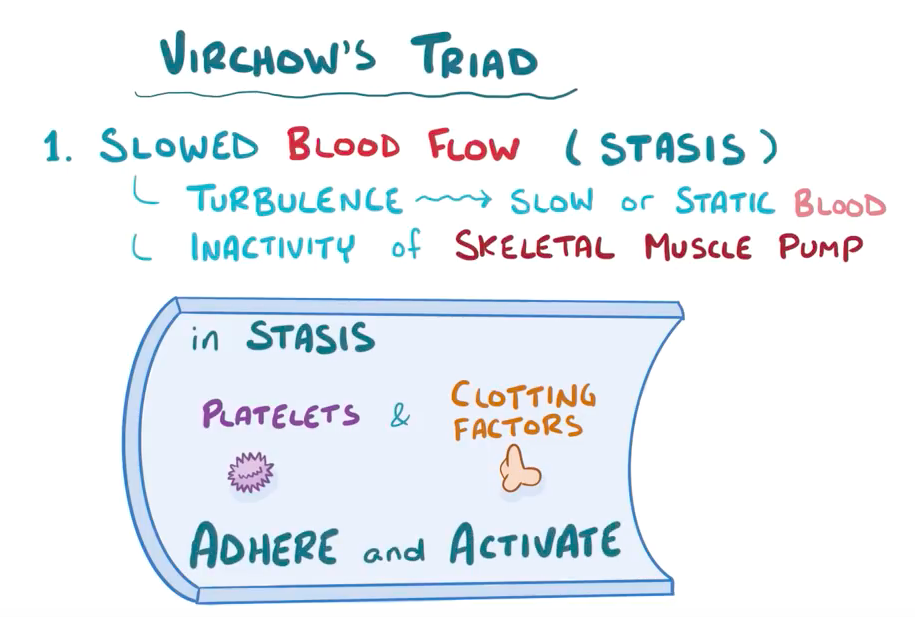
根据Virchow三角理论,DVT形成有三个主要因素:第一个因素是血流速度减慢即血流瘀滞。通常血流在血管中以层流的形式流动,但是如果血流形式变成湍流。层流的模式被打破,血流流速就会减慢甚至瘀滞。血流瘀滞也可以发生在骨骼肌的肌肉泵长时间不做功的情况下,比如说长时间卧床,长时间的航程或车程,甚至在孕妇中,胎儿挤压到周围的静脉也可以导致这种情况。当血流瘀滞发生时,血小板、其他凝血因子、内皮细胞长时间的互相作用,最终导致凝血级联反应的激活。
There are three main factors that lead to a deep vein thrombosis, which are referred to as Virchow’s triad. The first factor is slowed blood flow, called stasis, in the veins. Typically, blood continuously flows smoothly through the blood vessel, but if the blood flow becomes turbulent, the linear flow is disrupted and slow or static pockets of blood are formed. Stasis can also occur during long periods of inactivity of the skeletal muscle pump like bed rest or long flights and car rides, or even during pregnancy when a growing baby compresses nearby veins. During stasis, platelets and other clotting factors contact the endothelium, and prolonged interaction leads to clotting factor adhesion, and, ultimately, activation of the clotting cascade.
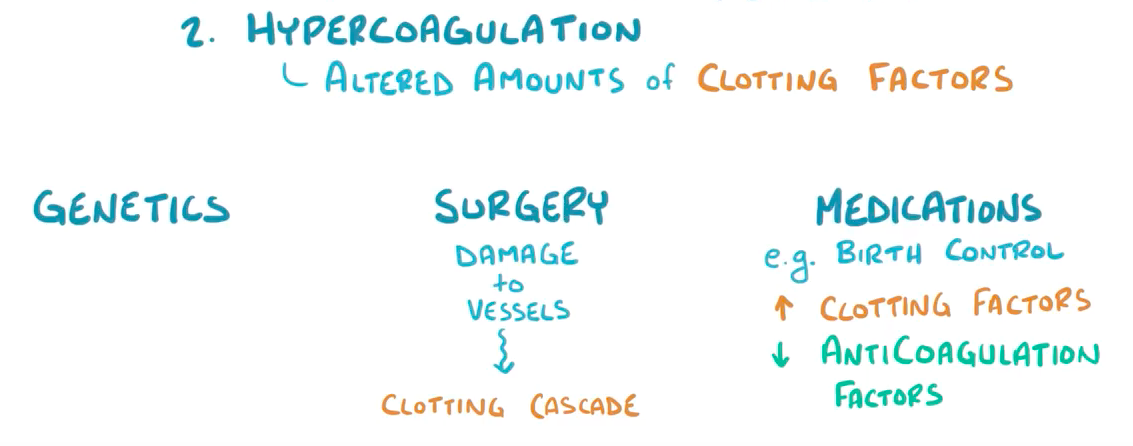
第二个因素是高凝状态,高凝状态下凝血因子活性增强,可以促进初期或二期凝血。高凝状态可以是先天性的,也可以是获得性的,比如说术后,或者使用特定药物例如避孕药。在手术过程汇总,血管壁的物理损伤激活了凝血系统。而避孕药使得凝血功能亢进,因为避孕药增强了凝血因子的功能,降低了抗凝系统的功能,比如说蛋白C以及抗凝血酶的功能。
The second factor is a state of hypercoagulation, where altered amounts of clotting factors increase primary or secondary hemostasis. This can occur for genetic or acquired reasons like surgery or taking certain medications like birth control pills. During surgery, physical damage to vessels activates the clotting cascade. And birth control pills tip the balance towards clotting because they increase the levels of clotting factors and decrease the levels of some anticoagulation factors like protein C and antithrombin.
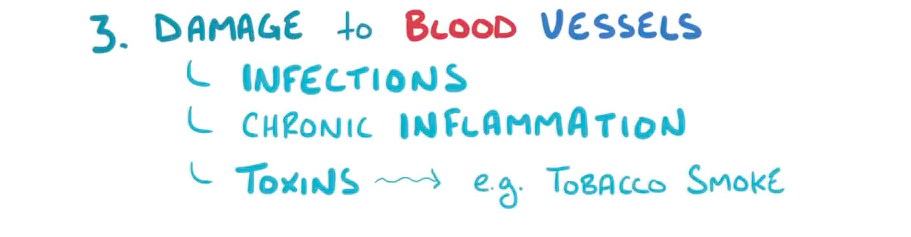
第三个因素是血管壁损伤,这使得组织因子和胶原得以暴露。损伤可以来自感染,慢性炎症,或者是在烟草中的发现的毒素。
A third factor is damage to the endothelial cell lining of a blood vessel that exposes tissue factor and collagen. Damage can be caused by infections, chronic inflammation or toxins like those found in tobacco cigarettes.
症状
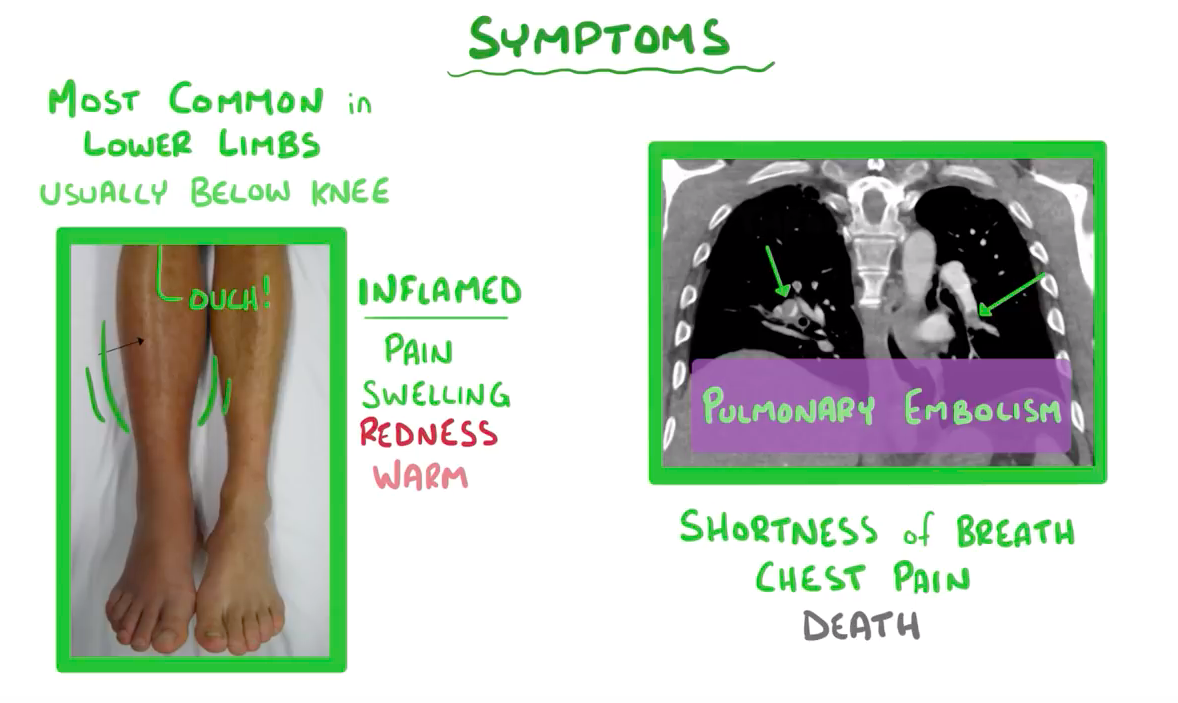
深静脉血栓最常见于下肢尤其是小腿。它可引起血栓周围炎,红肿热痛。当肺栓塞发生时,可以导致突发性的呼吸困难可胸痛。甚至可以是致死性的,这主要取决于受累的肺组织有多少。
A deep vein thrombosis is most common in a limb - usually the lower leg, and it can make the area around the clot inflamed - causing pain, swelling, redness, and warmth. If a pulmonary embolism occurs, it can cause sudden shortness of breath and chest pain, and depending on the amount of lung tissue affected, it can even be fatal.
诊断
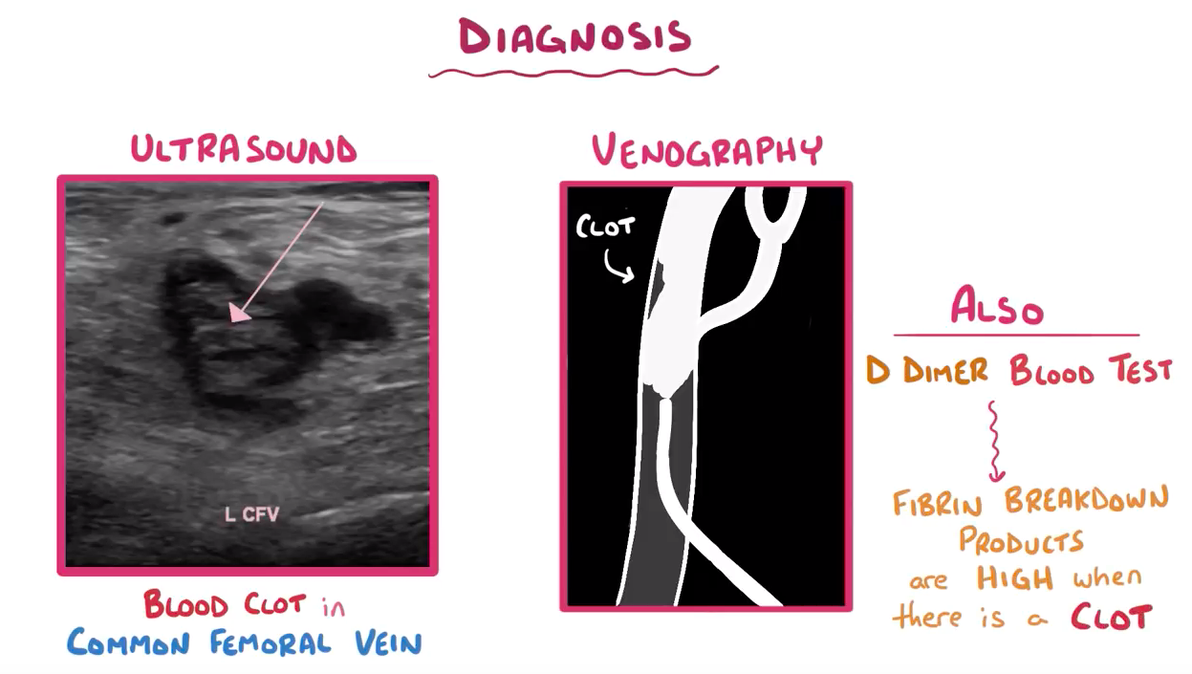
超声可以用来诊断DVT,当超声无法做出诊断时,也可以采用静脉血管造影,一种有创的检查方法。这指的是经静脉注入造影剂,通过X线来辨认阻塞。另外,D-二聚体的检测也很有帮助。因为纤维蛋白溶解的水平在血栓存在时往往更高。
The diagnosis of a deep vein thrombosis can be made by ultrasound. Alternatively, if the ultrasound is inconclusive a more invasive venography procedure can be performed. This is when a dye is injected into the veins and an X-ray is taken to identify blockages. Also, a D-dimer blood test can be helpful, because fibrin break-down product levels are usually higher in presence of a clot.
治疗
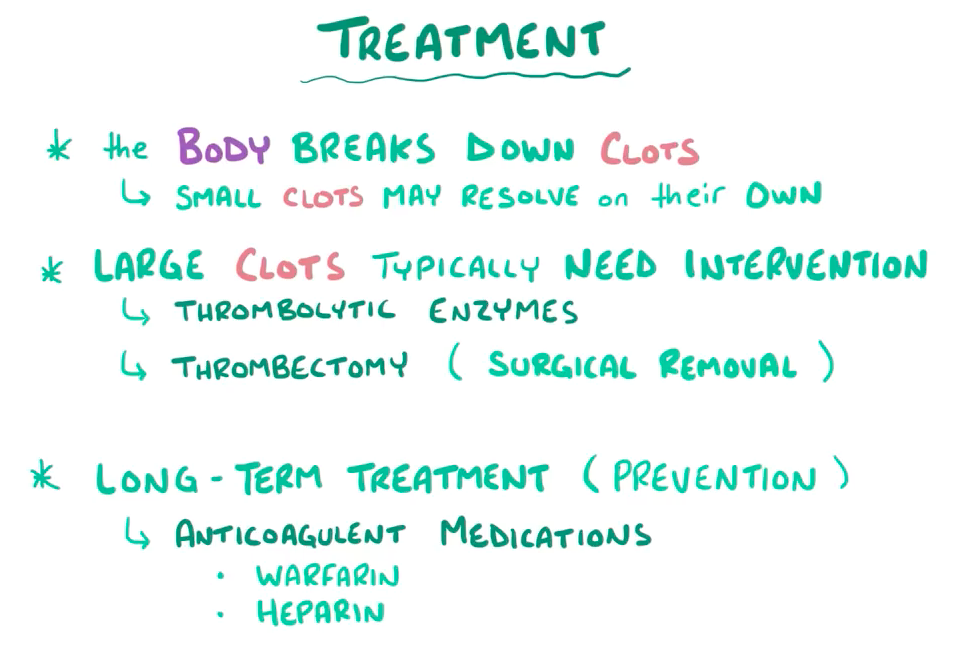
一般而言,机体始终处在制造和溶解血栓的动态过程中,一些小的血栓往往会随着时间自己溶解,但是导致临床症状的大血栓则需要人为干预。溶栓疗法有助于溶解血栓,也可以通过外科介入的方法取出血栓。预防DVT的长期疗法包括抗凝药物如华法林或肝素的使用,可以阻断凝血反应。
Generally speaking the body makes and breaks blood clots all the time, and some small clots resolve on their own over time, but large clots that cause symptoms typically need an intervention. Thrombolytic enzymes can be given to help break down the clot or a thrombectomy can be done to surgically remove the clot. Long-term treatment to prevent future thrombi from forming can include anticoagulant medications like warfarin or heparin, which inhibit the clotting cascade and prevent clot formation.
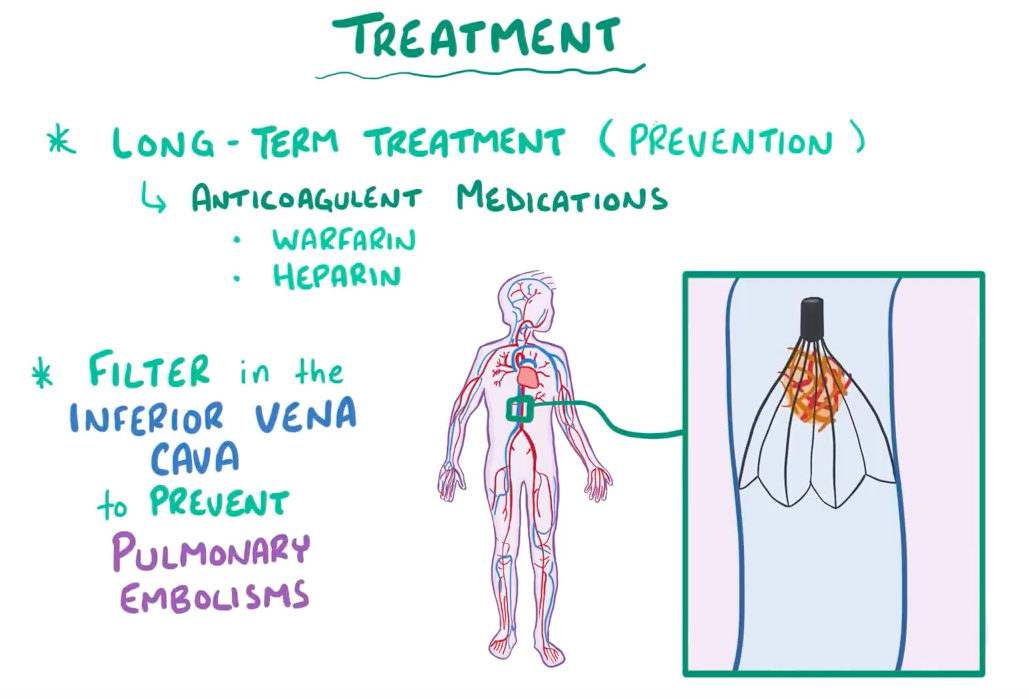
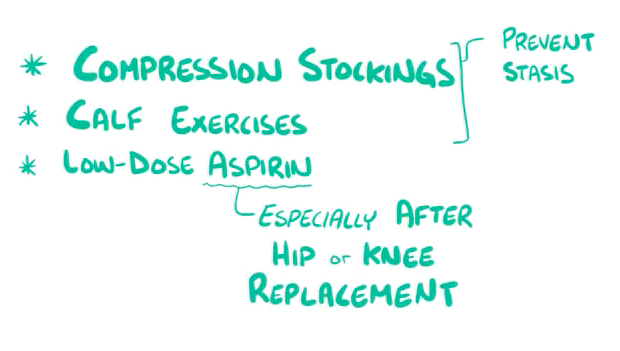
也可以放置下腔静脉滤器来防止肺栓塞的发生。DVT的预防也很重要,弹力袜以及长期制动患者进行规律的小腿活动来防止血流瘀滞也是有必要的。小剂量的阿司匹林也有预防作用,尤其是对于髋关节/膝关节置换术后的这种有DVT有高危因素的患者。
Also, a filter can be surgically placed in the inferior vena cava to prevent pulmonary embolisms. Prevention of a deep vein thrombosis is also important - compression stockings and frequent calf exercises during long periods of immobilization can help move blood through the veins to prevent stasis. Low-dose aspirin has also been shown to help prevent the formation of blood clots, especially if there is an increased risk in DVT because of a hip or or knee replacement surgery.
简扼回顾一下,DVT指的就是深静脉的血凝块,尤其是下肢。三大危险因素包括血流瘀滞,高凝状态,内皮损伤。引用自Virchow三角理论。DVT也可以脱落下血栓栓子至肺部导致致命的肺栓塞。
So, a quick recap: A deep vein thrombosis is a blood clot found in the deep tissue, particularly in the lower leg. The three main causes: stasis, hypercoagulation of clotting factors, and damage of the endothelial lining are often referred to as Virchow’s Triad. A deep vein thrombosis can also send off a thromboembolism to the lungs which can cause a sudden pulmonary embolism which can be fatal.
【开源医维传送门】
https://www.osmosis.org/invite/gL9HB3x
