
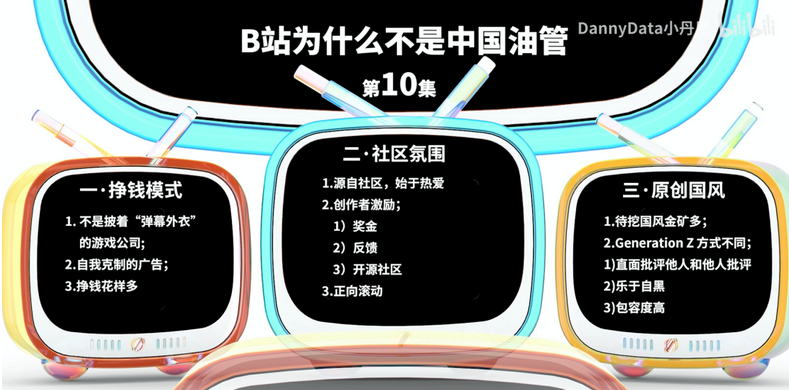
This episode is to celebrate the 10th episode of DannyData. As one of the famous content creators in the Tech Finance Channel, I have invited the three KOLs on Bilibili, YouTube and Zhihu respectively, to share some of their opinions with you in today’s video. Guess who they are? Let’s cheer up and find them out.
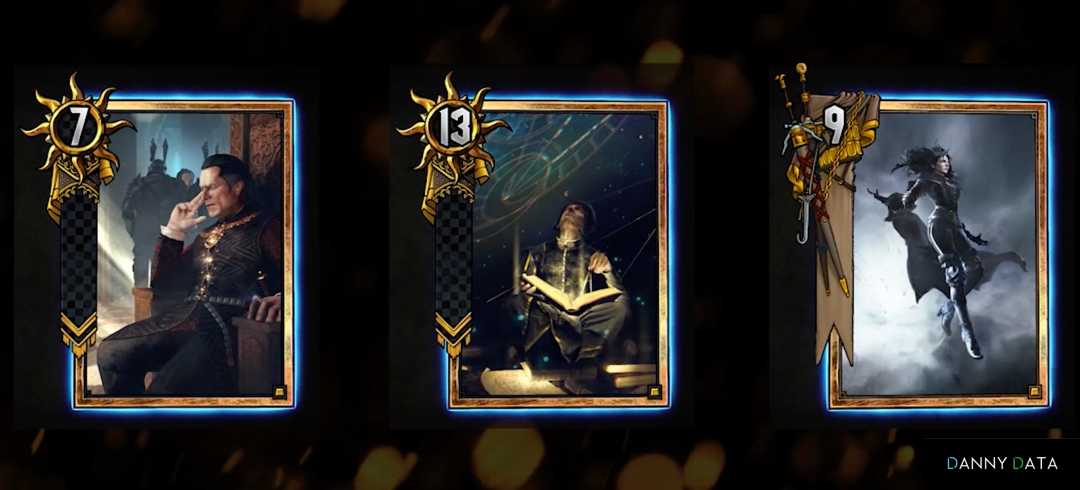
Special Guest
In the minds of many senior Chinese people, Bilibili is just a niche video website for schoolchildren to watch cartoons, but in fact Bilibili has long been the attention of the Internet tycoons. For example, Tencent invested in Bilibili as early as July 2015, and then increased its holdings several times. It has now become the second largest shareholder of Bilibili, holding 13.3% of total outstanding shares(Due to Sony's recent shareholding, other shareholders have been diluted), second only to the “married” bigwig Chen Rui, who holds 15.1% of total outstanding shares.
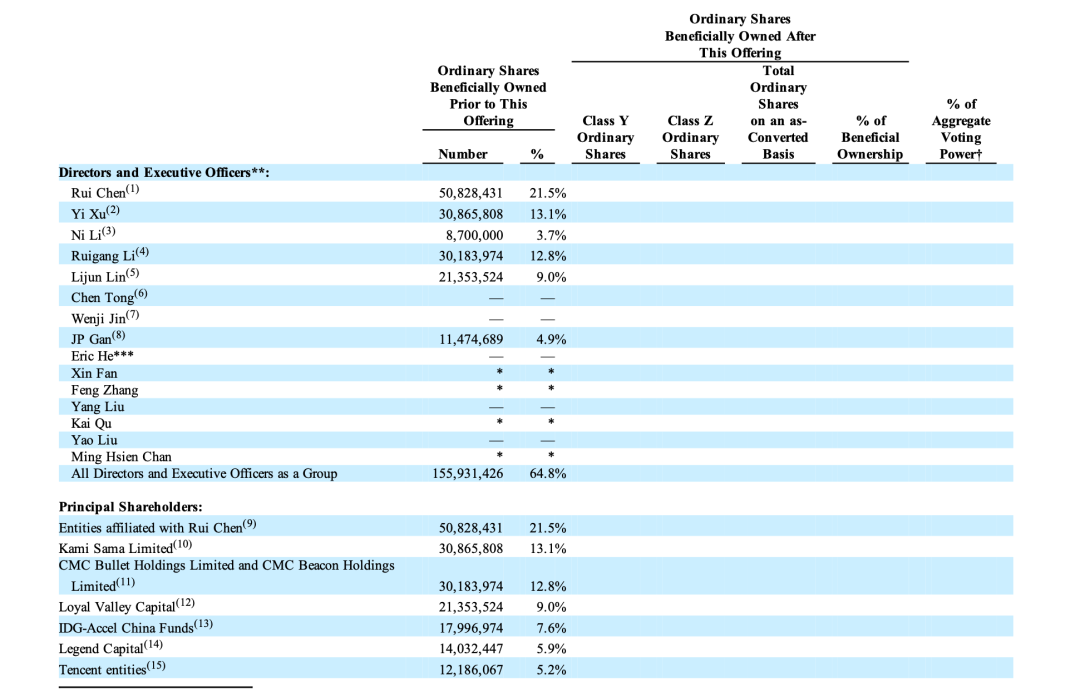
Bilibili Prospectus
Also, Ali invested in Bilibili in February 2019, holding 7.2% of total outstanding shares, and became the fourth largest shareholder, so I expect that you guys will see more and more content creators selling products from Taobao on Bilibili. Although Bilibili fans jokingly call Bilibili as a “small bankrupt site”, in fact it is really a “big bankrupt site”, excuse me, “a big brilliant site”. At present, the overall MAU (monthly active users) of Bilibili has reached 130 million and its mobile MAU 116 million.
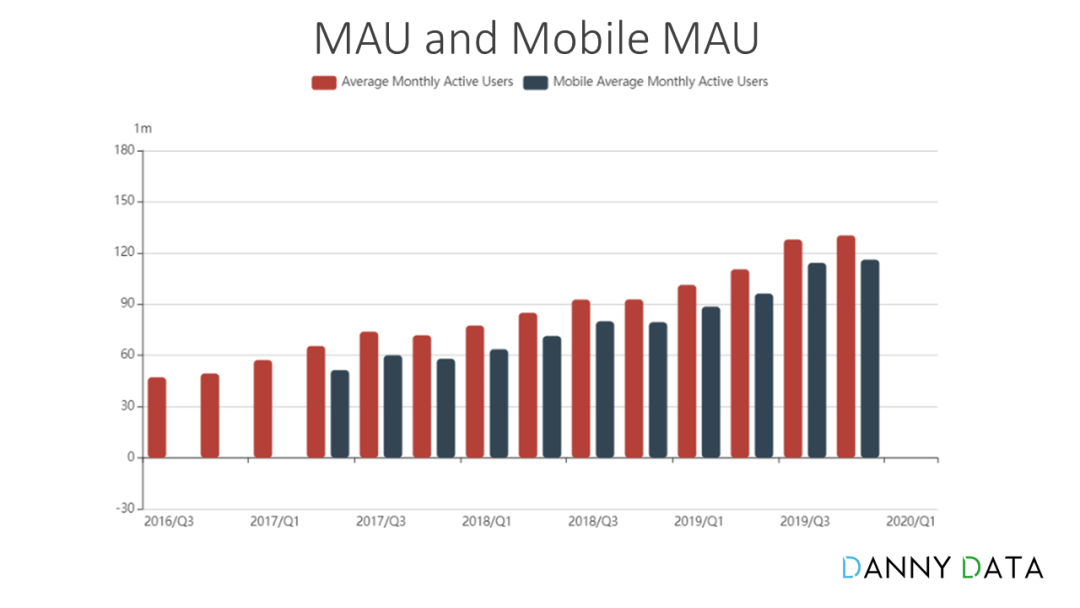
Bilibili MAU and Mobile MAU
I'm sure you've read a lot of analyses on why Bilibili will be the Chinese YouTube. So today I'm going to talk something from the opposite side: Why Bilibili is not the Chinese YouTube?
I’m Danny, I talk about tech and cars. As usual, all information used in my video is authentic and first-hand. You’re welcome to disagree with my arguments, but don't doubt my sources.
I've seen you guys calling me “hole king”, a “hole digger” in last episode comments. In this episode you are welcomed to count how many more holes that I need to fill.
01 The monetization model.
My conclusion is that Bilibili relies on mobile games to make profits, while the YouTube relies on advertising.
Let’s talk about Bilibili first. We can see from DannyData that in 2019 the mobile game revenue still dominates its overall revenue, accounting for 53% of total revenue. This is followed by live broadcasting and other VAS (valued-added service), which refers to the popular live broadcasting host, Feng Timo, and premium membership. Together, they account for 24% of total revenue. The next is the advertising services revenue, accounting for 12% of total revenue, and the e-commerce and other revenue share the remaining 11%.
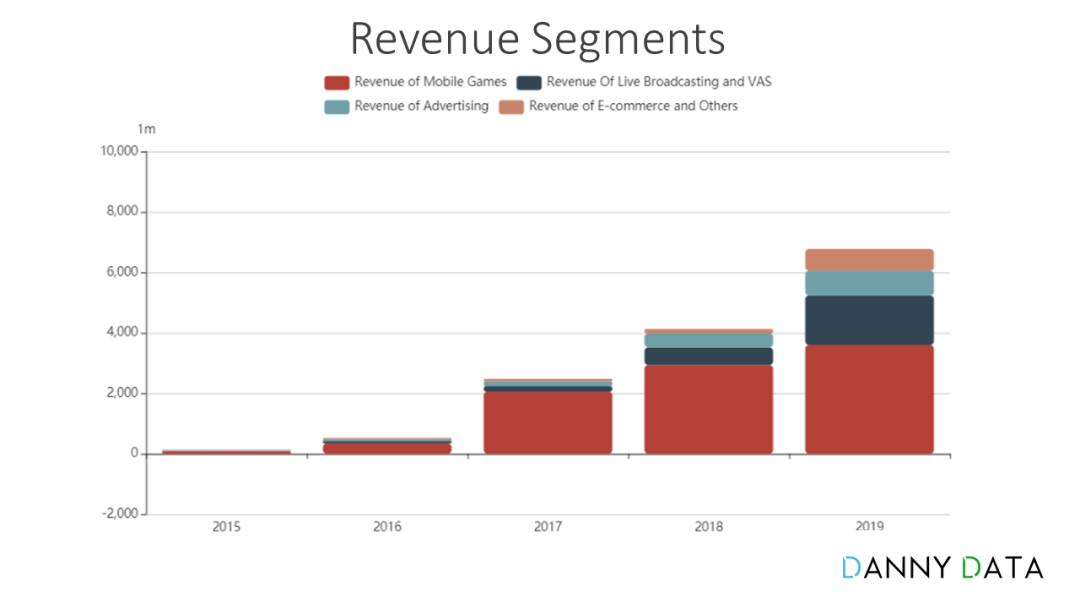
Revenue
Although it is true that the mobile game is still Bilibili’s source of revenue, accounting for more than half of its overall revenue, we may not conclude that Bilibili is a game company covered by the bullet-chatting video watching experience. That seems like a valid argument, but “Don’t be a cutie pie, okay?”
“Don’t be a cutie pie, okay?”
We cannot arbitrarily categorize Bilibili as a certain type of company simply based on its source of revenue. Just as Jobs was involved in Pixar animation production back in the day, and even wrote and voiceover for Apple commercials. Will you consider Jobs as a Top 100 Content Creators like those on Bilibili? Of course not. We need to take a long-term view and to focus more on the five- or even ten-year plan before making any conclusion. The Internet ear is changing rapidly. You may be an English teacher two days ago, sell mobile phones two days later, and then become a living broadcasting host selling products for your competitors two days ago.
The mobile game is only a commercial practice after the long-term experience accumulation in Bilibili community operation.
Chen Rui: "The mobile game business (is highly active) simply because we started the business relatively early."
To put it simply, the mobile game is just one revenue source of Bilibili, and only in recent two years it has occupied a large portion of the total revenue. It's the essence of things that we need to figure out, such as the community culture of Bilibili. I'll focus on this point later in the second part.
Simply put, some businesses of Bilibili are now responsible for making a living, such as mobile games, while other businesses are responsible for attracting you to back to Bilibili, like your favorite home-made dishes, such as its community culture, which is also its long-term core competency.
Earlier I mentioned that Tencent took a stake in Bilibili in July 2015. In fact, Bilibili started its mobile game business even earlier than that. As early as January 2014, Bilibili started to cooperate with third-party mobile game companies, and released its first self-developed mobile game in August 2017. FGO, which is a role-playing game adapted from the famous “FATE” animation series. Please raise your hand in the bullet chatting if you have played it. At that time, Chen Rui and Yang Kun, pardon me, Chen Kun did a live broadcasting preview for the FGO. It can be said that the two Mr. Chens have already become the bigwigs in the live stream selling field at that time.
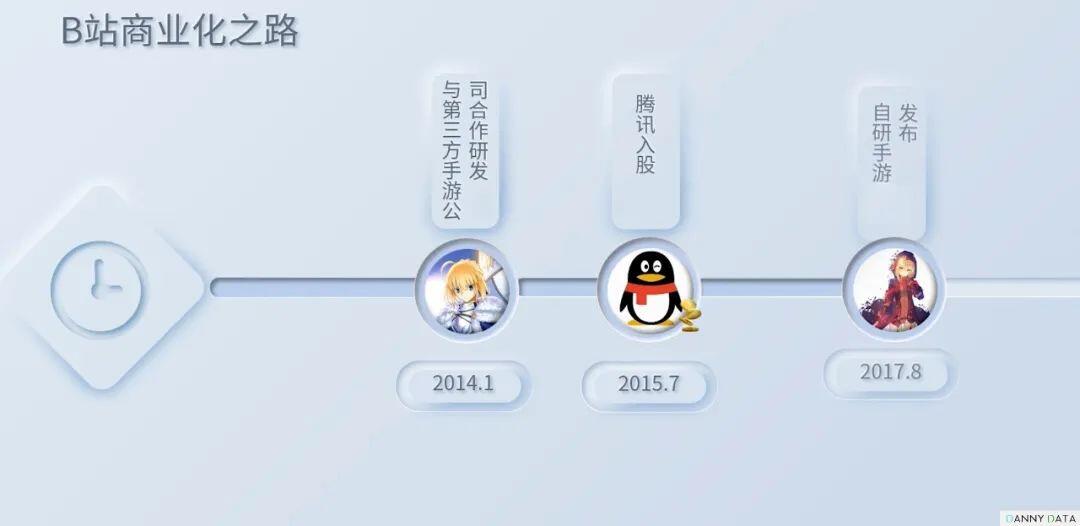
Timeline of Bilibili Commercialization
In 2019, revenue from the FGO game still accounted for 58.2% of Bilibili’s mobile game revenue, and in 2017 and 2018, this share was even as high as 70%. We can say that Bilibili used to put all its “eggs”, the revenue, in the FGO mobile game basket. Fortunately, Bilibili has adjusted its mobile game strategy in 2019.
It is true that the current revenue of Bilibili still largely depends on the mobile game business, but we also need to look at the overall trend. In the conference call in Q4 2018, Chen Rui mentioned a goal: game revenue and non-game revenue each accounted for 50% of total revenue. The past three years witnessed a significant decrease of mobile game revenue proportion, from 83% in 2017, 71% in 2018, down to 53% in 2019. It can be said that the goal set by Chen Rui has been completed.
Let’s move to YouTube for a second. Alphabet, Google's parent company, has a pretty straightforward income statement, since it directly presents YouTube ads income as one independent income item. This also shows how important advertising revenue is to YouTube.
If we look only at the official information of Bilibili and YouTube, there are three types of Bilibili advertisements, but only two of which are currently available on Bilibili. However, there are at least eight types of advertisements on YouTube, even though the range of these categories varies. For more details about Bilibili and YouTube advertising, let’s invite our first guest, a bigwig on Bilibili.
@ Lao Jiang
Hello, everyone, I am Lao Jiang. In response to Danny’s invitation, I’m going to introduce you with an easy-understanding overview of Bilibili's commercialization attempts in advertising. Some of you may know little about advertising and consider that the advertisement on online video platforms is the 60-second or 90-second long, non-skippable ad before the video officially start to play. Such as those you’ve experienced when using Youku, Tencent and iQiyi. This is a misunderstanding. Bilibili has had all sorts of attempts at advertising for a long time, and I'll give you a few examples.
The first type is the open screen ad. When you click on the Bilibili app, it will have three or five seconds to show you a large image ad and will possibly lead you to other links. This is called the open screen ad.
The second type is the information flow ad. On Bilibili website, the double-column video display mode plus the unlimited upward swipes of our fingers is called the information flow arrangement. Information flow ad is a piece of ad replacing a certain piece of information “tofu” with promotion content in the information flow. This is called the information flow ad.
The third type of advertisement is the banner advertisement underneath the video. That is, after we watch a video clip, the first thing displayed below is not another video, nor the recommendation to another video, but a recommendation link to certain products or a Taobao link which are chosen by the content creators. This is called the banner advertisement.
There’s another type of ad, the channel ad. I'm very glad to introduce it to you, because I predicted this type of ad has potential to be liquidated when the channel first went live. Let me give you an example. Let’s say a manufacturer has released a new mobile phone called "Lao Jiang 30 Pro", and the Lao Jiang Company will give Bilibili a sum of money to set up a special channel called “Lao Jiang 30 Pro Mobile Phone”. Then this channel will be promoted through the previously mentioned information flow. When click and enter this channel “Lao Jiang 30 Pro Mobile Phone”, you guys will watch all kinds of content about this product, such the product review and experience, the product launch event preview, etc. This is also one way of monetization for Bilibili.
All right, I only listed several advertising solutions of Bilibili, and there are many more others. So, how’s the overall advertising performance of Bilibili? As I mentioned earlier, the annual advertising revenue of Bilibili in 2019 is 820 million yuan, accounting for 12% of its total annual revenue. To be honest, that's not a great number. It will be clearer if we make a comparison.
Last year, YouTube disclosed that its advertising revenue is 15 billion US dollars, or about 100 billion yuan, occupying more than 50% of its total revenue. What makes such a big difference? The gap between their MAU is not that wide. YouTube now has 2 billion MAU, and Bilibili gets 130 million which is only 10 times less. The advertising revenue scale of Bilibili, however, is more than 100 times smaller. How come?
For Bilibili, or sites like Bilibili, the most important part of advertising revenue is from UGC pre-roll ads which you can see on YouTube but not on Bilibili. People who have used YouTube should know exactly what I’m talking about. What does this UGC pre-roll ads mean? On YouTube, with the uploader’s agreement, the viewers will watch an ad before they watch his/her video. This ad is compulsory, but you can skip it after five seconds. This form is called UGC pre-roll advertising, which is not available on Bilibili now.
I’ve talked too long. To make it short, one reason for Bilibili not applying the pre-roll ads may be that the algorithm system of Bilibili is not as powerful as that of Google. YouTube now enjoys the best algorithm in the world, which can promote products or services to you that you need or that you won’t find unpleasant, but Bilibili can't do it yet.
Another reason may be about the nature of these two websites. From the very start, YouTube has been a content consumption website. Bilibili has a strong community attribute, and the stronger the community stickiness, the higher the users’ loyalty. Bilibili users tend to be more sensitive to changes in product experience and commercialization.
The core users of Bilibili can bear the open screen ad and the information flow ad at present. As you can imagine, if one day they are suddenly presented with an ad, interrupting their watching experience, you bet it would be catastrophic to the community, and users will strongly protest against it.
Although the pre-roll ad is a very large source of revenue, Bilibili has not yet adopt it. I don’t know Danny’s opinion. From my perspective, Bilibili’s current strategy may be to take one step at a time, trying to use other revenue sources to cover its lack of pre-roll ad revenue.
One obvious move of Bilibili is making its live broadcasting business bigger and stronger, to see if its revenue proportion of total revenue can, let’s say, reach 20%. If that’s possible, then Bilibili may have the confidence to reject pre-roll ad, and to guarantee the best user experience.
Otherwise, Bilibili may carry out a systematic project over the course of a few months to lay the groundwork before launch the pre-roll advertising. Will Bilibili use the pre-roll ads in the future, and if so, when? I think this is one of the biggest strategic mysteries surrounding Bilibili in the next one to two years.
Okay, I ’m Lao Jiang. Now I’ll give the time back to Danny, he will give you an in-depth analysis of the business logic of Bilibili.
Thank you, Lao Jiang, for your insightful interpretation. The importance of advertising to a video platform is self-evident. You can clearly sense that Bilibili is extremely restrained in advertising. But be aware, Bilibili gives up a lot of benefits just to please its users. This Ad Favoritism Model may help you understand.
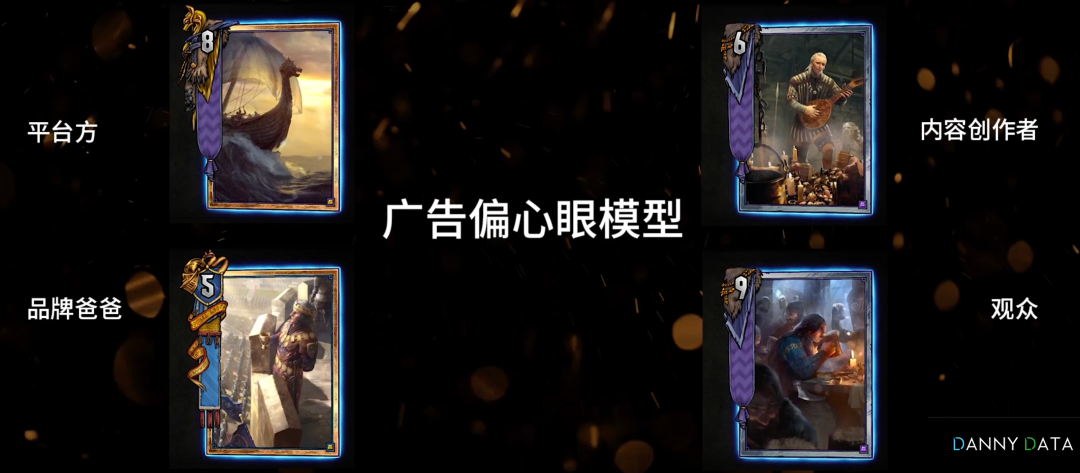
Advertising Model
I categorize the stakeholders as the following four: the platform, the content creators, the brand, and the viewers. As the leading party of the advertising system, the platform cannot satisfy all four stakeholders at the same time.
Let’s start with YouTube, for it is the dominator of overseas UCG or PUCG platform. In plain words, it is in a monopoly position, and the audience does not have many other options. That’s why YouTube can advertise as it wishes. The advantage of advertising is that it can satisfy the platform, the content creator and the brand side all at the same time.
Here is a realistic example. The number of my subscribers on YouTube is less than one-third of that on Bilibili, but my monthly platform incentive income from YouTube is three times more than that from Bilibili. Exactly the opposite. The wool comes from the sheep. The incentive income from YouTube mainly derives from the advertisement of the brand.
Back to the Ad Favoritism Model of Bilibili. Due to the fierce competition in the domestic video industry, in terms of advertising business, Bilibili sacrifices the interests of the platform, the content creators and the brand to stratifies its users first.
Cheng Rui made a promise in 2014 that new animations on Bilibili will never add pre-roll ads. Even if giving up a lot of profits, Bilibili determines to let the users be satisfied first.
Before, I mentioned my advertising incentive income difference between YouTube and Bilibili, so it is easy to understand that Bilibili sacrifices the interests of content creators like me in advertising. What about the brand side?
The brand owners certainly hope that Bilibili can have all kinds of fancy advertising means, but this violates the principle of Bilibili: user experience first. In 2016, Chen Rui made an apology on Zhihu for Bilibili must put on pre-roll ads under the pressure of copyright holders and competitors. If not, Bilibili users will not have access to new animation contents. This has violated Chen Rui’s commitment. To Bilibili, it is indeed a very catchy thing.
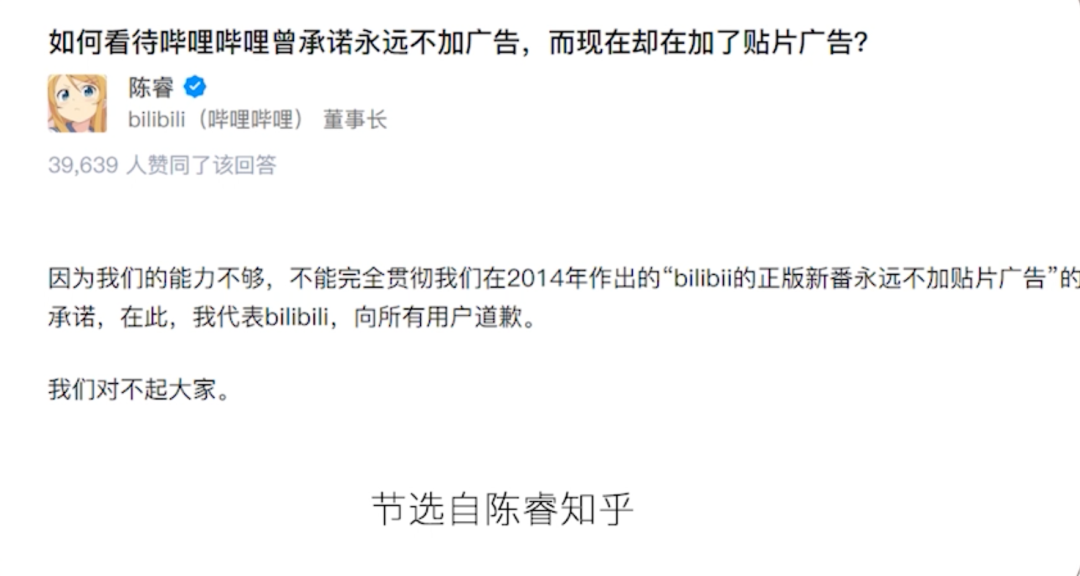
From: Chen Rui
The business world is never a simple bi-directional relationship. Even one of your own people may report your fraud to the public.
Please notice what I said here is just about advertising business. If content creators and brand sides have always been dissatisfied, in the long run, Bilibili would not develop well. Therefore, Bilibili also need to incentivize content creators and brand sides in other ways, including granting content creators awards, like Quality Content Award and Creative Rookie Award that I have won before.
And the incentives for brand sponsors are reflected in other revenues of Bilibili. In addition to the games and advertisements I mentioned earlier, it also includes live broadcasting and other VAS, e-commerce and others. In fact, there are many profitable ways for Bilibili.
To fully understand the monetization model of Bilibili, it is necessary to identify the key timings of Bilibili when it started making money or commercialization.
As I said earlier, Bilibili has been working with third-party mobile game companies since January 2014. In August 2017, Bilibili released the first self-developed mobile game. Bilibili began making money from the mobile games, and the mobile games still dominates its revenues.
In December 2017, the Bilibili started to do performance-based advertising. In January 2018, Bilibili began to provide the premium membership VAS. In November 2018, the Bilibili launched the independent Bilibili Comic app, and acquired NetEase Comic in the following month. I will discuss more about this when talking about NetEase. Are you guys interested? "Danny, The Digging Madness" dig his first hole in this episode.
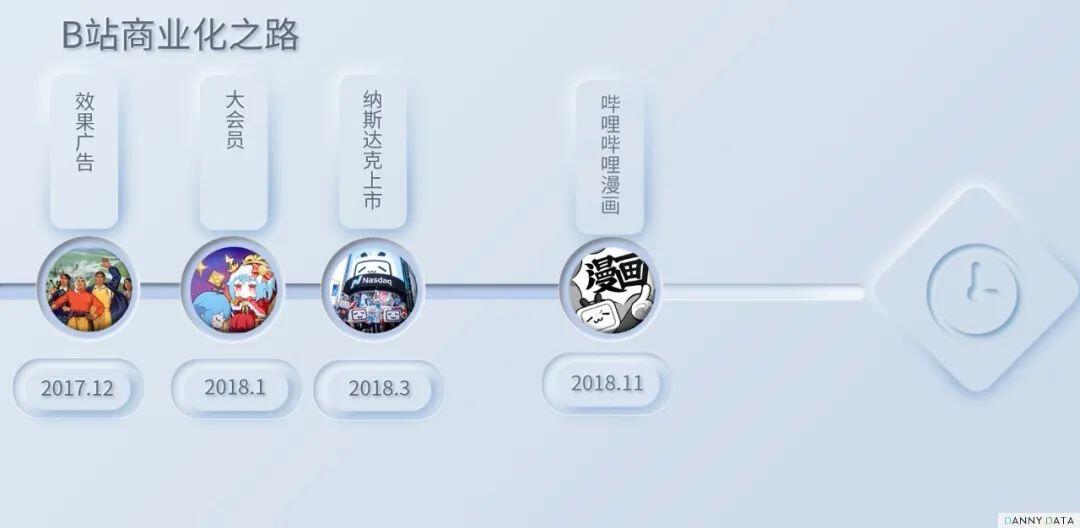
Timeline of Bilibili Commercialization
In the future, Bilibili can try to do whatever the Generation Z is interested in. For example, earlier Bilibili cooperated with major bookstores holding a reading activity. This kind of activity could help Bilibili to expand the study channel. It is also an important reason why I said that Bilibili has multiple ways to earn money. The Gen Z is growing up anyway, and they will dominant their consumption.
02 The community culture.
How much does Bilibili value its community? In its prospectus, Bilibili repeatedly mentioned the word “community”. So, if rather than defining Bilibili as a video company, you’d better consider Bilibili as a big community.
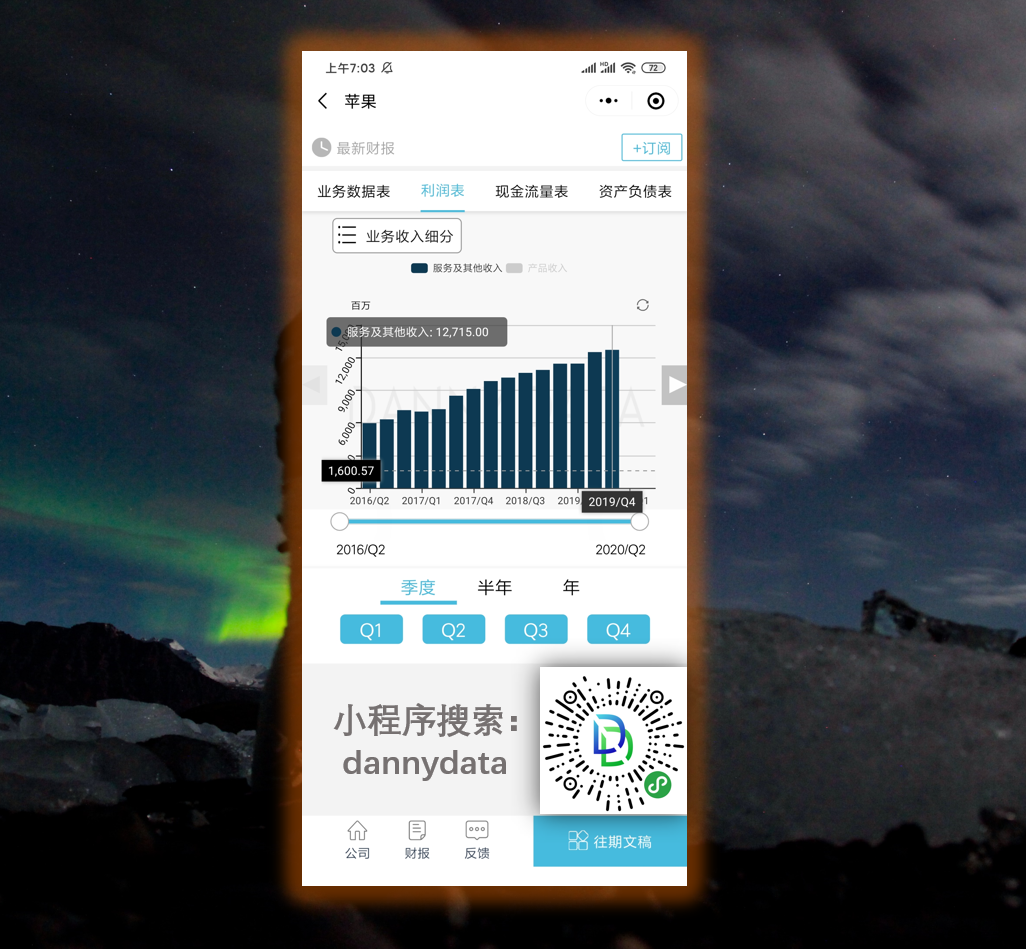
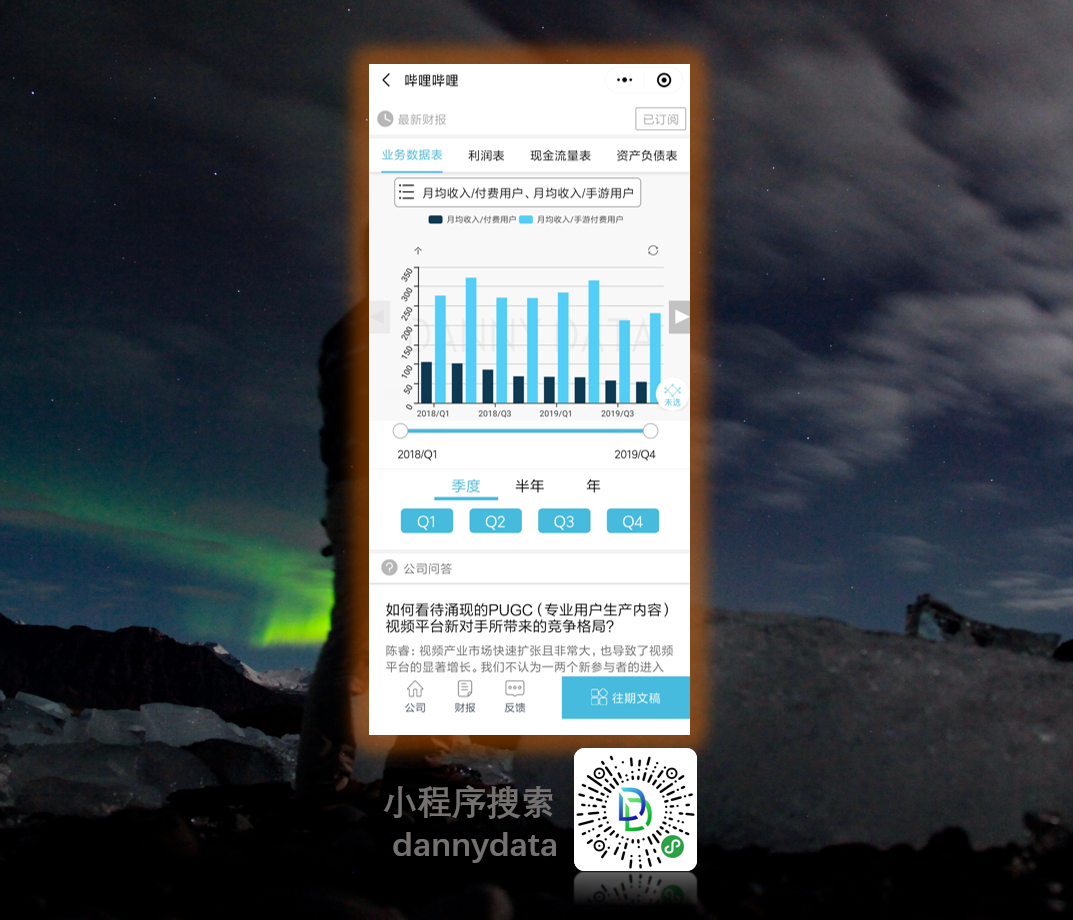
Here’s the biggest surprise. The long-awaited DannyData Visualization Tool is launched on WeChat mini program! All the analytics features that you saw in the previous ten episodes of DannyData videos are now available in the DannyData mini program.
Some may ask about the price. I tell you in tears: it's free for a limited time. It’s a good news to you guys, right? Scan the QR code on your screen or search "DannyData" in the WeChat, and you are all set. We'll launch the HD web version of DannyData and more powerful features later. Enjoy playing with DannyData!
Please give a warm welcome to our second distinguished guest to explain the difference between the community culture of Bilibili and YouTube:

@ Nate Li
The topic that Danny ask me to discuss is the difference between Bilibili and YouTube in terms of community. Bilibili started as an ACG-related video platform with bullet chatting feature, so from the beginning it has a core user group consisting of ACG fans. Based on its commercial considerations, Bilibili tried to expand its user group. In fact, Bilibili always has the tone of community under control. This is simply because the communication mode of Bilibili, based on bullet chatting, is intensive user interactive.
Think about it. A group of people that nobody likes join in the community, and they send some disgusting comments through bullet chatting. These behaviors will cause considerable damage to the community of Bilibili. Therefore, it is natural for Bilibili to consider the compatibility of users. The tone of Bilibili is under the control of its team, and the team also hopes that users can live in harmony.
Videos on YouTube is diverse at the initial stage, and you can find all kinds of contents on it. So, from the beginning, YouTube targeted on the broadest user group, and it does not have a core user group. There are few common interests between users, everyone can find his/her favorite videos on YouTube. Also, YouTube decided to share some profits with YouTubers at a very early stage.
The relationship between YouTube and its content creators is more like an interest-based community. YouTube mainly relies on its algorithms with the minimal manual interference. You rarely get recommended videos from YouTube editors.
It hopes that content creators fully compete and only the fittest survive. YouTube doesn’t care about supporting a certain type of content or maintaining a community culture.
YouTube doesn't care about users like each other or not, and it only cares about whether users can find videos they like. If a user could find a video s/he likes on YouTube, then YouTube uses its algorithms pushing his/her favorite types of videos to him/her. That is core logic of YouTube.
These two video platforms have very different attitudes towards community culture. Bilibili's users share many jokes or punchlines simply because they have things in common.
YouTube doesn’t have that because this platform is more like a microcosm of the society. That’s the reason why I mentioned YouTube users do not have much in common.
Furthermore, Bilibili is channeling a learning culture in the community. If there is a knowledge-based video, some users will voluntarily offer a summary of the critical points of that video in the comment, which will be beneficial to the whole community culture.
YouTube is more permissive. It doesn’t guide users what to do or supervise their comments. So, we often see some awful comments in the YouTube comment area, and YouTube just leaves as they are. These two platforms are very different, you see.
I think Bilibili is more about managing a community. The content creators on YouTube mainly produce what they like, gather fans who like their videos, and then form many small communities. That’s all I thought about the communities of Bilibili and YouTube. DannyData did a great job. Keep going!
Thanks to the brilliant Nate and his explanation about the difference between the communities of Bilibili and YouTube. I think YouTube is more like a canteen, and Bilibili used to be more like a boutique café. However, as Bilibili grows, Chen Rui also said
Chen Rui: "Even if we raised the bar of user growth, we will still regard the quality of our users and our community culture as the most important work."
Boutique cafés also need to start some popular businesses, like the takeaway coffee and self-service coffee machines.
We all know the style of a company's CEO would affect the company. For example, Musk built Tesla as a powerful and unconstrained company; Jobs turned Apple as an ultimate innovation company; and Chen Rui, he is a person who has lived with ACG for a long time. Sogou's CEO, Wang Xiaochuan, was the desk-mate of Chen Rui at school. He commented Chen Rui as follows.
Host: Wang Xiaochuan told me that he was furious. He said that he was a very hard-working student at school. And Chen Rui, you are the one who reads comics every day and earns bad grades. Chen Rui: Well, yes, I like anime all the time.
In fact, I always believe that if entrepreneurs do not have love from their heart for their careers, they will not do well in the long term. If they only pursuit short-term benefits, their businesses will end up conducting financial fraud or plagiarizing the white paper. I believe that Chen Rui has real love for the community of Bilibili because he is one of the earliest users of Bilibili.
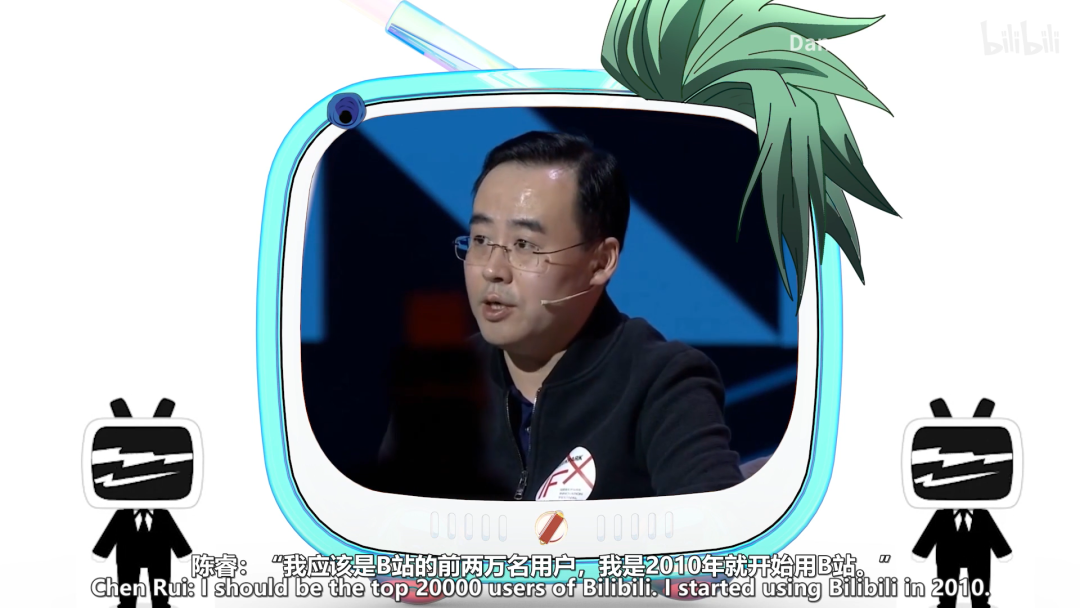
Chen Rui: I should be the top 20000 users of Bilibili. I started using Bilibili in 2010.

往期回顾: