
丰宁满族剪纸之技——阳刻为主、阴刻为辅 The Cutting Style of Fengning Manchu Paper Art
(图片来源:百度图片)
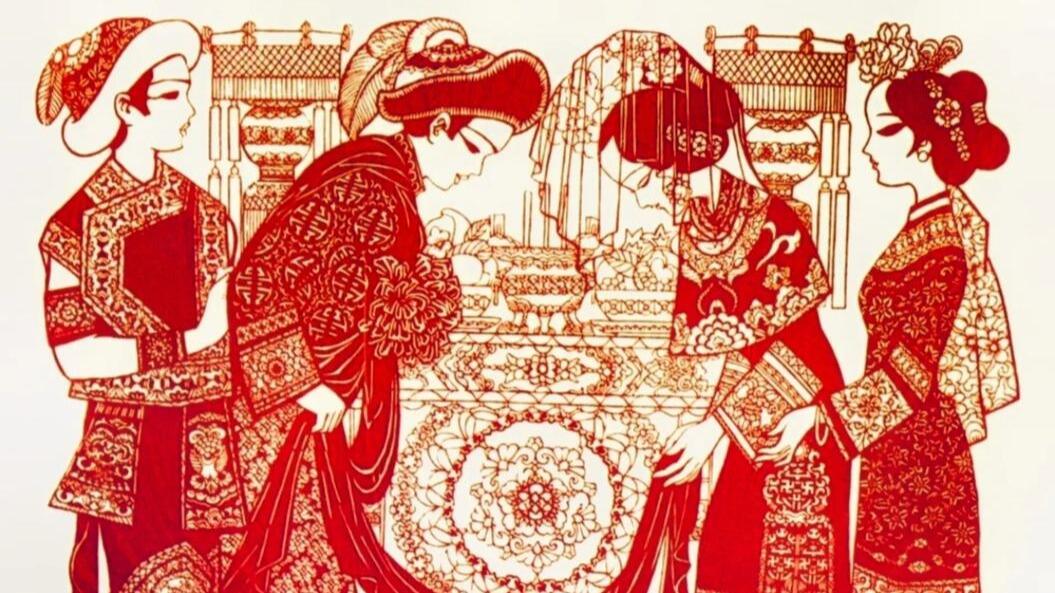
剪纸(丰宁满族剪纸)是河北省丰宁满族自治县传统美术、国家级非物质文化遗产之一。其起源于清代康熙年间,乾隆时期形成以阳刻为主、阴刻为辅的艺术风格,具有批毛纤长、剪工精细的特点,2006年列入第三批国家级非物质文化遗产名录(编号Ⅶ-16)。
Paper-cutting (Fengning Manchu paper-cutting) is a traditional folk art from Fengning Manchu Autonomous County, Hebei Province, and is listed as one of China’s National Intangible Cultural Heritage items. It originated during the Kangxi reign of the Qing Dynasty and developed an artistic style during the Qianlong period characterized by predominantly yang-carving with yin-carving as a secondary technique, featuring fine, hair-like lines and meticulous craftsmanship. It was inscribed on the Third Batch of China’s National Intangible Cultural Heritage List in 2006 (No. VII-16).
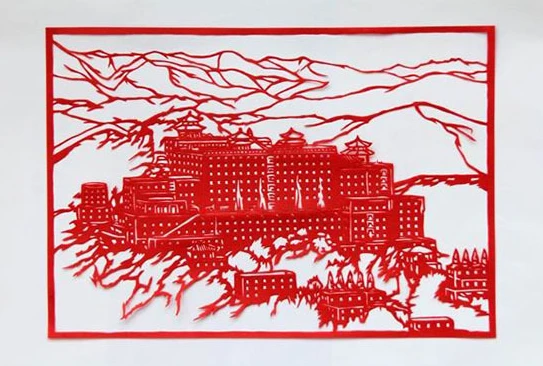
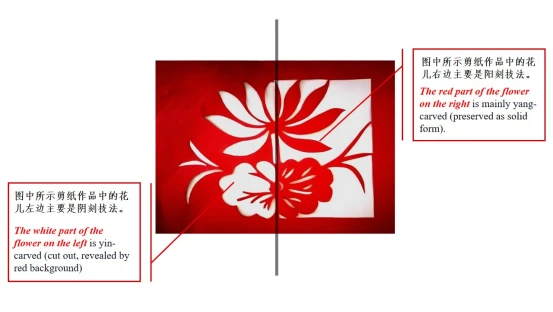
所谓的阳刻剪纸,就是把图案以外的部分剪刻掉,保留图案原有的点线面,阳纹剪刻一般需要笔笔相连。它的特征就是保留原稿的轮廓线,剪去轮廓线以外的空白部分。它的每一条线都是互相连接的。
Yang-carving paper-cutting refers to cutting away the areas outside the design, preserving the original dots, lines, and planes of the motif. In yang-carving, every stroke must remain connected to the next. Its defining feature is the retention of the design’s outline, with the blank spaces outside the contour removed. Consequently, all lines in a yang-carved work are interconnected.
(图片来源:百度图片)
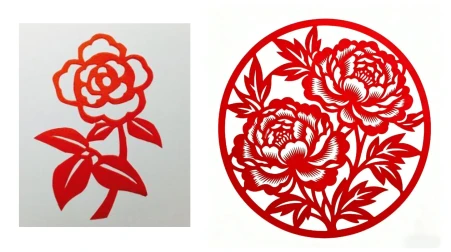
阴刻剪纸是把图案自身剪刻掉,剩下的是图案以外的部分,通过衬纸反衬出图案的内容,阴纹剪纸一般要求线线相断。阴刻剪纸的特点是刻去原稿的轮廓线,保留轮廓线以外的部分,所以阴刻剪纸的特征是它的线条不一定是相连的,作品的整体是块状的。
Yin-carving paper-cutting, by contrast, involves cutting away the design itself, leaving only the areas outside the motif; the image is then revealed by placing the cut sheet over a contrasting backing paper. Yin-carving typically requires that lines be disconnected from one another. Its characteristic lies in removing the original outline of the design while preserving the surrounding areas. Thus, the lines in yin-carving are not necessarily connected, and the overall composition appears as solid blocks.
(图片来源:百度图片)
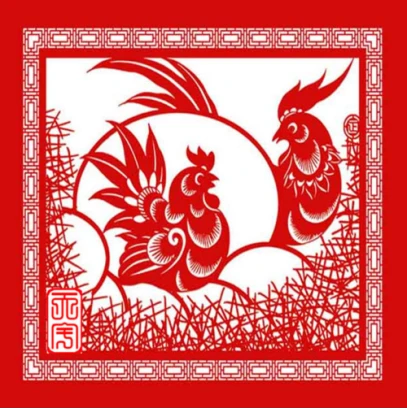
在传统剪纸中,完全采用一种的剪纸方式并不多见,大部分是把阴阳刻两种方法结合起来,阳刻中有阴刻,阴刻中有阳刻,使得作品阴阳相济,互相印衬,画面效果更为丰富。一般是先利用阳刻将主体纹样的轮廓剪出,然后再进行阴刻的装饰修剪,也有时阴阳并行,相得益彰。
In traditional paper-cutting, it is rare to use only one technique exclusively. Most works combine both yang and yin methods—yang within yin, and yin within yang—creating a harmonious interplay that enriches the visual effect. Typically, the artist first uses yang-carving to cut out the main outline of the motif, then applies yin-carving for decorative detailing. At other times, both techniques are employed simultaneously, complementing each other to excellent effect.
(图片来源:百度图片)
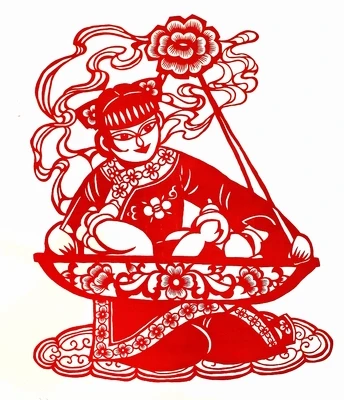
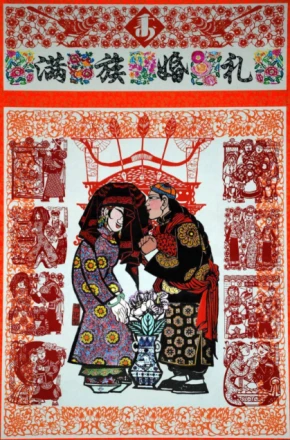
丰宁满族剪纸以阳刻为骨、阴刻为肉,线条干净利落,留白处常以“月牙”“锯齿”纹样打破平板,远观如冰花,近看似锦绣。
Fengning Manchu paper-cutting takes yang-carving as its bone and yin-carving as its flesh. Its lines are clean and decisive, and the negative spaces are often enlivened with motifs such as “crescent moons” and “saw-tooth patterns” to break visual monotony. From a distance, the work resembles frost flowers on glass; up close, it appears as intricate brocade.
(图片来源:百度图片)
(图片来源:百度图片)
(说明:本文内容中阴刻、阳刻、阴阳结合等剪纸技法说明部分整理自https://www.jianshu.com/p/95789846da37?from=timeline;丰宁满族剪纸内容来自百度百科;英文翻译来自河北石油职业技术大学会计2503班同学的人机协同翻译探索与实践。)
