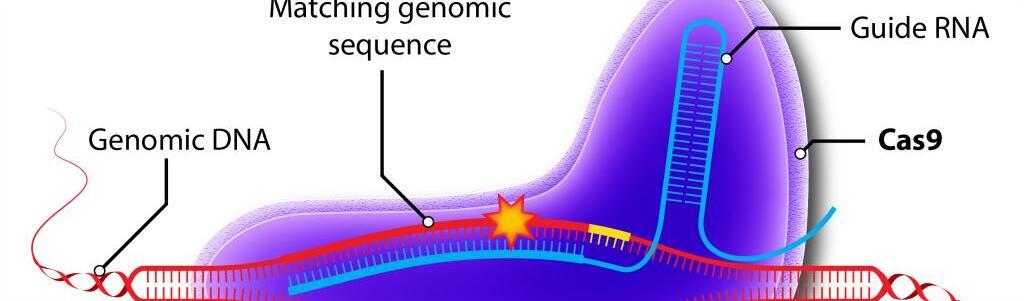

Cas9实验步骤教程
1. Copy the target sequence (<500bp), paste in “query sequence:” of the webpage:
https://crispr.cos.uni-heidelberg.de/
2. Set two parameters:
① target site length: 20
② species: Arabidopsis thaliana TAIR10
3. Click “Submit”, pick the best 20-bp “target_seq”, which has the least mismatch with other genes.
4. Primers: the part highlighted in red in the following sequence is an example target sequence, which is replaced by the picked target sequence.
Target-Cas9-F: GaaaattctggcgtcgtgaggGTTTTAGAGCTAGAAATAGCAAGTTAA
Target-Cas9-R: CcctcacgacgccagaattttCAATCACTACTTCGACTCTAGCTG
Target-check-R: cctcacgacgccagaatttt
U6-26P-common-F: GAGAAGCAGGCCCATTTATATGGGA
U6-26T-common-R: CCAGAAATTGAACGCCGAAGAACAG
pEG100-Seq-R: caacgtgcacaacagaattga
5. Construction of pCas9-T1-target as the following protocol.
① Digestion of pCas9-T1: SmaI
② PCR: Target
ü Template: plasmid pCas9-T1 (100x dilution)
ü Primers:
l Target-UP: U6-26P-common-F, Target-Cas9-R→~170 bp
l Target-DN: Target-Cas9-F, U6-26T-common-R→~160 bp
ü Taq: PrimeStar GXL
③ Seamless cloning: pCas9-T1+Target-UP+Target-DN=pCas9-T1-target
④ Colony PCR: U6-26P-common-F, Target-check-R→~170 bp
⑤ Sequencing primers: pEG100-Seq-R
The same strategy is used for construction of multiple targets. If there are more than 2 targets, two of the target sequences are integrated into pCas9-T2 first. The rest of the targets are integrated into pEG100-T2, which is amplified by PCR as a whole cassette and integrated into pCas9-T2.
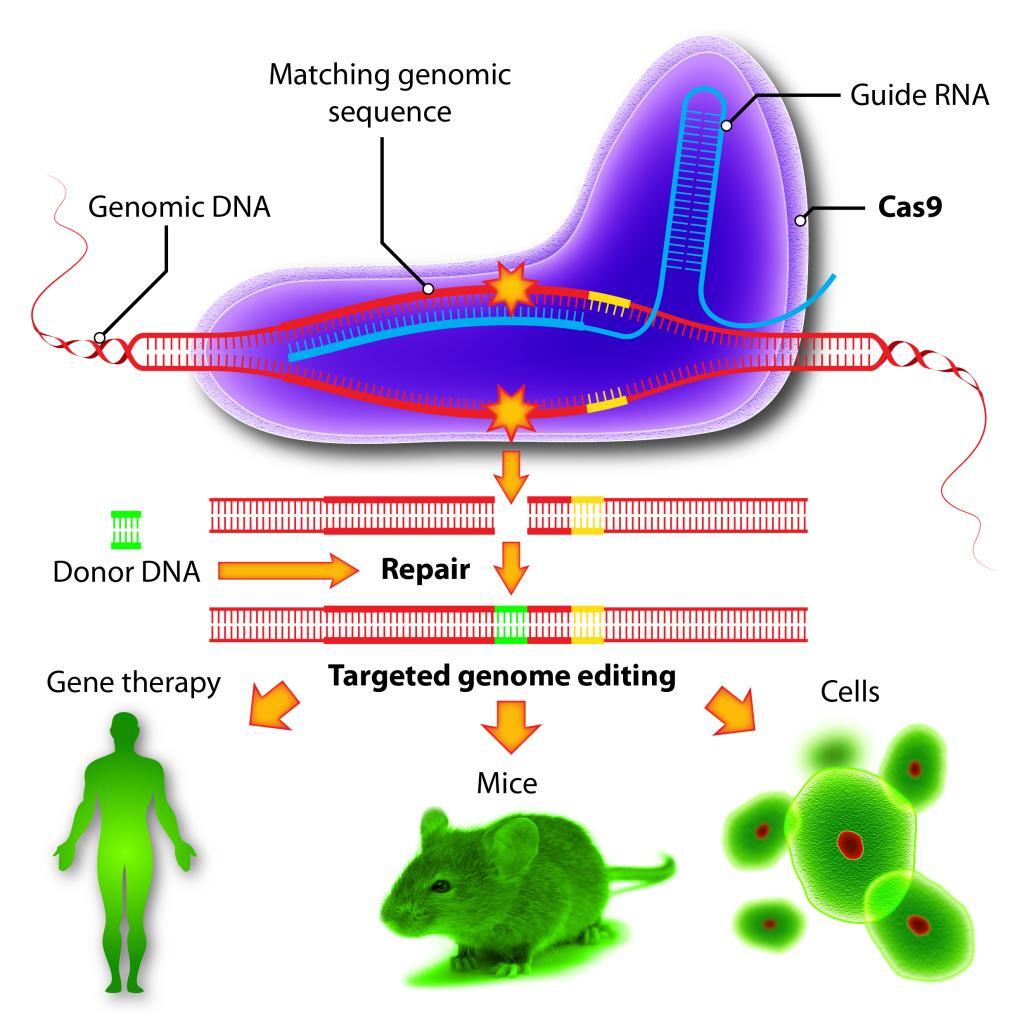
CRISPR-Cas9原理图
