
Dē Bellō Gallicō,直译为《关于高卢的战争》,更为人所熟知的译名是《高卢战记》,由Gaius Iulius Caesar(盖乌斯·尤里乌斯·凯撒)所著,原文是拉丁文,本专栏翻译其第一卷第一节,讲述了高卢三分的地理与民族状况。本文所选的拉丁文本来自于Mondon - 2014 - Caesar’s Dē Bellō Gallicō A Syntactically Parsed(这本书非常好,不仅每节后有单词表,而且还全部标注了长音)。下面的拉丁文本利用缩进来表示句子结构,翻译在尽量保证没有目标语言语法错误的情况下,尽可能地贴近原文结构,所以可能翻译出来很奇怪的东西,如果实在难以近似原文结构需要做出修改,则会做出标注。
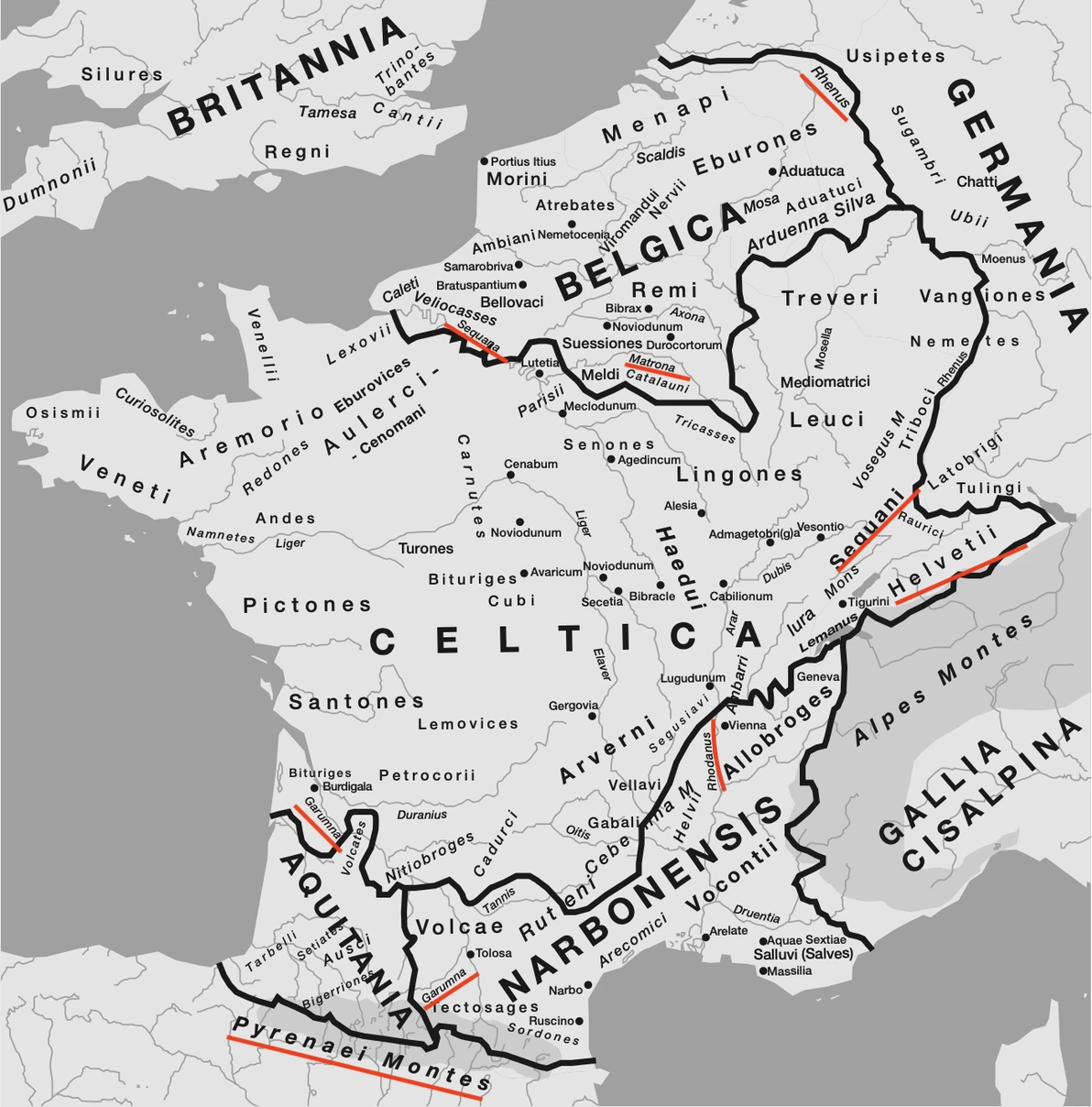
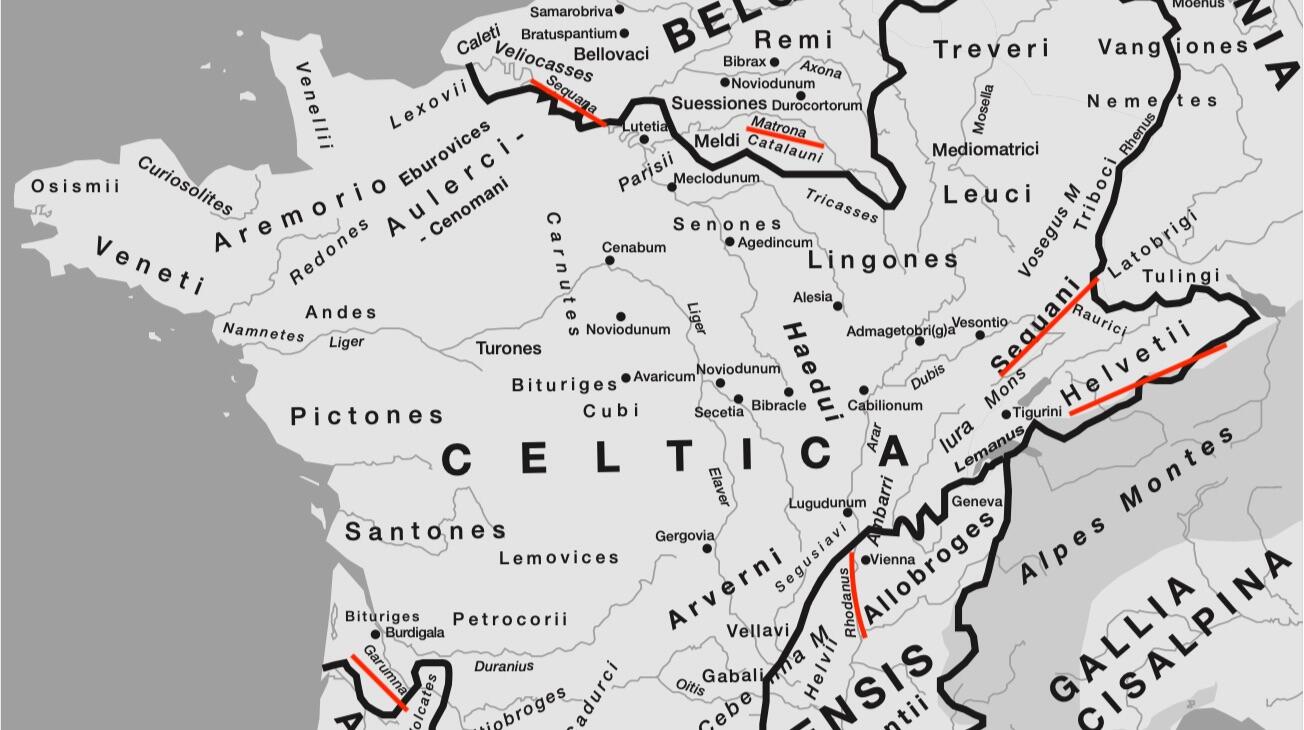
高卢地图,本小节中提到的地名或族群均已在图中标注
[1]
Gallia est omnis dīvīsa in partēs trēs,
quārum ūnam incolunt Belgae,
aliam Aquitānī,
tertiam
quī ipsōrum linguā Celtae,
nostrā Gallī appellantur.
[1] All Gaul is divided into three parts, one of which the Belgae inhabit, another the Aquitani (inhabit), the third which is called Celts in their language, Gaul by us.
[1] 整个高卢被分为三部分,贝尔盖人居住在其中的一部分,阿基坦人居住在另一部分,第三部分在他们的语言中被称作凯尔特人,被我们称为高卢人。
[2]
Hī omnēs linguā, īnstitūtīs, lēgibus inter sē differunt.
[2] All these differ between themselves in language, customs, laws.
[2] 所有这些人使他们自己在语言,习俗,法律上分化。
[3]
Gallōs ab Aquitānīs Garumna flūmen,
ā Belgīs Matrona et Sēquana dīvidit*.
*: The two rivers, Matrona et Sēquana, forming a single boundary, are viewed as a single entity which demands a singular verb
[3] The Garonne river separates Gauls away from Aquitani, the Marne river and the Seine river separates Gauls away from Belgae.
[3] 加伦河把高卢人从阿基坦人处隔开,马尔讷河和塞纳河把高卢人从贝尔盖人处隔开。
[4]
Hōrum omnium fortissimī sunt Belgae,
proptereā quod* ā cultū atque hūmānitāte prōvinciae longissimē absunt,
minimēque ad eōs mercātōrēs saepe commeant
atque ea
quae ad effēminandōs** animōs pertinent
important,
proximīque sunt Germānīs,
quī trāns Rhēnum incolunt,
quibuscum*** continenter bellum gerunt.
*: proptereā quod = because.
**: ad + gerund acc. 表目的, 此处的目的为"使心智变得柔弱", 即animos是effeminandos的宾语.
***: = quibus(abl.) + cum
[4] Of all these the Belgae are the strongest, because the provinces are the farthest from culture and civilization, and the merchants do not often visit them, and they do not import things that concern enfeebling minds, and they are the nearest to the Germans, who inhabit on the other side of the Rhine, with whom they continuously conduct wars.
[4] 在这三者之中贝尔盖人是最强大的,因为行省是距离文化和文明最远的,并且商人不经常拜访他们,他们也从不引进会使得精神脆弱的事物,而且他们与日耳曼人(关系或地理上)最为接近,(日耳曼人)居住在莱茵河的另一边,他们持续地与日耳曼人进行战争。
[5]
Eōrum ūna pars,
quam
Gallōs obtinēre*
dictum est,
initium capit ā flūmine Rhodanō;
continētur Garumnā flūmine, Ōceanō, fīnibus Belgārum;
attingit etiam ab Sēquanīs et Helvētiīs** flūmen Rhēnum;
vergit ad septentriōnēs.
Belgae ab extrēmīs Galliae fīnibus oriuntur;
pertinent ad īnferiōrem partem flūminis Rhēnī;
spectant in septentriōnem*** et orientem sōlem.
*: 间接陈述句, 宾格+不定式, 尽管应该直译为the Gauls possess, 为了句子通顺我选择译为被动句.
**: 这个ab + abl. 短语我选择翻译为adjacent to.
***: 这是一个名词, 并非修饰后面的太阳, 应该翻译为北方而非北方的(这同时也是拉丁语的大熊星座和小熊星座).
[5] One part of them, which is said to be possessed by the Gauls, takes beginning from the Rhone river; is enclosed by the Garonne river, the ocean and the borders of the Belgae; also borders the Rhine river, adjacent to the Sequani and Helvetii; inclines to the north. The Belgae rise from the outermost borders of Gaul; extend to the lower part of the Rhine river; face the north and the rising sun.
[5] 它们之中的一个部分——被称为是高卢人占领的(部分)——起始于罗纳河;被加伦河, 海洋和贝尔盖人的边界包围;与莱茵河接壤,毗邻塞昆人和赫尔维蒂人;弯曲向北方。贝尔盖人起源于高卢最外面的边界;延伸至莱茵河的下游;面朝北方和升起的太阳。
[6]
Aquitānia ā Garumnā flūmine ad Pȳrēnaeōs montēs et eam partem Ōceanī
quae est ad Hispāniam
pertinet;
spectat inter occāsum sōlis* et septentriōnēs.
*: 注意此处是setting of sun, 和上一句中的rising sun比对.
[6] Aquitania extends from the Garonne river to the Pyrenean mountains and that part of the Ocean which is towards Spain; faces between the setting of sun and the north.
[6] 阿基坦尼亚从加伦河延伸至比利牛斯山和朝向西班牙的海的那一部分;面朝日落之地和北方之间。
