

今天我们一起来学习教学法第五单元:Classroom Management。
这一单元是教学法这本书里非常重要的一个单元,一共包含七个板块:efficient classroom management, the role of the teachers, classroom instructions, grouping, discipline, questionning, errors,每个板块都是可以单独出考题的,一定要重视!且这一单元出现简答题或论述题的概率很大,所以背诵任务也会比较重。对于内容较多、较零碎的单元,大家一定要利用框架来整理单元内容,先宏观把握,再微观抓知识点。
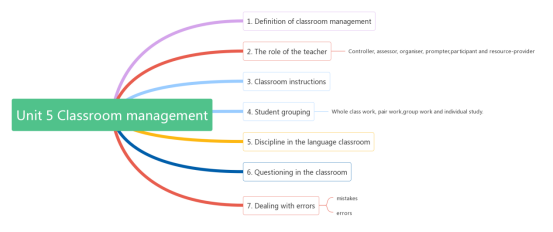
章节框架
教材精读:
首先,第一大重点:课堂管理和教师角色
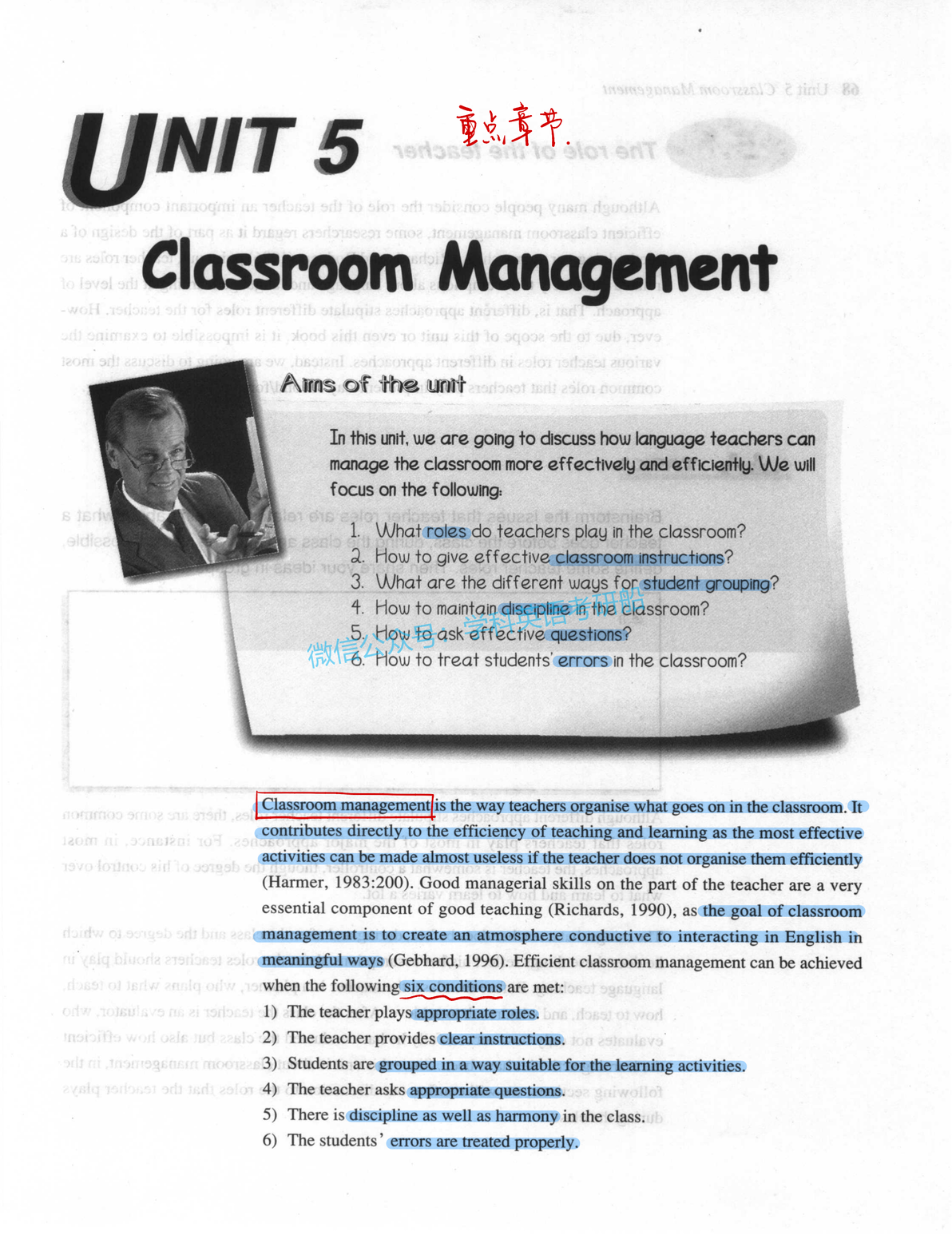
一、What is Classroom management?
Classroom management is the way teachers organize what goes on in the classroom.The goal of classroom management is to create an atmosphere conducive to interacting in English in meaningful ways (Gebhard,1996). 课堂管理:指的是组织课堂进行的方式、方法。其目的是给学生创造一个有利于高效学习的环境。
Efficient classroom management can be achieved when the following six conditions are met.
Students are grouped in a way suitable for the learning activities.
There is discipline as well as harmony in the class.
The teacher asks appropriate questions.
The students’ errors are treated properly
The teacher plays appropriate roles.
The teacher provides clearer instructions.
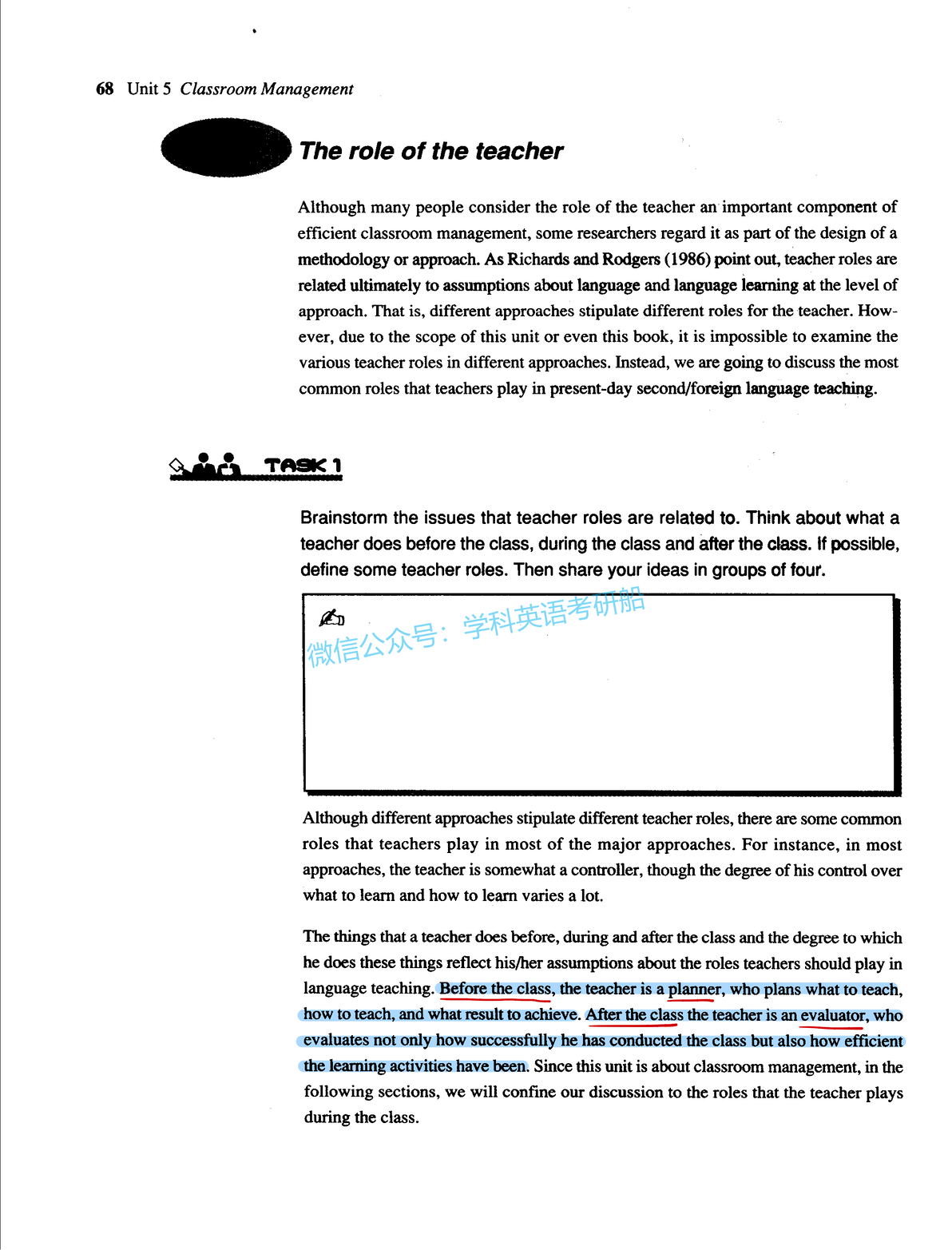
二、The role of the teacher
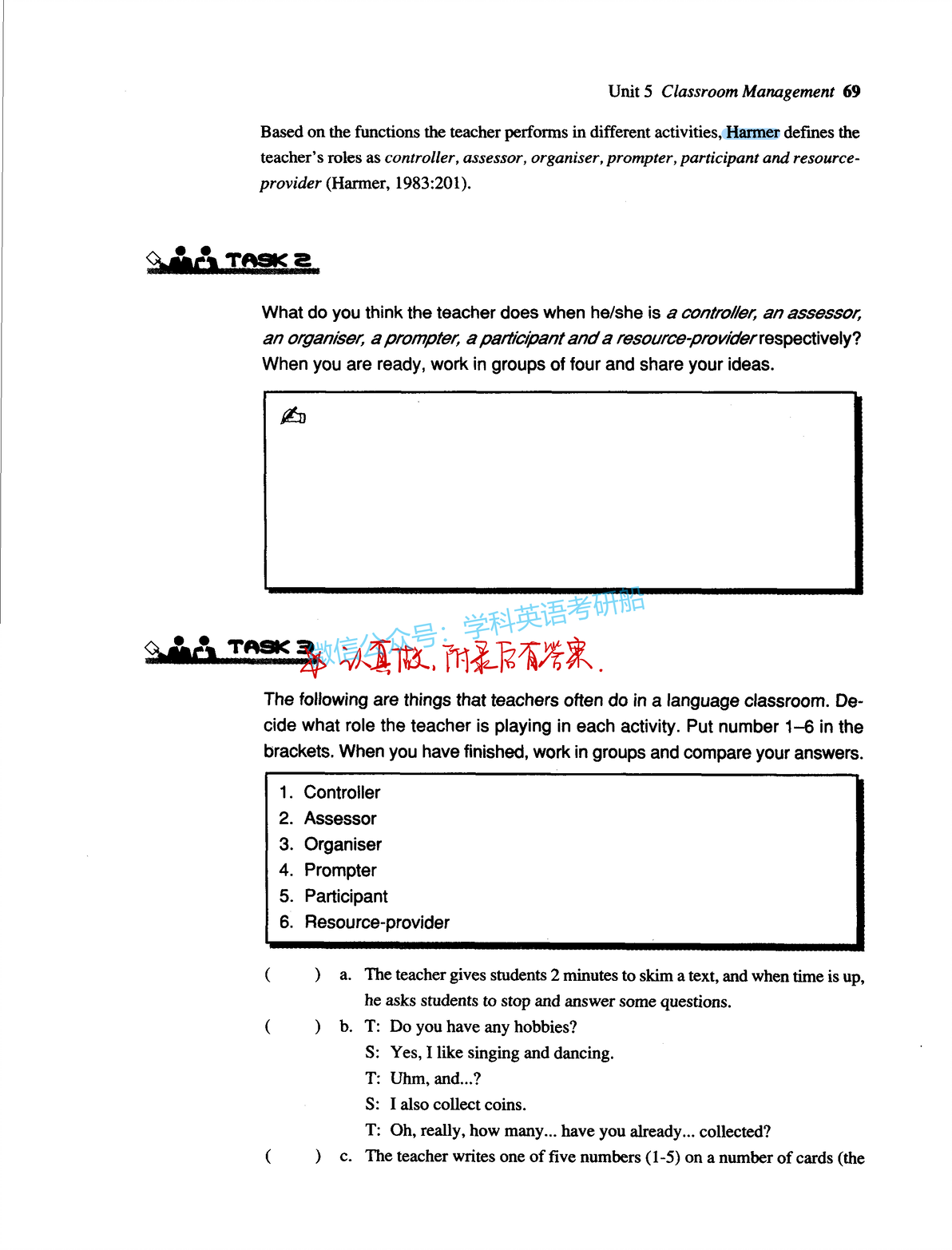
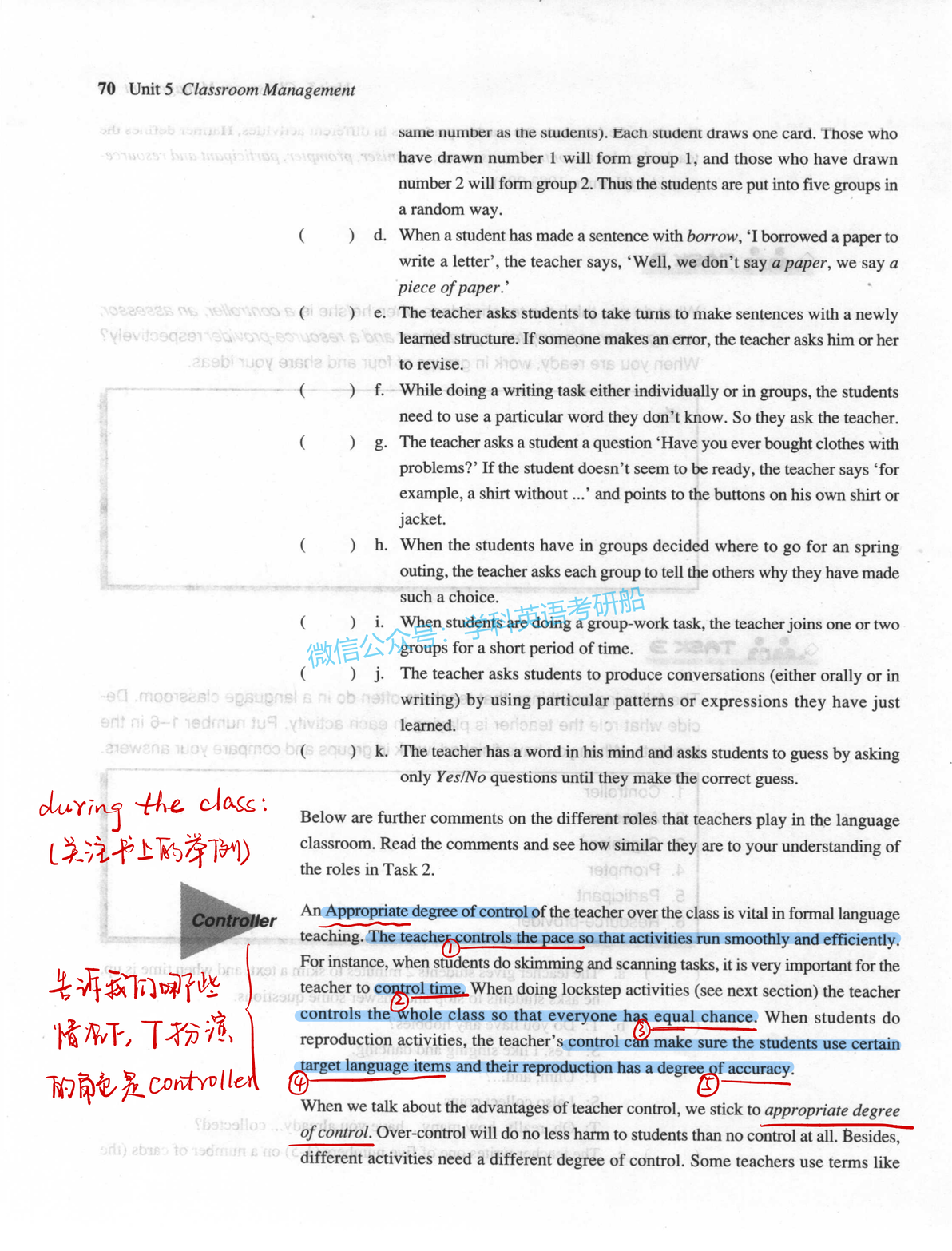
Controller (what to learn; how to learn) 控制者
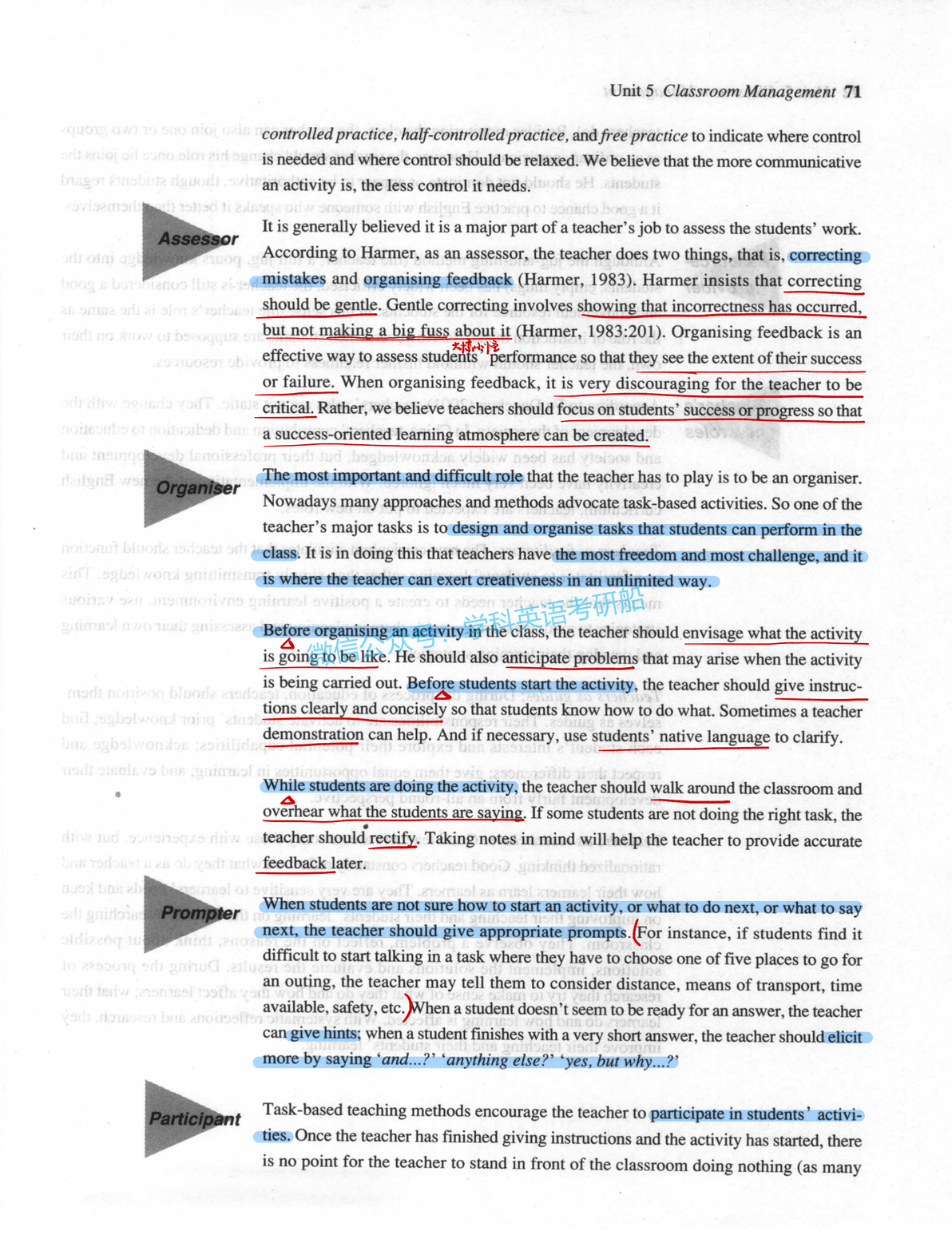
Assessor (correcting mistakes; organizing feedback) 评估者
Organizer (students’ activities) 组织者
Prompter (when ss don’t know what to do…) 促进者
Participant (in ss’ activities) 参与者
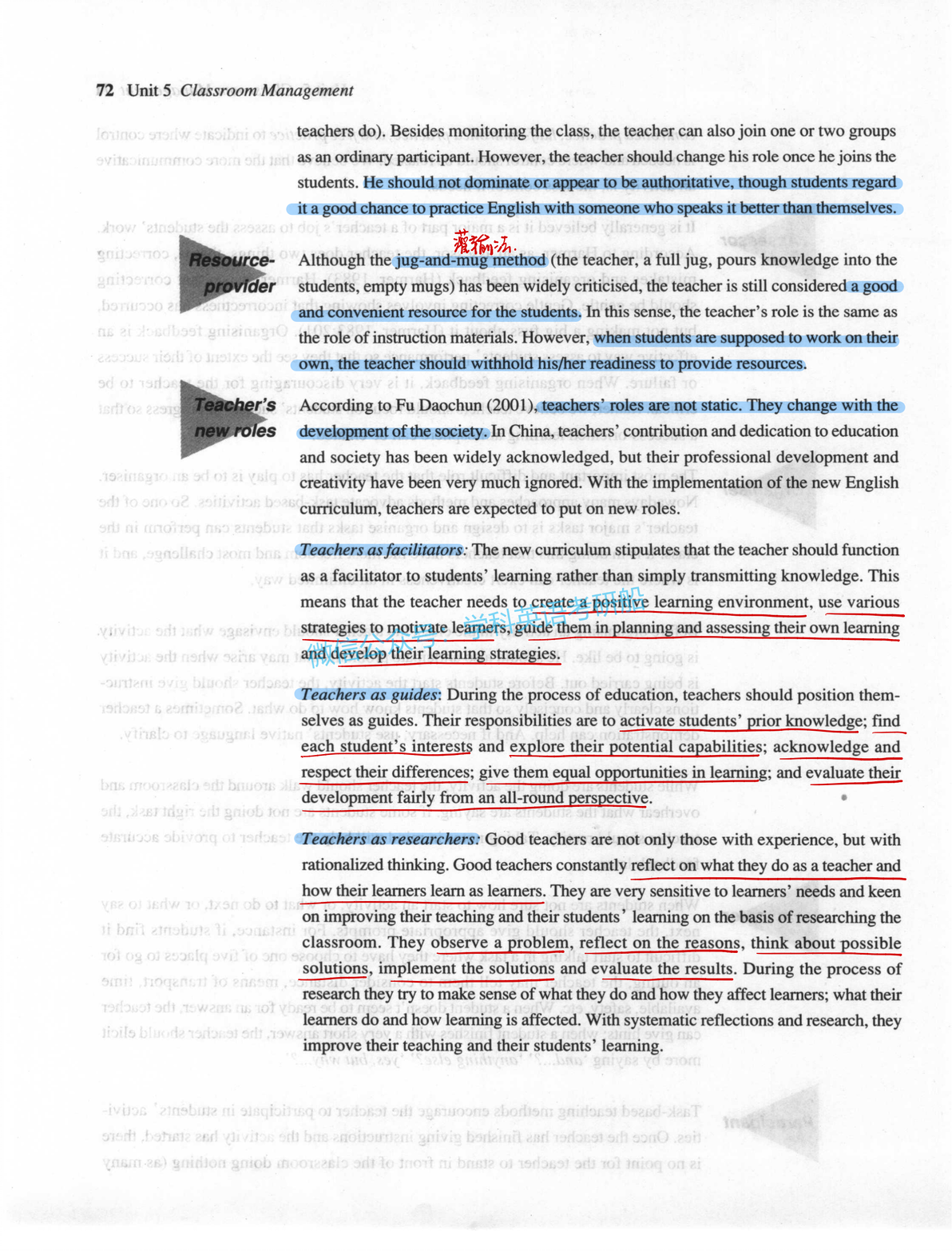
Resource-provider 资源提供者Teachers’ roles are not static. They change with the development of the society.
New roles:
Teacher as facilitator 帮助者Create a positive learning environment, use various strategies to motivate learners,guide students in planning and assessing their learning and develop their learning strategies…
Teacher as guide 指导者Activate students’ prior knowledge; find individual interests and explore potential capabilities; acknowledge and respect individual differences; give each equal opportunity in learning; evaluate students’ development fairly from an all-round perspective…
Teacher as researcher 研究者Observe a problem, reflect on the reasons, think about possible solutions, implement the solutions and evaluate the results…
其次,第二大重点:课堂指令
三、How to give effective classroom instructions?
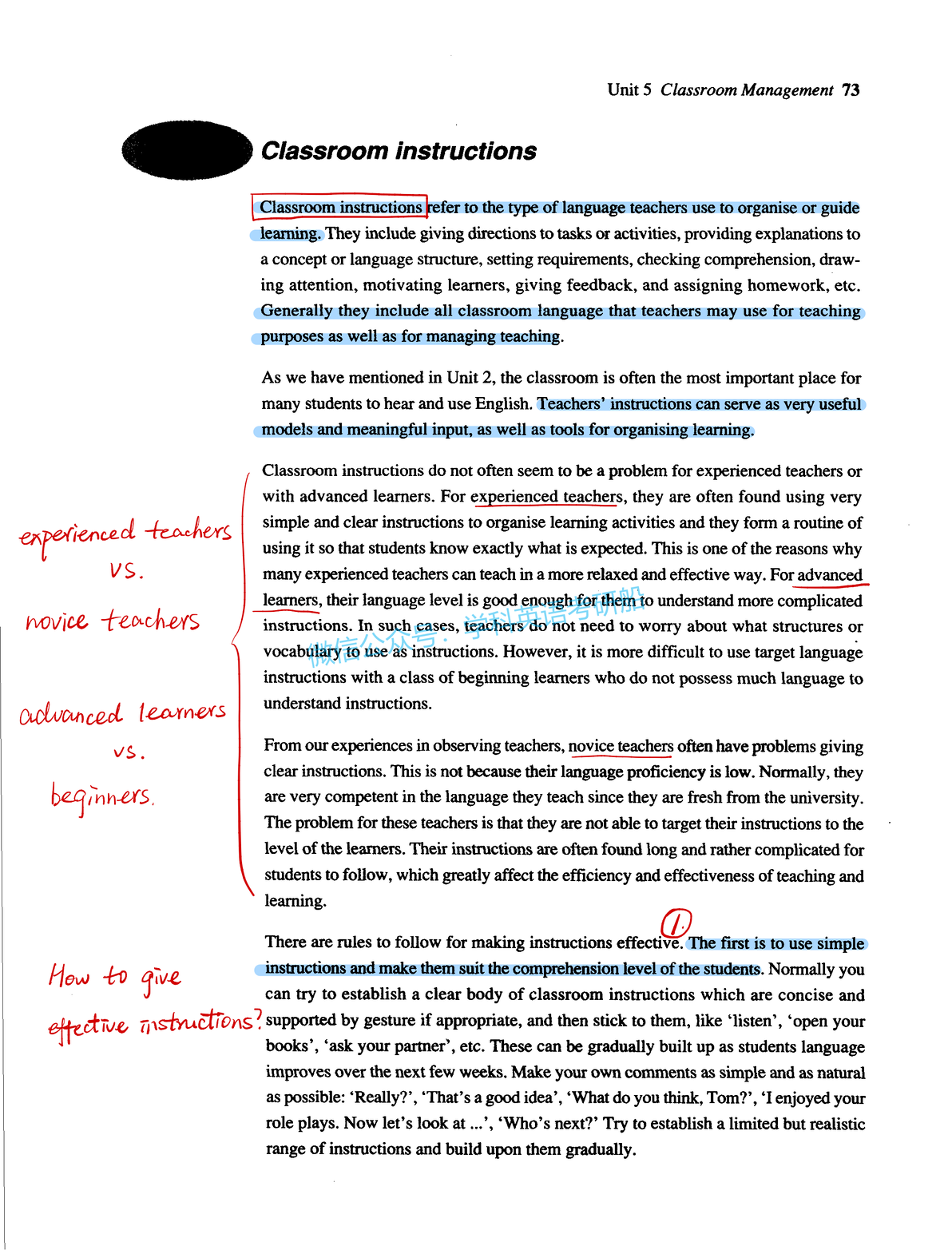
Classroom instructions refer to the type of language teachers use to organize or guide learning. 课堂指令是教师组织和指导学生所用的语言类型,一般包括用来实现教学目的和组织教学的所有课堂语言。
To use simple instructions and make them suit the comprehension level of the students;
To use the mother-tongue only when it is necessary;
Give students time to get used to listening to English instructions;
Use body language to assist understanding;
Model the task/activity before letting students into groups or pairs…
Teachers are not expected to do all the talking in class.Tip: Demonstration示范is usually more effective than words.
然后,第三大重点:学生的分组方式、维持课堂纪律策略、课堂提问及类型
四、What are the different ways for students grouping?
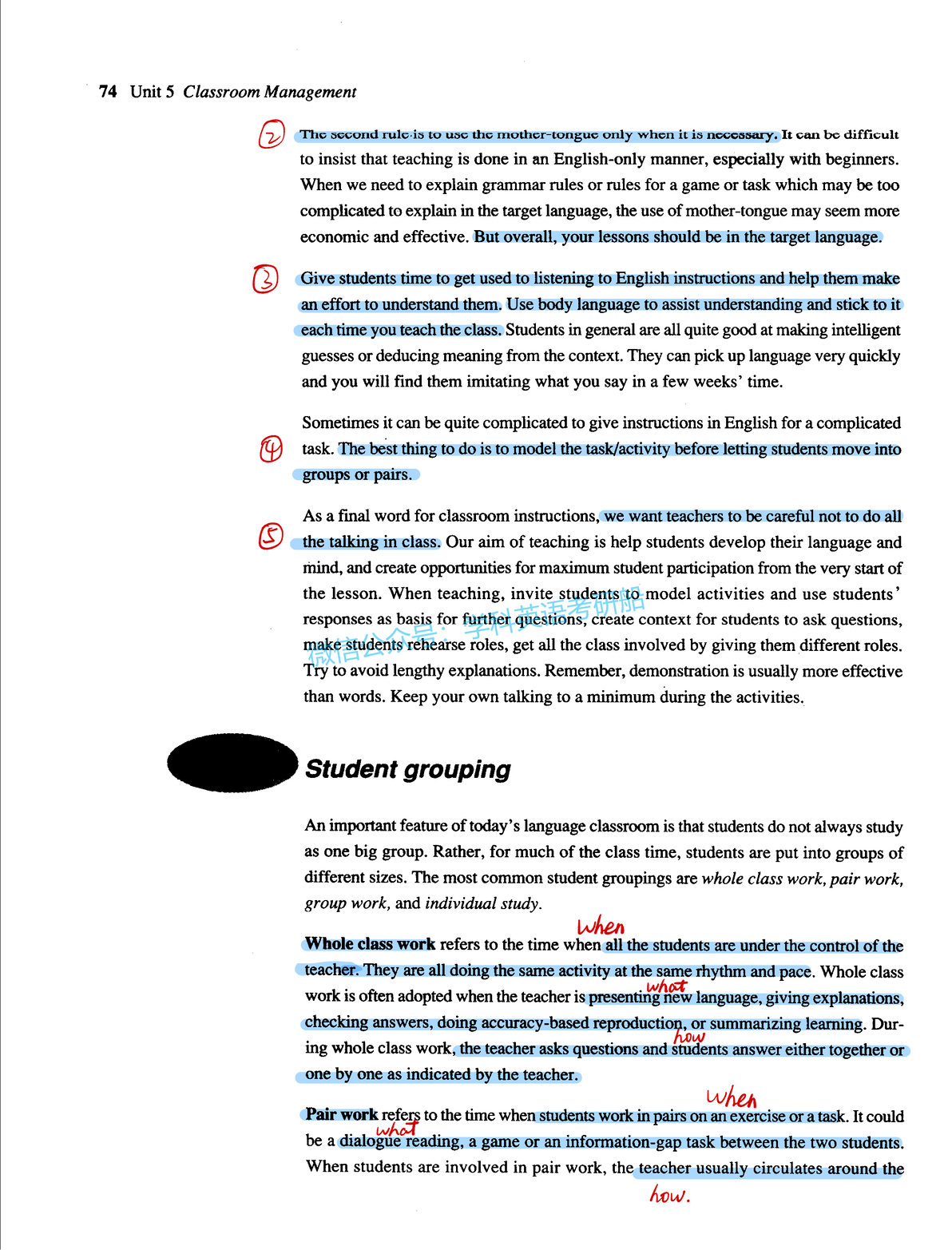
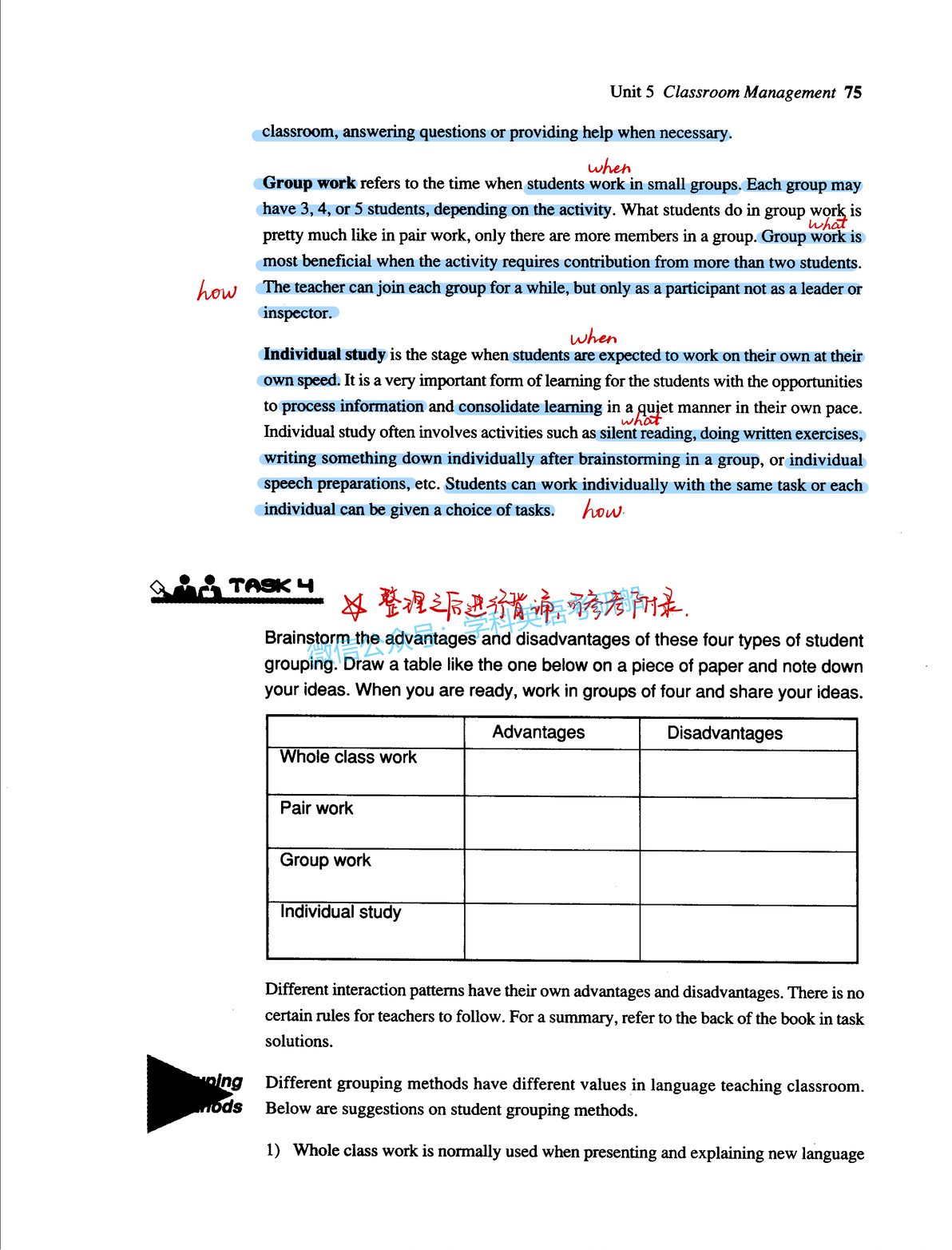
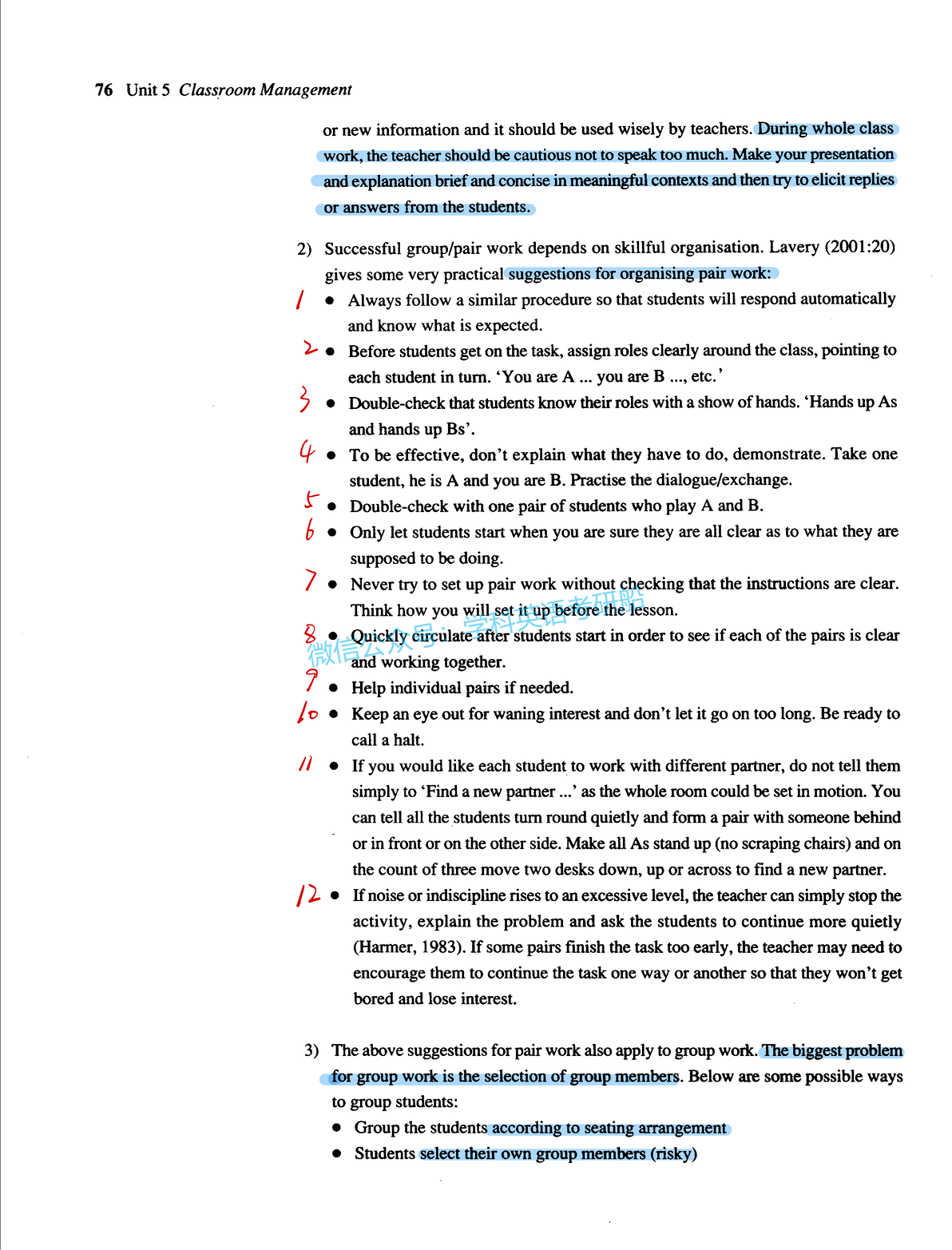
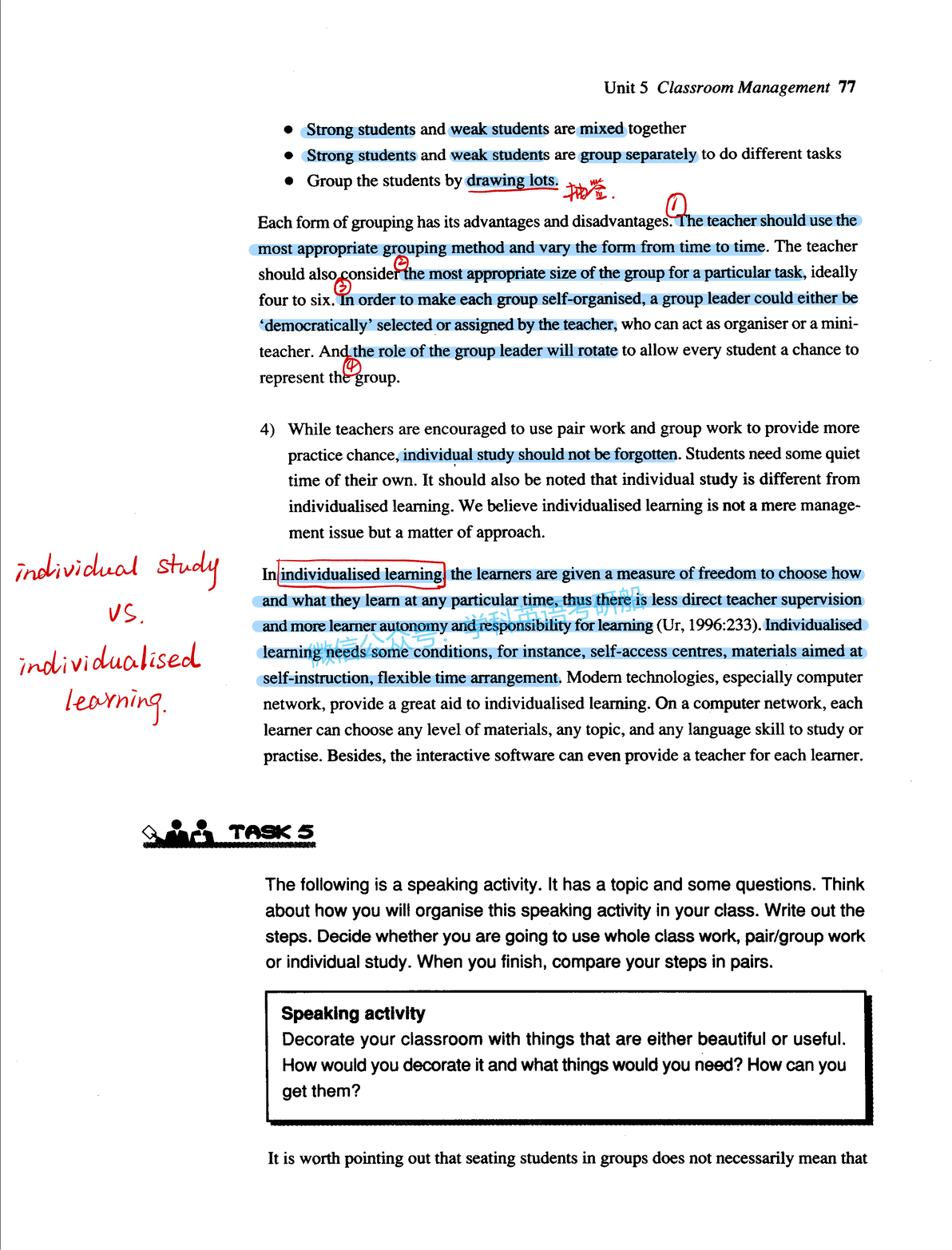
It include: Whole class work, pair work, group work, individual study 整个班级一组、两人一组、小组合作和单独学习
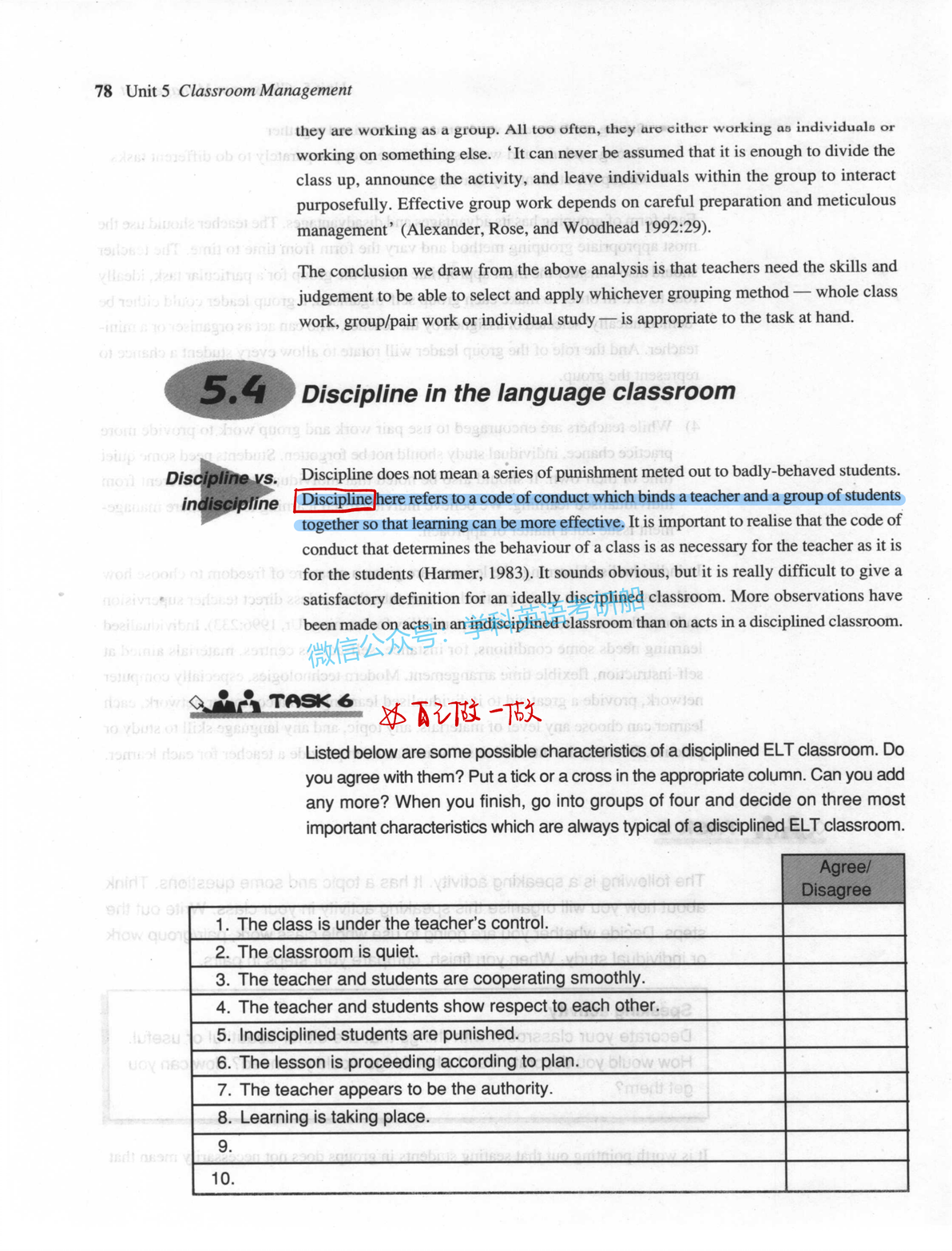
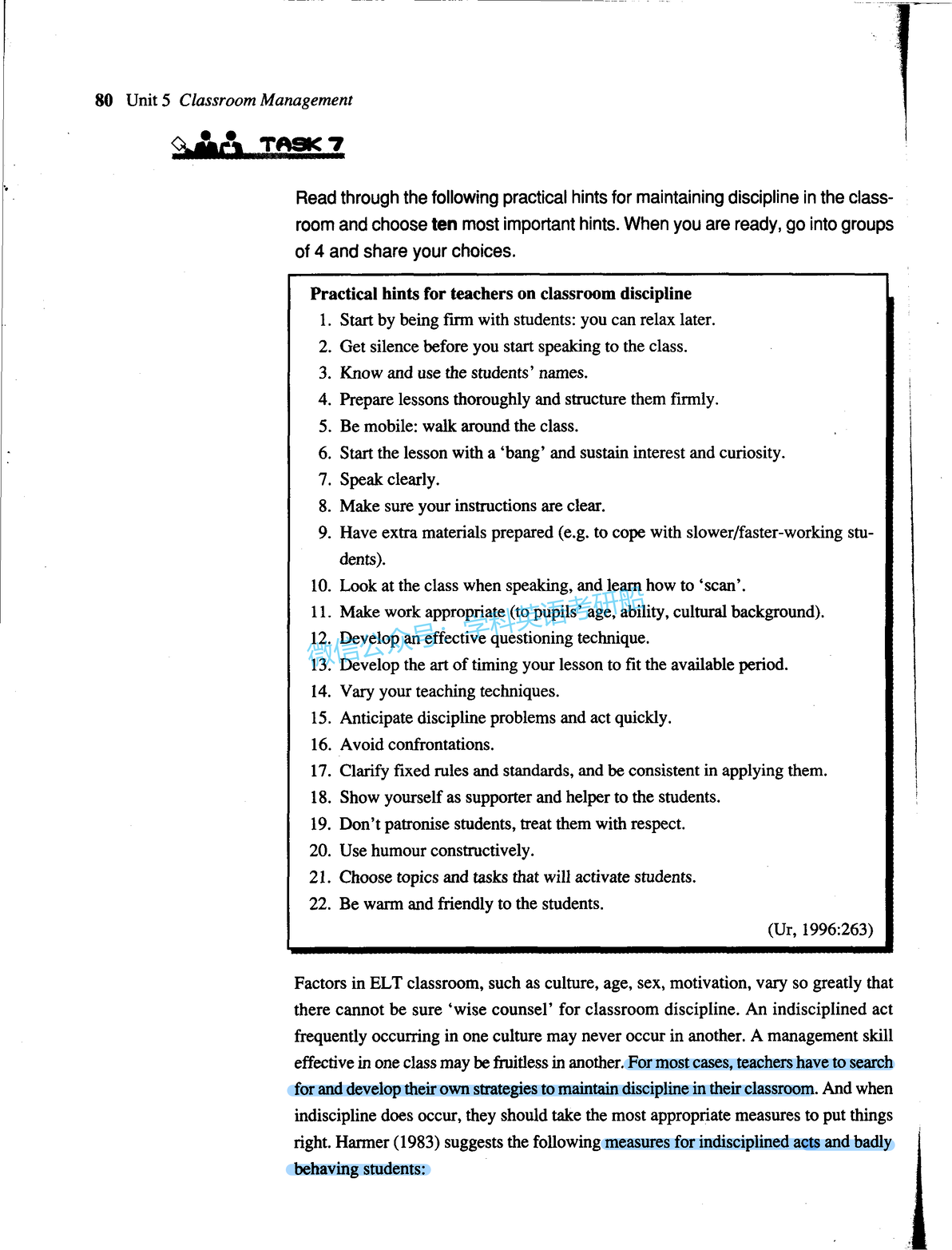
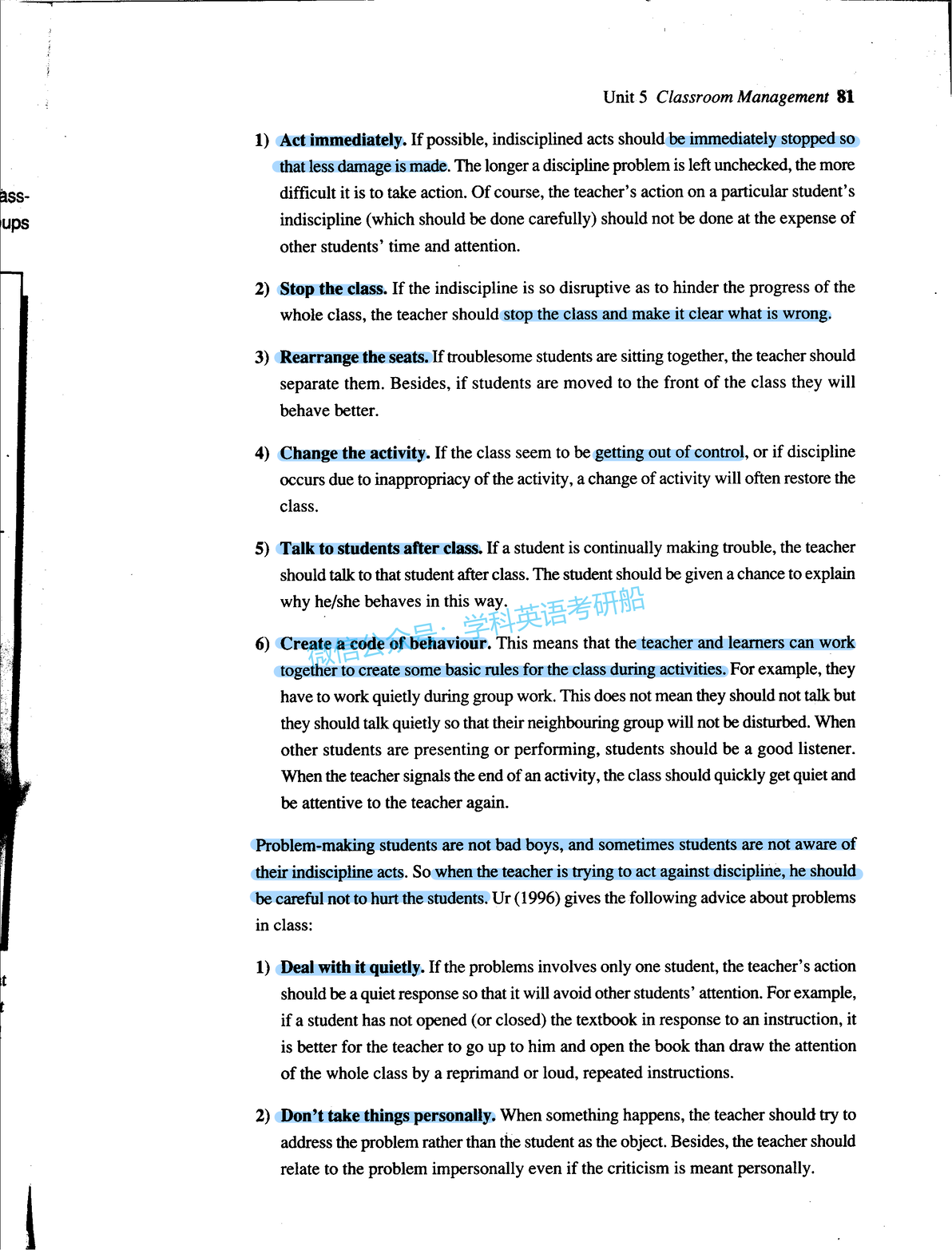
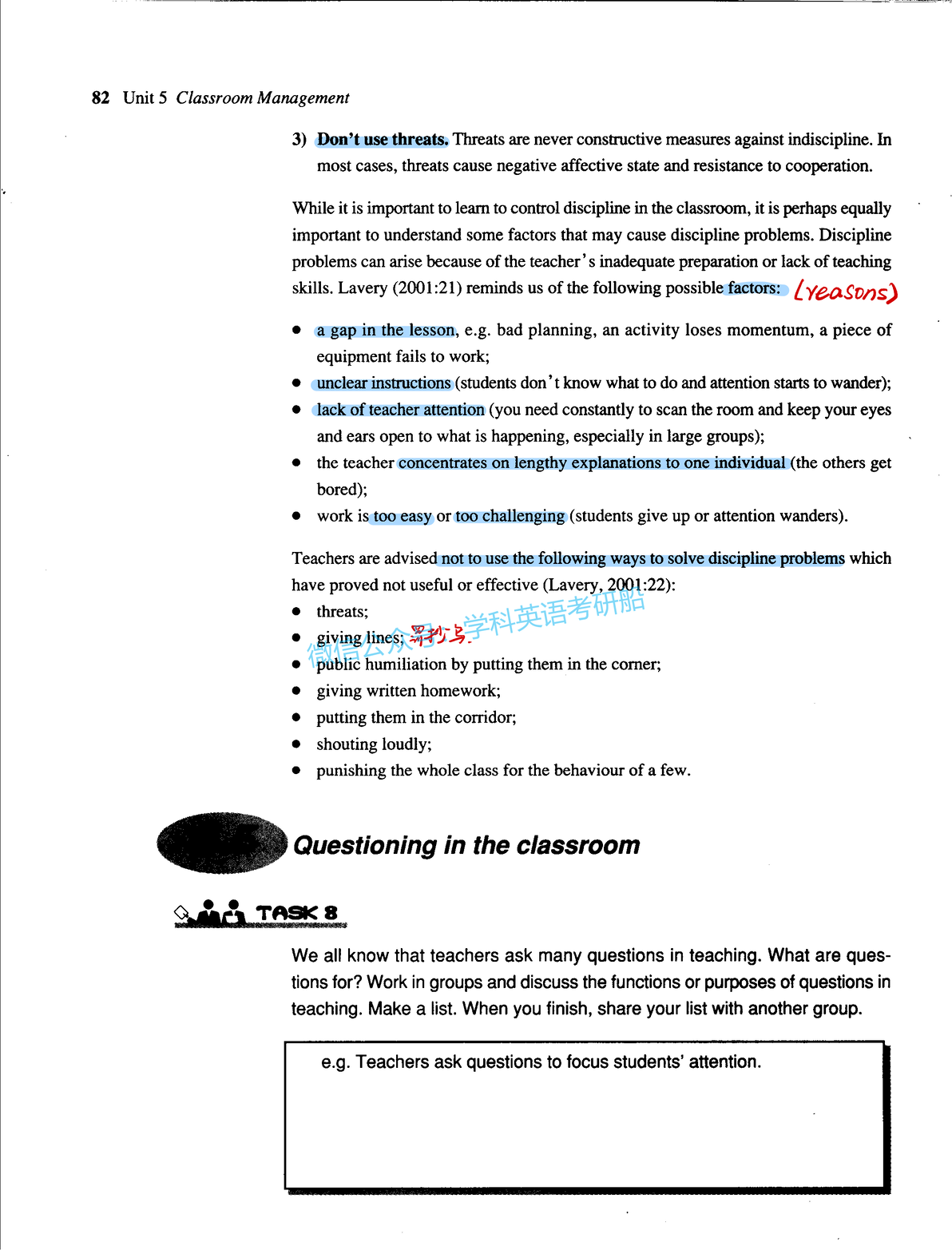
五、How to maintain discipline in the classroom?
Discipline refers to a code of conduct which binds a teacher and a group of students together so that learning can be more effective. 课堂纪律是一种行为准则,用来约束教师和学生,从而促进有效学习。
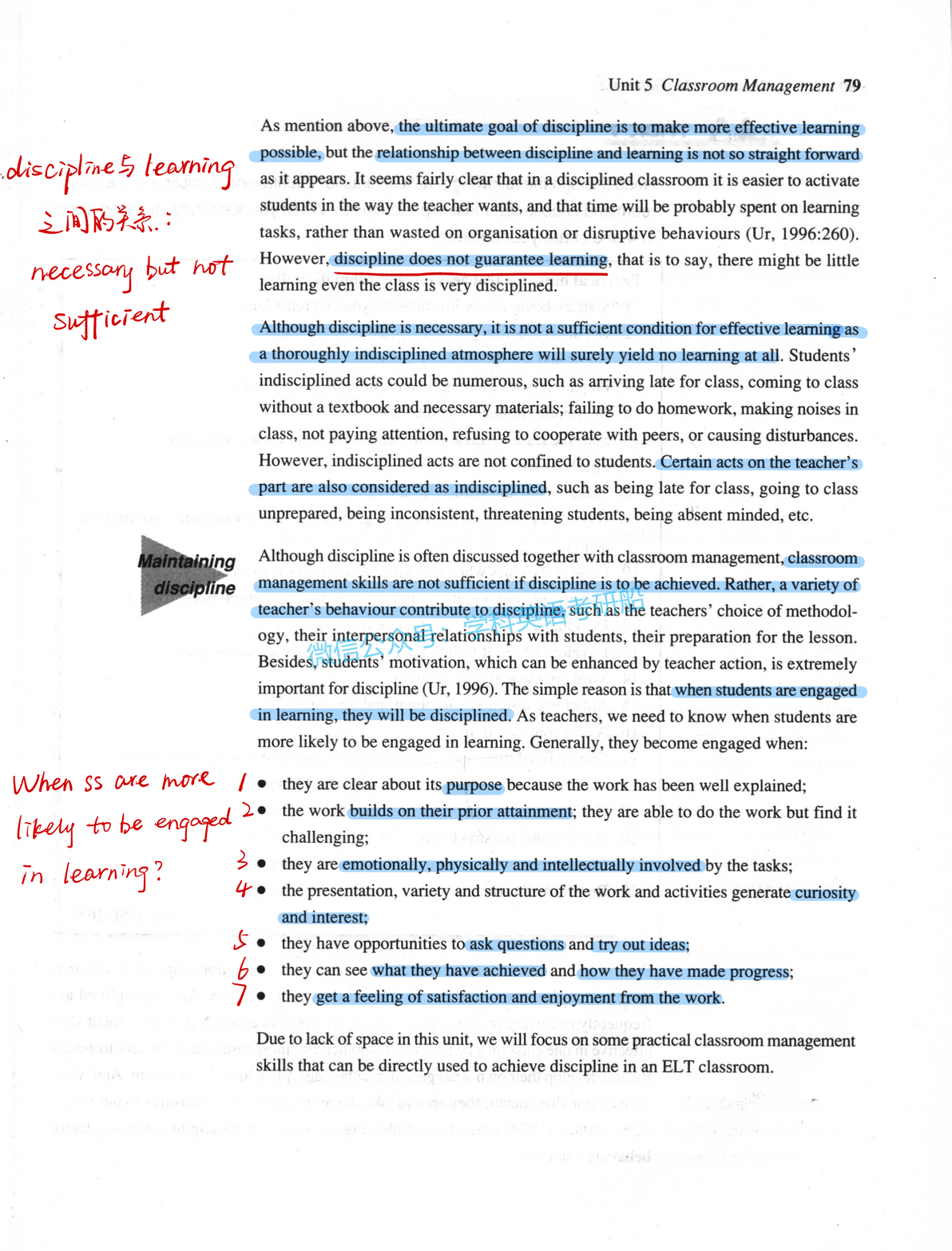
How to maintain discipline
When students are engaged in learning, they will be disciplined.
Ss are clear about learning purpose;
Ss are able to do the work but find it challenging;
Ss are emotionally, physically and intellectually involved by the tasks;
The presentation, variety and structure of the work and activities generate curiosity and interest;
Ss have opportunities to ask questions and try out ideas;
Ss can see what they have achieved and how they had made progress;
Ss get a feeling of satisfaction and enjoyment from the work.
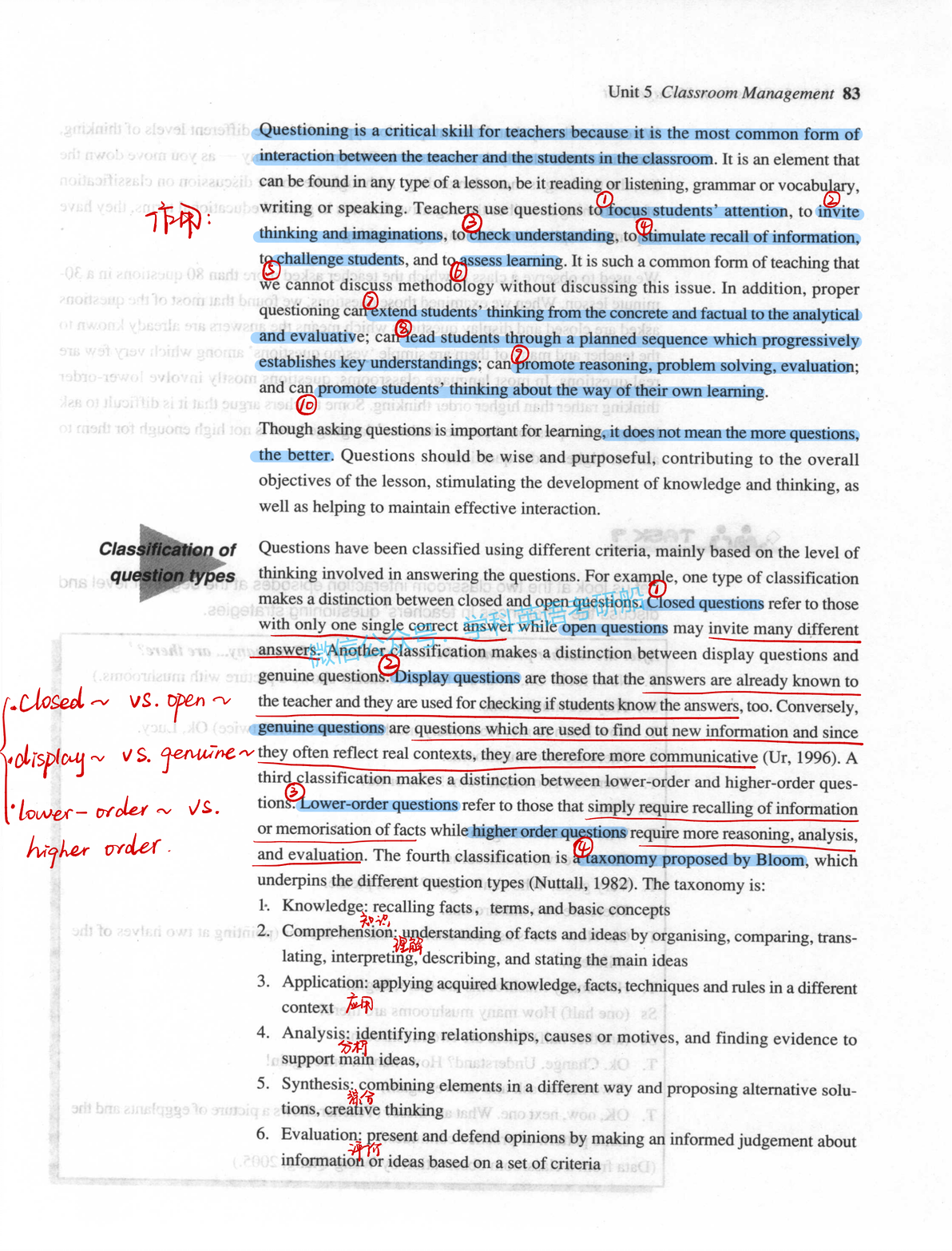
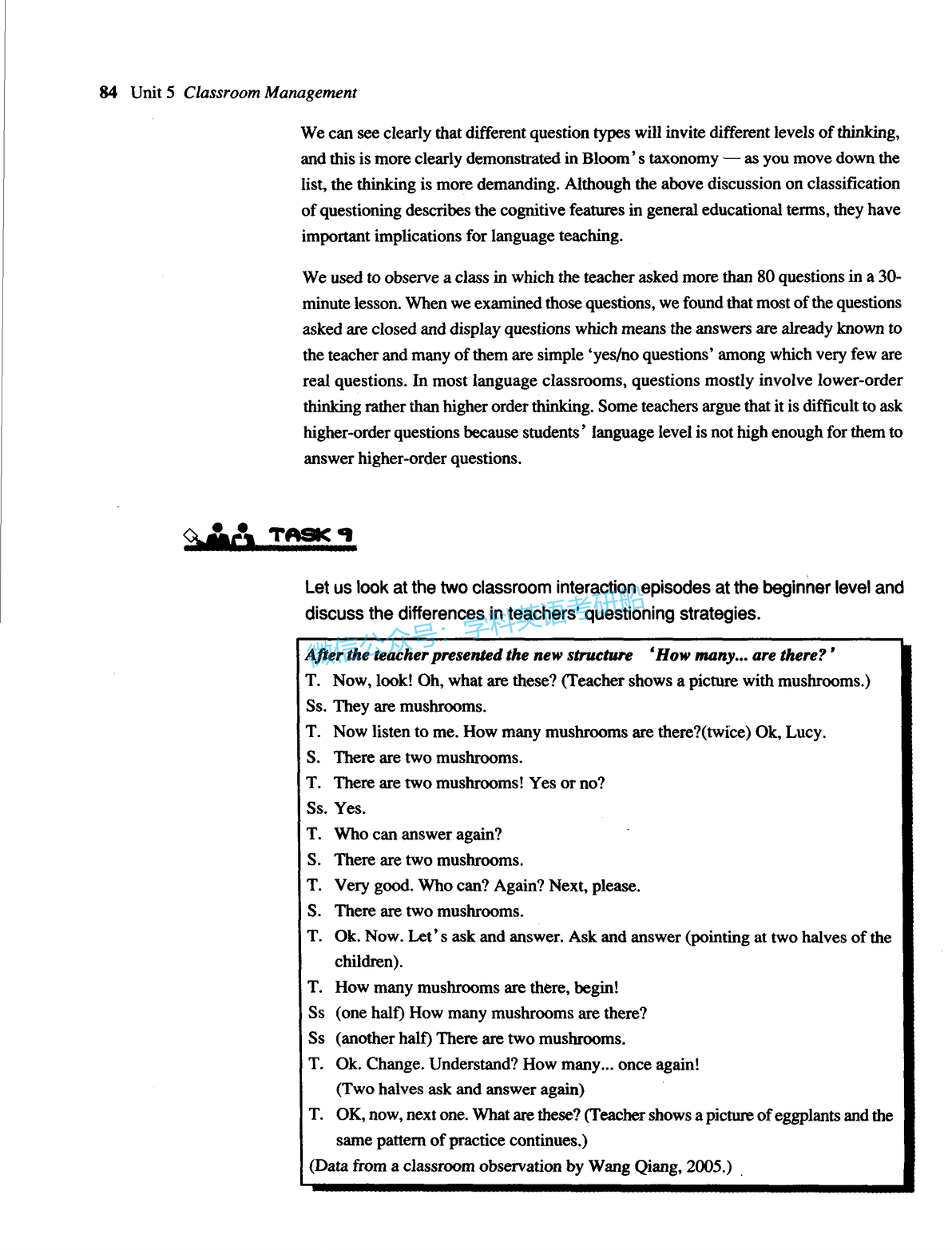
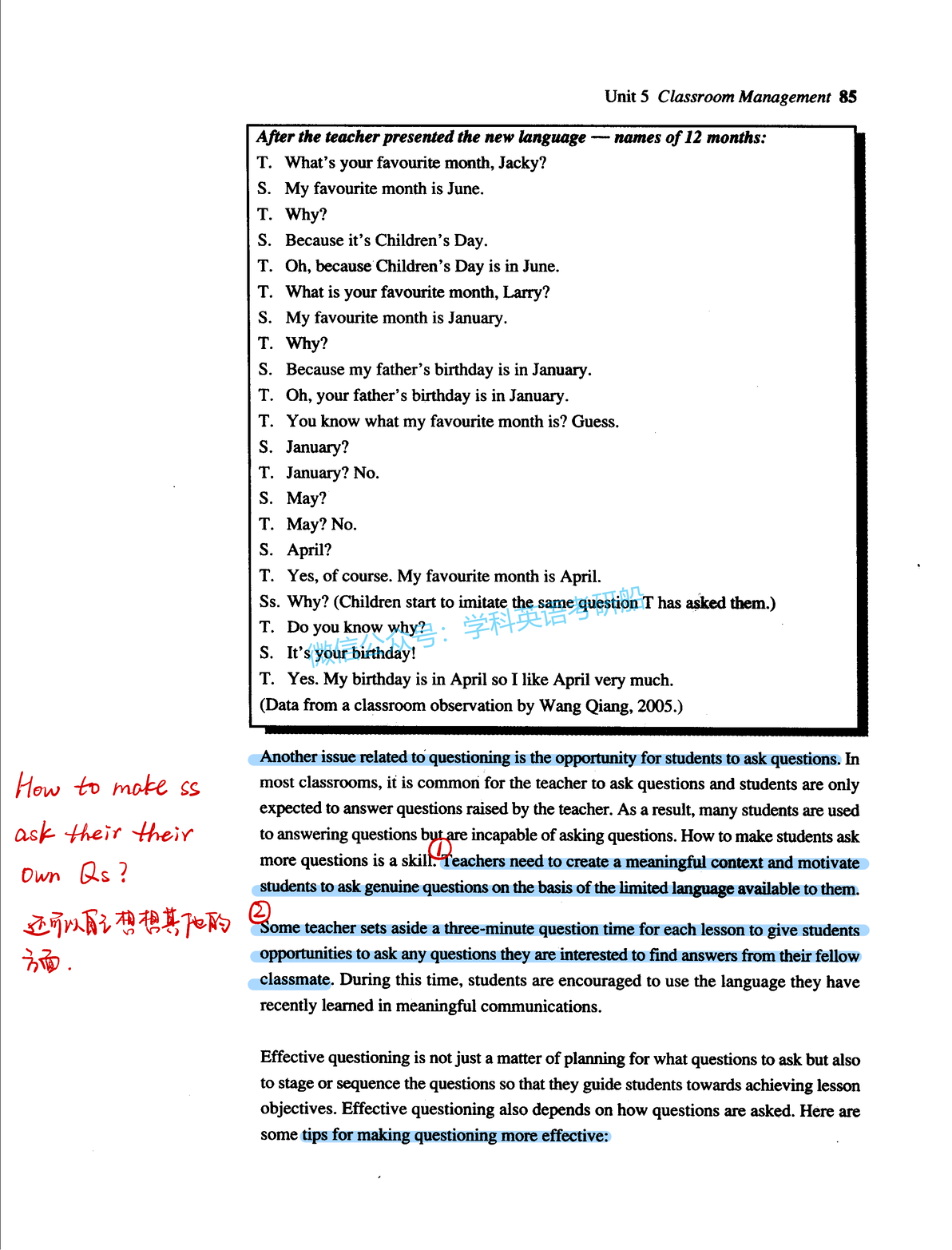
六、How to ask effective questions?
Questions should be closely linked to the learning objectives in the lesson;
Questions should be staged so that the level of challenge increases as the lesson proceeds;
There should be a balance between closed and open, lower-order and higher-order questions;
Wait time is important to allow students to think through their answers;
Ss should be provided opportunities to ask their own questions and seek their own answers;
A secure and relaxed atmosphere of trust is needed and ss’ opinions and ideas are valued.
最后,第四大重点:错误的定义和改错的五大方法
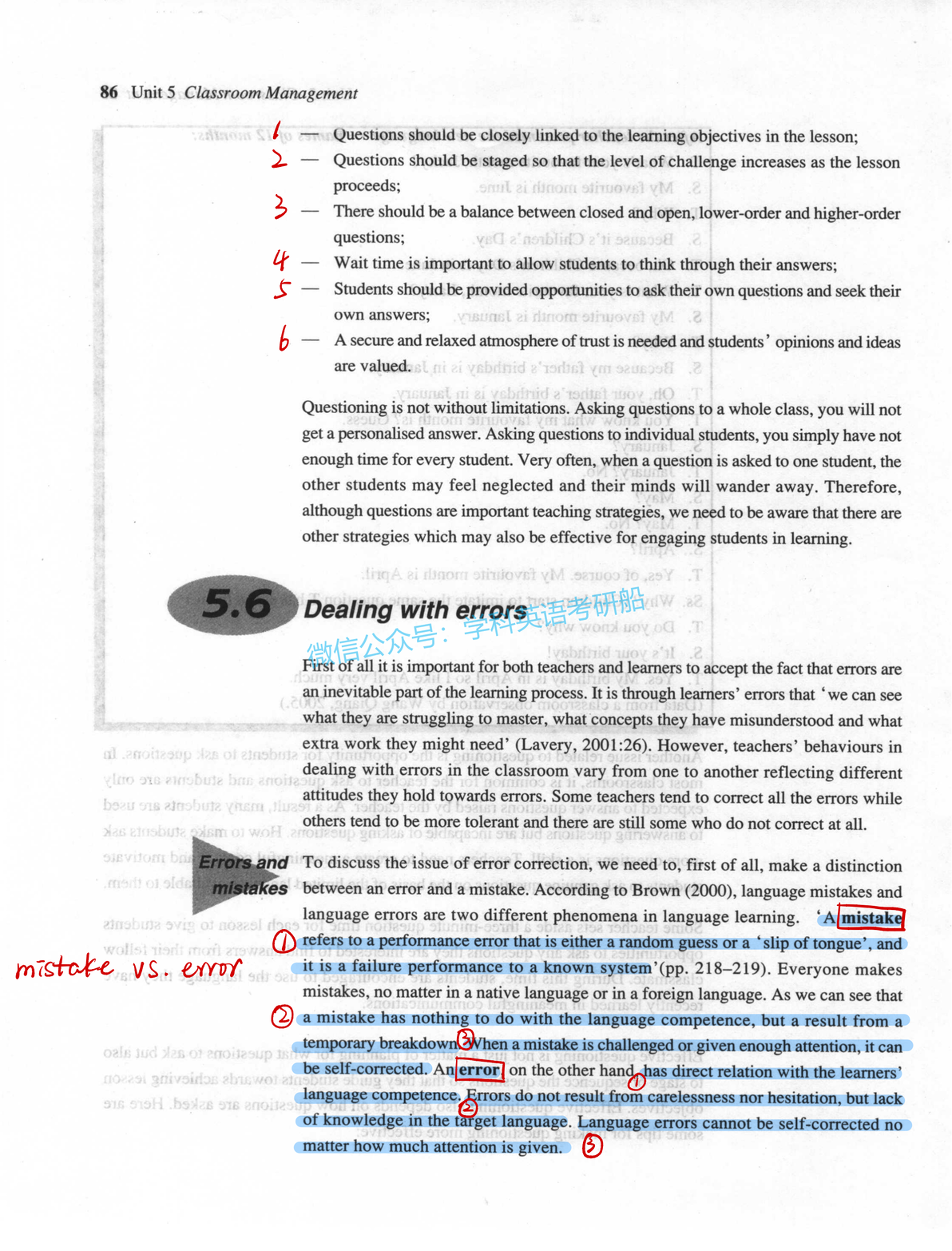
七、How to treat students’ errors in the classroom?
A mistake refers to “a performance error that is either a random guess or a ‘slip of tongue and it is a failure performance to a known system” (Brown, 2000: 218-219)
An error has direct relation with the learner’s language competence. Errors do not result from carelessness nor hesitation, but lack of knowledge in the target language.A mistake can be self-corrected; an error cannot be.
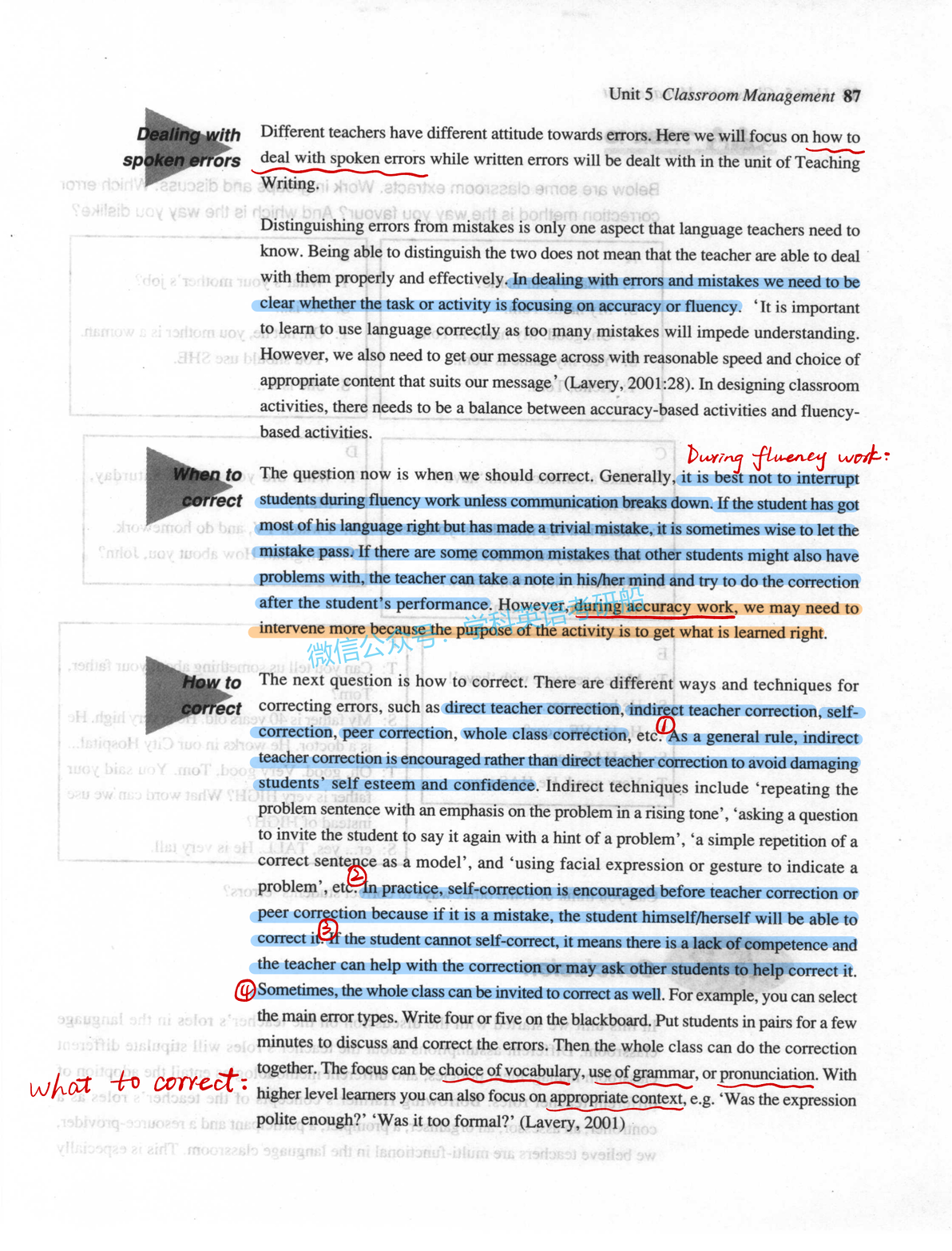
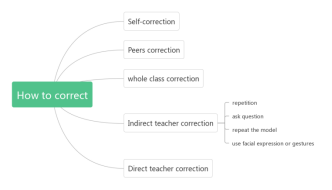
The methods for correcting mistakes:
一般每次更新一个单元,单元内容较多时会分为上、下两期更新。
关注我,跟我一起来学教学法吧~
