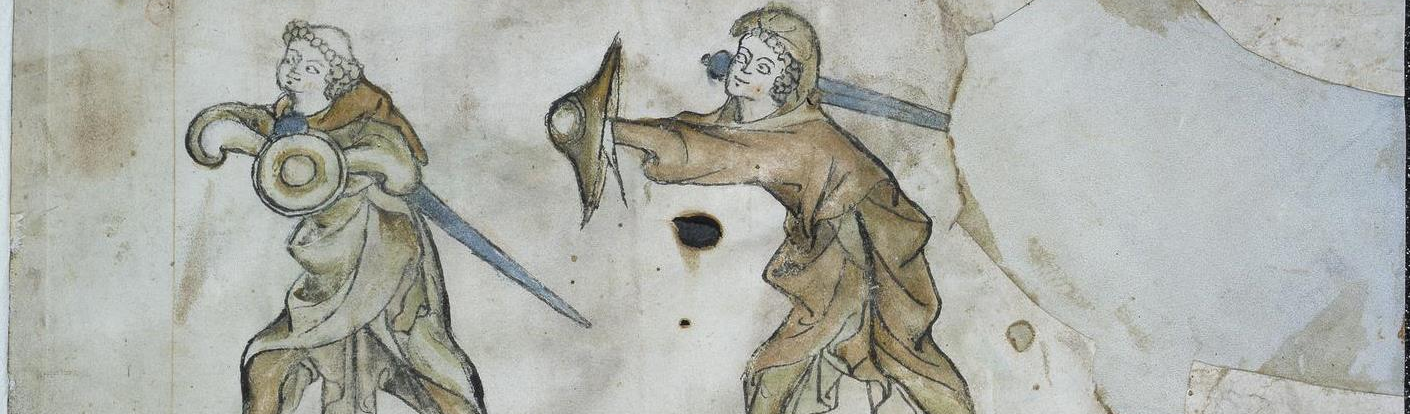

Walpurgis Fechtbuch (MSⅠ.33)剑术手稿(最近重新编目为 FECHT 1)是可追溯到 1320 年的德国击剑手册。目前由英国利兹的皇家军械库博物馆持有。它包含现存最古老的关于中世纪武术的论文"Liber de Arte Dimicatoria",它由一位世俗牧师起草的,可能是文中提到的"Lutegerus",三位抄写员和多达十七位插图画家参与创造了这个作品。目前手稿由五份手稿组成,除第一个外均不完整,至少有八页手稿丢失了。本文主要根据Joey Nitti翻译的英文译文和手稿原件图片对I.33所述剑盾技术进行学习,翻译水平有限,若有谬误请指出。
英语译文:Note how in general all fencers, or all men holding a sword in hand, even ignorant in the art of fencing, use these seven wards, of which we have seven verses:
大意:请注意,一般来说,所有的击剑手和会用剑的人,即使是对击剑艺术一无所知,也会使用这七种,我们通过(以下)七段文字描述的守势:
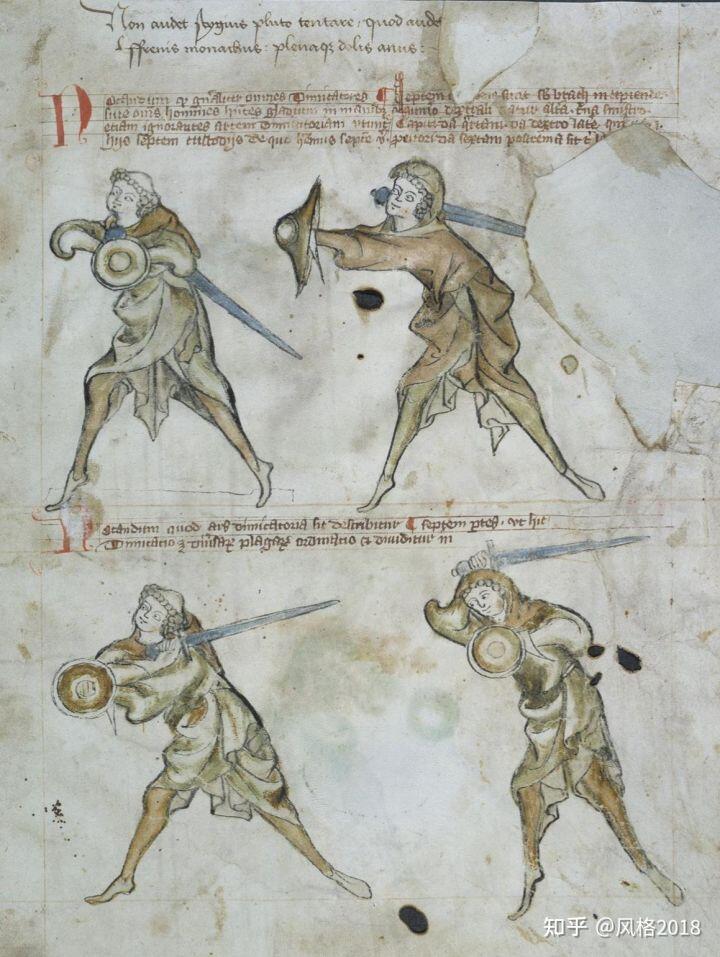
英语译文:Seven wards there are, beginning with under the arm, give to the right shoulder [the second], and the third is the left [shoulder].Give to the head the fourth, give to the right side the fifth, give to the breast the sixth, and langort is your last.
大意:从腋下开始转向到右肩(第二式)一共有七个守势,第三式在左肩。第四式位于头上,第五式位于右侧,第六式位于胸前,最后一式名为langort式。
英语译文: Note that the entire core of the art of fencing stands in this final ward which is called langort. Also, all the actions of the wards or of the sword are defined by it, i.e. they finish in it and not in others. And so consider well the abovementioned first.
大意:请注意,击剑艺术的整个核心都在这个最后的守势,它被称为langort式。同样,守势或剑的所有行动都是由它所定义的,即所有守势均以它结束而不是以其他守势。所以首先要考虑好上面提到的顺序。
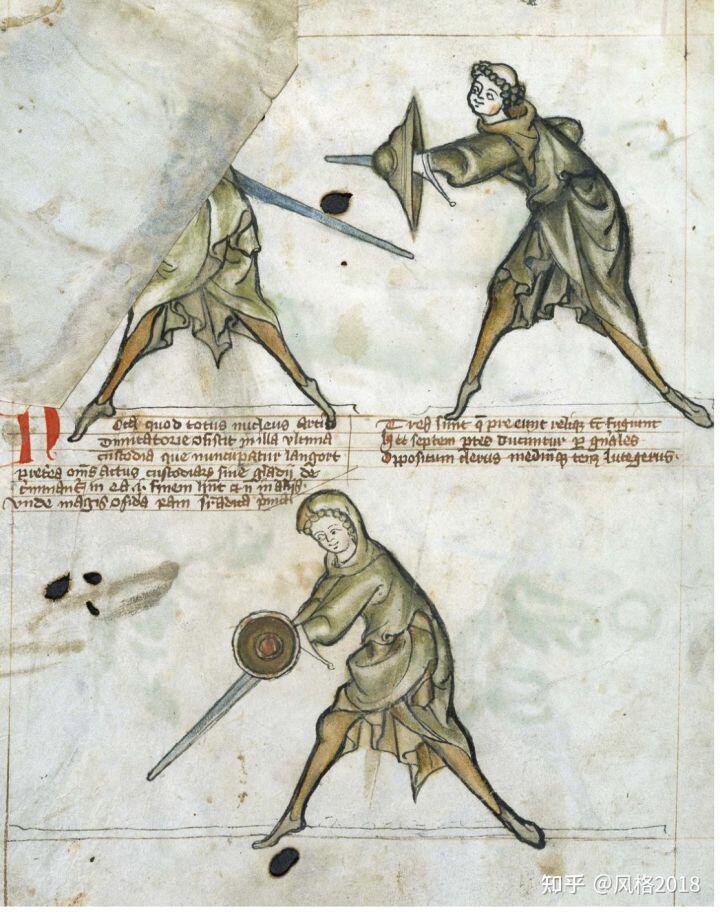
原文(拉丁语):Tres sunt que preeunt relique tunc fugiunt
Hec septem partes ducuntur per generales
Oppositum clerus mediumque tenet lutegerus
大意(存疑): 有三个人先于其他人离开了。
这七个部分由普通人(编写)。
神父反对,Lutegerus中立。
