
wt国际服开黑群:597459693 YY:24894048
本文为cv2401687的资料补充。配合该文食用更佳。

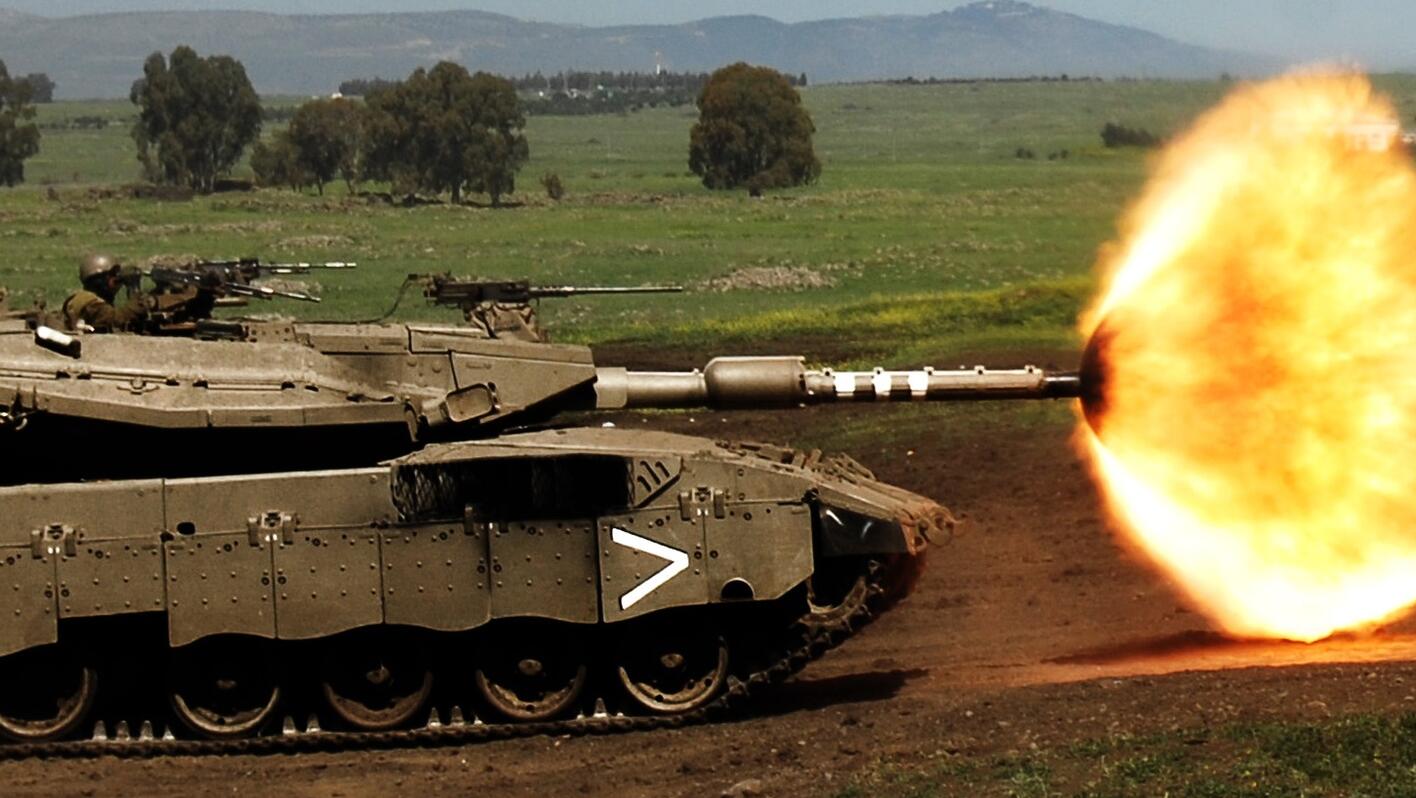
本文提要:“梅卡瓦”的简介、发展历程、主要特征、衍生型号
The Merkava is a main battle tank used by the Israel Defense Forces. The tank began development in 1970, and entered official service in 1979. Four main variants of the tank have been deployed. It was first used extensively in the 1982 Lebanon War. The name "Merkava" was derived from the IDF's initial development program name.
“梅卡瓦”是以色列国防军使用的主战坦克。该坦克于1970年开始研制,1979年正式服役。坦克的四个衍生型号都是现役车辆。她在1982年黎巴嫩战争中首次广泛使用。“merkava”这个名称是从IDF的初始开发项目名称派生而来的。
Design criteria include rapid repair of battle damage, survivability, cost-effectiveness and off-road performance. Following the model of contemporary self-propelled howitzers, the turret assembly is located closer to the rear than in most main battle tanks. With the engine in front, this layout is intended to grant additional protection against a frontal attack, so as to absorb some of the force of incoming shells, especially for the personnel in the main hull, such as the driver. It also creates more space in the rear of the tank that allows increased storage capacity and a rear entrance to the main crew compartment allowing easy access under enemy fire. This allows the tank to be used as a platform for medical disembarkation, a forward command and control station, and an infantry fighting vehicle. The rear entrance's clamshell-style doors provide overhead protection when off- and on-loading cargo and personnel.
她的设计标准包括快速修复战损、生存能力、成本效益和越野性能。她参考了现代自行榴弹炮的外型,炮塔总成比大多数主战坦克更靠近车尾,而发动机前置,此布局旨在提供额外的保护,以抵御来自正面的攻击,从而吸收一部分炮弹的能量,尤其是对车体中的人员,如驾驶员提供额外防护。坦克后部有了更多的空间,从而增加了内部的容量,并为乘员舱提供了一个后部入口,以便在面对敌军火力时轻松上车。这使得坦克可以用作前线医疗平台、前方指挥控制站和步兵战车。车尾的翻盖式门能在装卸货物和人员时提供头顶的保护。
It was reportedly decided shortly before the beginning of the 2006 Lebanon War that the Merkava line would be discontinued within four years. However, on November 7, 2006, Haaretz reported that an Israeli General staff assessment had ruled of the Merkava Mark IV that "if properly deployed, the tank can provide its crew with better protection than in the past", and deferred the decision on discontinuing the line. On August 16, 2013, Israeli Defense Minister Moshe Ya'alon announced the decision to resume production of the Merkava main battle tank for the IDF Armored Corps.
据报道,在2006年黎巴嫩战争开始前不久,以色列人决定在四年内关停“梅卡瓦”的生产线。然而,2006年11月7日,《国土报》报道说,以色列总参谋部对“梅卡瓦” Mk.4进行了评估,他们认为“如果部署得当,坦克可以为乘员提供比过去更好的保护”,并推迟了关停生产线的决定。2013年8月16日,以色列国防部长摩西·雅哈隆宣布,决定为以色列国防军装甲部队恢复“梅卡瓦”的生产。
资料卡片:
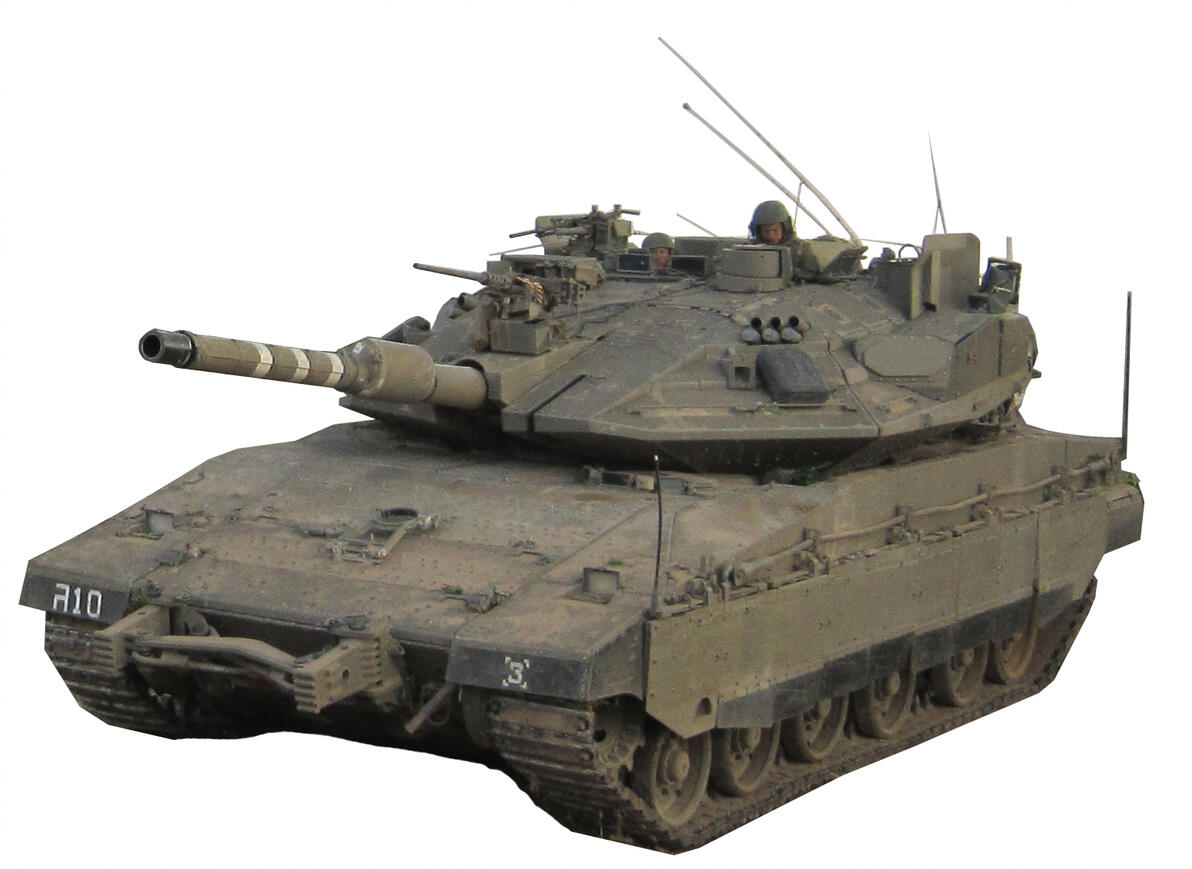
2014年“护刃”行动期间,装备了主动防御系统的“梅卡瓦” Mk.4M “风衣”
服役时间:1979年至今
使用方:以色列国防军
参战记录:1982年黎巴嫩战争、黎巴嫩南部冲突、镇压1987年底爆发的以色列占领区巴勒斯坦人第一次暴动、2000年爆发的以色列占领区巴勒斯坦人第二次暴动、2006年黎巴嫩战争、加沙战争、“防御支柱”行动、“护刃”行动
单价:350万美元(交付给以色列国防军的“梅卡瓦” Mk.4)、450万美元(2014年卖给外国的“梅卡瓦” Mk.4)
生产时间:1979年至今
质量:65吨
总长:9.04m
总宽:3.72m
车高:2.66m
车组:4人(车长、驾驶员、炮手、装填手)
乘员:6人
主武器:可发射LAHAT反坦克导弹的120mm MG 253滑膛炮
副武器:1门遥控的.50 M2HB、2门7.62mm MG 1 机枪、Mk 19烟雾发射器(备弹12发)、1门60mm迫击炮
动力:MTU设计的1,500马力涡轮增压柴油机
功重比:23马力/吨
载弹量:48发
底盘离地间隙:0.48m
作战续航:500km
最大速度:64kph(铺装路面)、55kph(越野)
3.1 Development 发展历程
In 1965, Israel's military establishment began research and development on a domestically produced tank, the "Sabra" (not to be confused with the later model of the same name now in service). Initially, Britain and Israel collaborated to adapt the United Kingdom's Chieftain tank that had entered British Army service in 1966. However, in 1969, Britain decided not to sell the tank to Israel for political reasons.
1965年,以色列军方开始在国内生产的“萨布拉”坦克的基础上进行研究和开发(不要与现在使用的同名型号混淆)。最初,英国和以色列合作,计划让犹太人适应1966年进入英国陆军服役的英国“酋长”坦克。然而,1969年,出于政治原因,英国决定不向以色列出售坦克。
Israel Tal, who was serving as a brigade commander after the Suez Crisis, restarted plans to produce an Israeli-made tank, drawing on lessons from the 1973 Yom Kippur War, in which Israeli forces were outnumbered by those of the Middle East's Arab nations.
以色列公司塔尔吸收了1973年赎罪日战争的教训,重新启动了生产以色列国产坦克的计划。
By 1974, initial designs were completed and prototypes were built. After a brief set of trials, work began to retool the Tel HaShomer ordnance depot for full-time development and construction. After the new facilities were completed, the Merkava was announced to the public in the International Defense Review periodical. The first official images of the tank were then released to the American periodical Armed Forces Journal on May 4, 1977. The first Merkava Mk. 1 tanks were supplied to the IDF in April 1979, nearly nine years after the decision to produce the Merkava Mk. 1 tank was taken. The IDF officially adopted the tank in December 1979.
到1974年,初步设计完成,并制造了原型车。经过一系列短暂的试验,工作重心转到了特拉哈索默军械库的更新重建上。新设施建成后,“梅卡瓦”《国际防务评论》期刊上公开。1977年5月4日,坦克的第一张官方图片被发布到美国期刊《武装部队杂志》上。在决定生产Merkava MK.1坦克近9年后,1979年4月,第一辆“梅卡瓦” Mk.1坦克交付以色列国防军。国防军于1979年12月正式装备了该坦克。
3.2 General Characteristics 主要特征
Firepower 火力
The Merkava Mark I and II were armed with a 105 mm M64 gun, A license built variant of the M68. The Mark III, Mark III Dor Dalet BAZ kassag, and the Mark IV are armed with an IMI 120 mm smoothbore gunwhich can fire all versions of Western 120 mm smooth bore tank ammunition.
“梅卡瓦”1和2装备了105毫米M64坦克炮,这是M68的许可证授权制造产品。“梅卡瓦”3、“梅卡瓦”3 “道尔”和“梅卡瓦”4装备了IMI生产的120mm滑膛炮,可以发射西方所有型号的120 mm炮弹(例如DM12/M830、DM13/23/33/43/53、DM18、M829等)。
Each model of the Merkava has two roof mounted 7.62 mm machine guns for use by the commander and loader and another mounted co-axially with the main gun. A 60 mm mortar is also fitted for firing smoke rounds or suppressing dug-in infantry anti-tank teams.
所有型号的“梅卡瓦”都有两门7.62毫米机枪,一门供指挥官和装填手使用,另一门为同轴机枪。她还装备了一门60毫米的迫击炮,用于发射烟雾弹或压制反坦克工兵小组。
All Merkava tanks are fitted with a remote-controlled M2 Browning .50 heavy machine gun, aligned with the main gun and controlled from within the turret. The .50 machine gun has proven to be useful and effective in asymmetric warfare.
所有的梅卡瓦坦克都配备了一门遥控的M2老干妈,与主炮弹道基本一致,由炮塔中的乘员操控。M2HB在不对称战争中是有用和有效的。
Mobility 机动性
The tank's 1,500 horsepower turbocharged diesel engine was designed by MTU and is manufactured under license by L-3 Communication Combat Propulsion Systems (formerly General Dynamics). The Mark IV's top road speed is 64 km/h.
车辆的1,500马力涡轮增压柴油发动机由MTU设计,授权L-3通信战斗推进系统(原通用动力)制造。“梅卡瓦”4的最高车速为64公里/小时。
3.3 Variants 衍生型号
Merkava Mark I “梅卡瓦”1
The Mark I, operational since 1978, is the original design created as a result of Israel Tal's decision, and was fabricated and designed for mass production. The Mark I weighed 63 tonnes and had a 900 horsepower (670 kW) diesel engine, with a power-to-weight ratio of 14 hp/ton. It was armed with the 105 millimeter M64 L71A main gun (a licensed copy of the British Royal Ordnance L7), two 7.62 mm machine guns for anti-infantry defense, and a 60 mm mortar mounted externally, with the mortar operator not completely protected by the tank's hull.
自1978年开始使用的Mk.1是以色列塔尔公司的原始设计,是为批量生产而制造和设计的。Mk.1重达63吨,拥有900马力的柴油发动机,功率重量比为14马力/吨。它装备了105毫米M64 L71A主炮(英国皇家军械公司L7的授权版)、用于压制步兵的两门7.62毫米机枪和一门安装在外部的60毫米迫击炮,而迫击炮操作人员没有受到坦克外壳的完全保护。
The general design borrows the tracks and road wheels from the British Centurion tank, which had seen extensive use during the Yom Kippur war and performed well in the rocky terrain of the Golan.
该车总体设计借用了在赎罪日战争期间广泛使用,在戈兰高地的多岩石地表中表现良好的 英国“百夫长”坦克的履带和车轮。
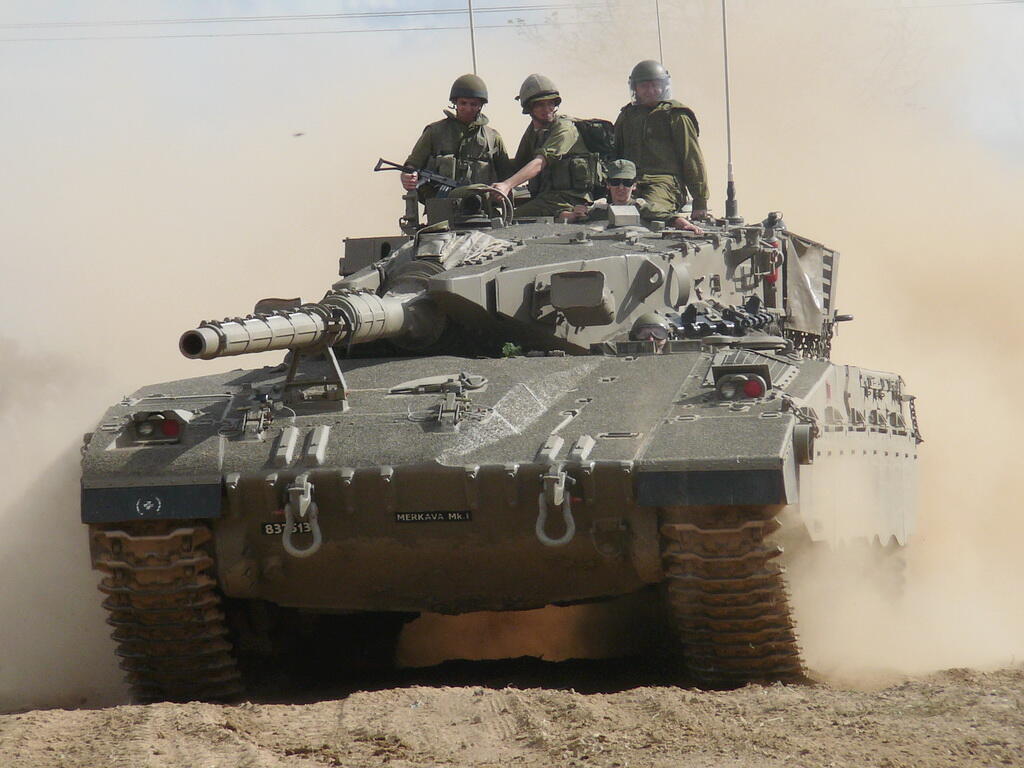
在捷克展出的“梅卡瓦”1
The Merkava was first used in combat during the 1982 Lebanon War, where Israel deployed 180 units. Although they were a success, the M113 APCs that accompanied them were found to have several defects and were withdrawn. Merkavas were converted into makeshift APCs or armored ambulances by taking out the palleted ammunition racks in storage. Ten soldiers or walking wounded could enter and exit through the rear door.
“梅卡瓦”1在1982年黎巴嫩战争期间首次用于战斗,以色列部署了180辆。虽然他们取得了成功,但伴随她们的M113装甲运兵车由于被发现有几个缺陷而被撤回。“梅卡瓦”通过取出车体中的带托盘的弹药架,被改装成临时的装甲运兵车或装甲救护车。10名士兵或伤者可以从后门进出。
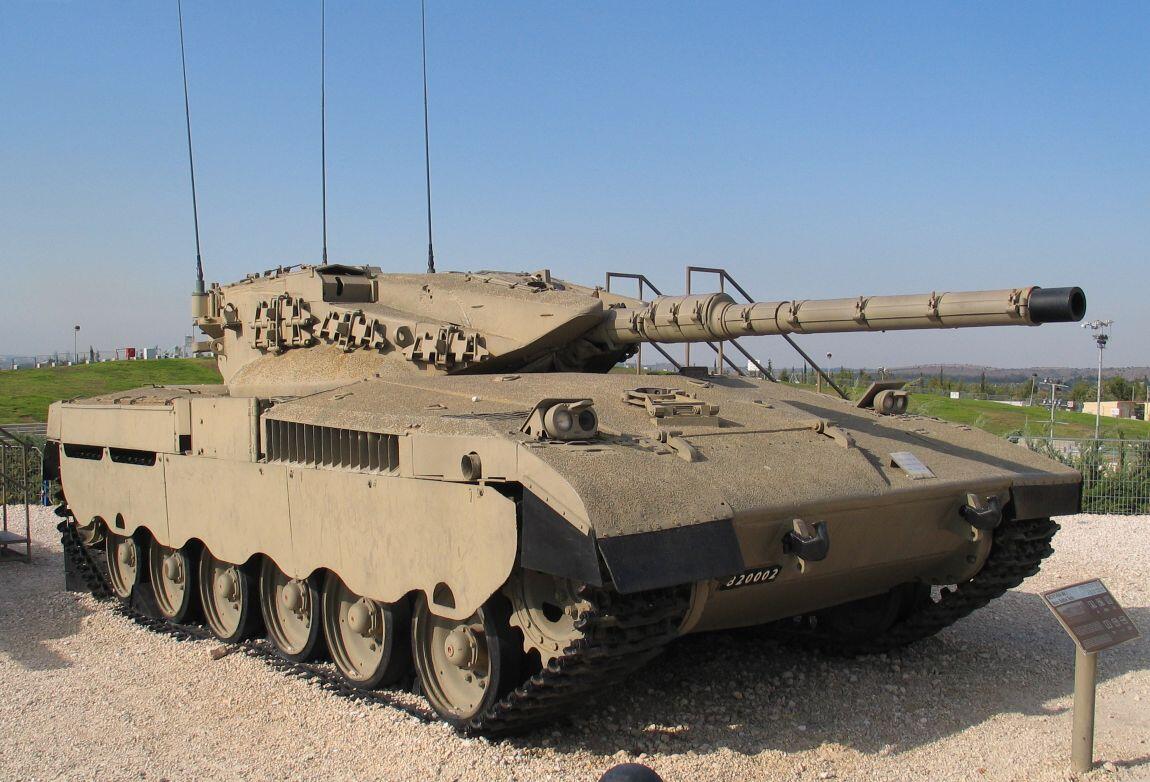
“梅卡瓦”1
After the war, many adjustments and additions were noted and designed, the most important being that the 60 mm mortar needed to be installed within the hull and engineered for remote firing—a valuable feature that the Israelis had initially encountered on their Centurion Mk3s with their 2" Mk.III mortar. A shot trap was found beneath the rear of the turret bustle, where a well-placed shot could jam the turret completely. The installation of chain netting to disperse and destroy rocket propelled grenades and anti-tank rockets before impacting the primary armor increased survivability.
战后,人们对该车进行了多项改装,最重要的是在车体内安装60 mm的迫击炮,并用于远程射击——这是以色列人最初在“百夫长”Mk.3上使用2英寸Mk.2迫击炮时得到的经验。工程师们在炮塔的后备箱下面发现了一个窝弹区,炮弹若射入那里可以完全卡死炮塔。车上还安装了铁丝网,以在火箭推进榴弹和反坦克火箭弹撞击第一层装甲前分散金属射流并摧毁它们,提高了生存能力。
Merkava Mark II “梅卡瓦”2
The Mark II was first introduced into general service in April 1983. While fundamentally the same as the Merkava Mark I, it incorporated numerous small adjustments as a result of the previous year's incursion into Lebanon. The new tank was optimized for urban warfare and low intensity conflicts, with a weight and engine no greater than the Mark I. But the 60 mm mortar was redesigned during construction to be located within the hull and configured for remote firing to remove the need to expose the operator to enemy small-arms fire. An Israeli-designed automatic transmission and increased fuel storage for increased range was installed on all further Mark IIs. Many minor improvements were made to the fire-control system. Updated meteorological sensors, crosswind analyzers, and thermographic optics and image intensifiers gave greater visibility and battlefield awareness.
“梅卡瓦”2于1983年4月入役。虽然与Mk. 1基本相同,但基于前一年在黎巴嫩的作战,它进行了大量的小改动。新的坦克针对城市战争和低强度冲突进行了优化,而其重量和引擎保持不变。但60毫米迫击炮在新车的生产过程中被重新安装于车体内,并设计为遥控发射,以消除操作员暴露于敌人小武器火力的风险。以色列设计的自动变速器和增加的油箱,安装在所有“梅卡瓦”2上。她的消防系统也进行了许多细微的改进。更新后的气象传感器、侧风分析仪、热成像光学和图像增强器为车组提供了更大的能见度和战场感知能力。
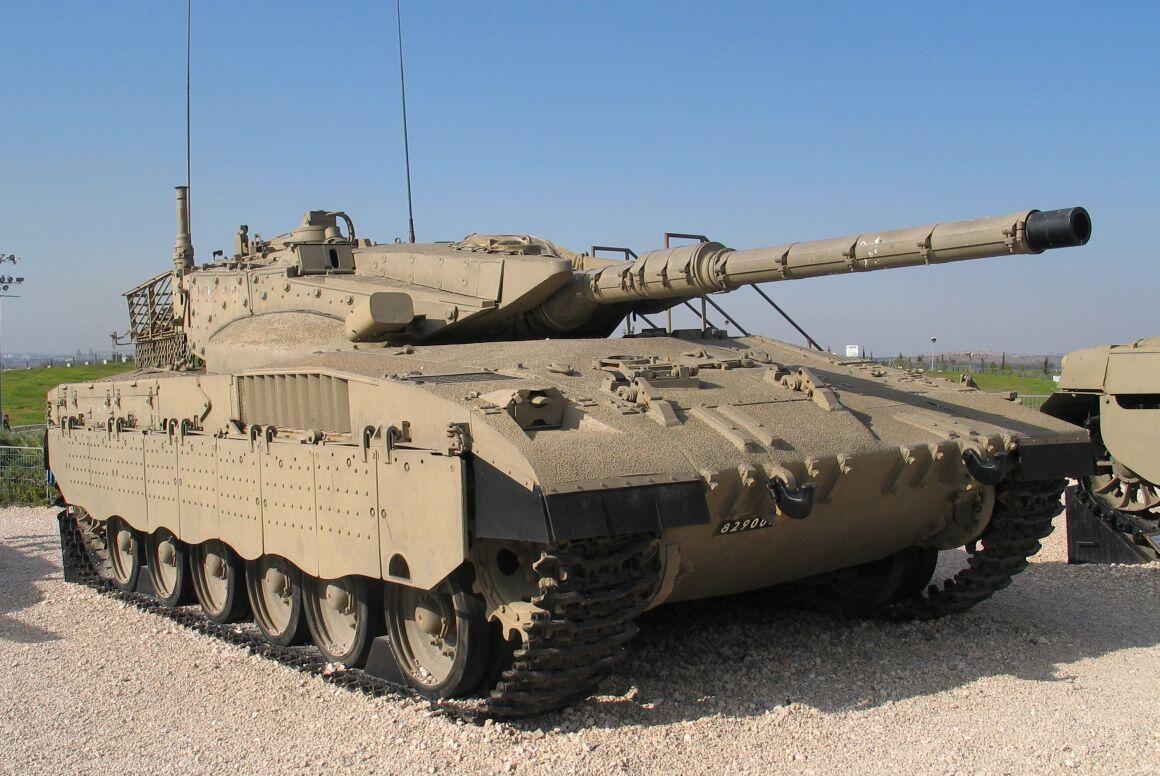
“梅卡瓦”2
Newer versions of the original Mark II were designated:
Mark IIB, with thermal optics and unspecified updates to the fire control system.
Mark IIC, with more armor on the top of the turret to improve protection against attack from the air.
Mark IID, with modular composite armor on the chassis and turret, allowing rapid replacement of damaged armor.
“梅卡瓦”2的更新版本如下:
Mk.2B:火控系统加装了热像仪,以及部分不明的更新。
Mk.2C:炮塔顶部装甲加厚,对飞机舔地进行防护。
Mk.2D:底盘和炮塔加装了模块化的附加装甲,允许快速更换损坏的装甲块。
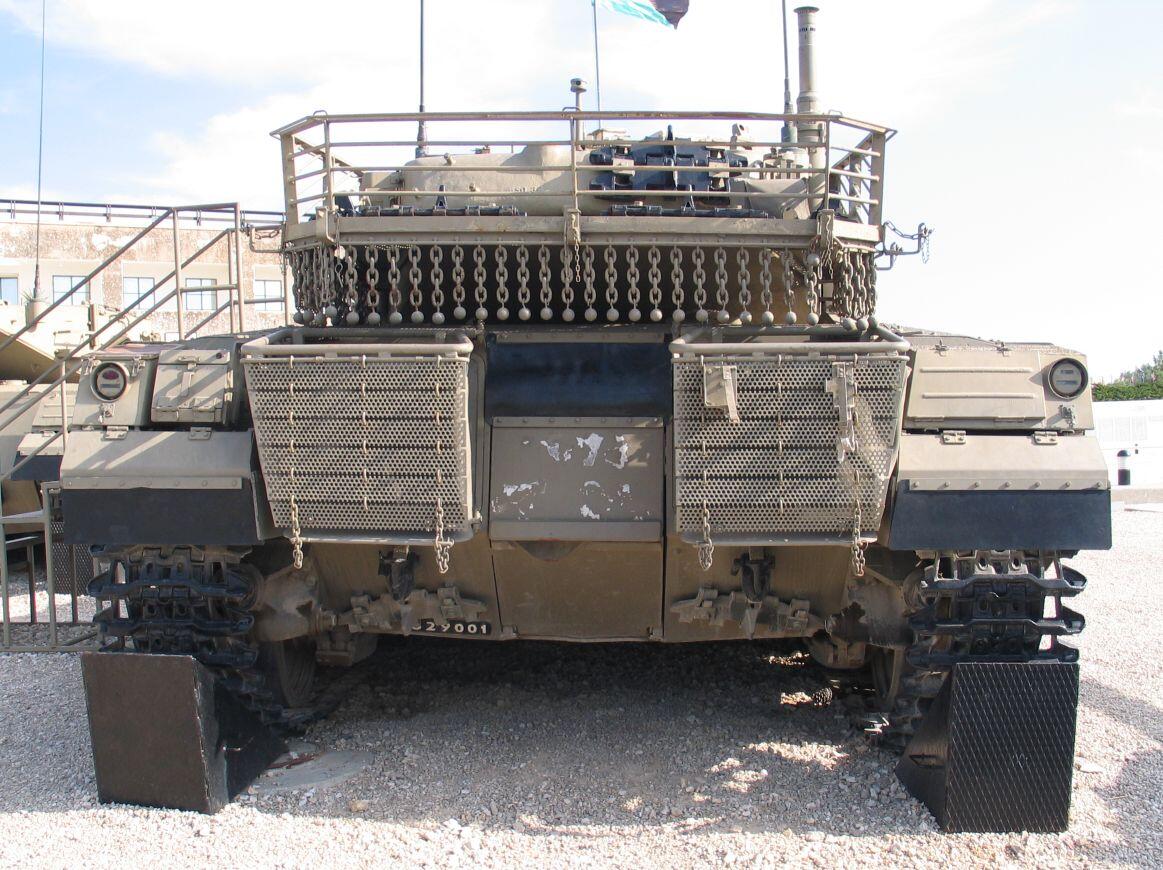
“梅卡瓦”2后部安装了格栅装甲
In 2015 the IDF had begun a plan to take the old models out of storage and repurpose them as heavy armored personnel carriers. Cannons, turrets, and spaces used to store tank shells inside the hull were removed to create a personnel carrier that outperforms the lighter M113 APC. Converting hundreds of Mark II chassis provides a low-cost way to upgrade support units' capabilities to perform medical, logistical, and rescue missions. By late 2016, after 33 years of service, the last conscripted brigade to operate Merkava IIs was scheduled to transition to Merkava III and Merkava IV tanks for battlefield missions, relegating the vehicles to reserve forces for border patrols during conflicts and conversion to personnel carriers.
2015年,国防军开始计划将旧型号从仓库中取出,并将其重新用作重型装甲运兵车。炮弹、炮塔和用于在车体内储存炮弹的空间被移除,以创造出一种性能优于M113轻型装甲运兵车的人员运输车。数百个Mk. 2的底盘被改装,以一种低成本的方法来升级支援部队执行医疗、后勤和救援任务的能力。到2016年底,在服役33年后,最后一个使用“梅卡瓦”2的旅计划换装到“梅卡瓦”3和4坦克执行战场任务,并将Mk.2降级,并转为冲突期间的边境巡逻和人员运输车。
Merkava Mark III “梅卡瓦”3
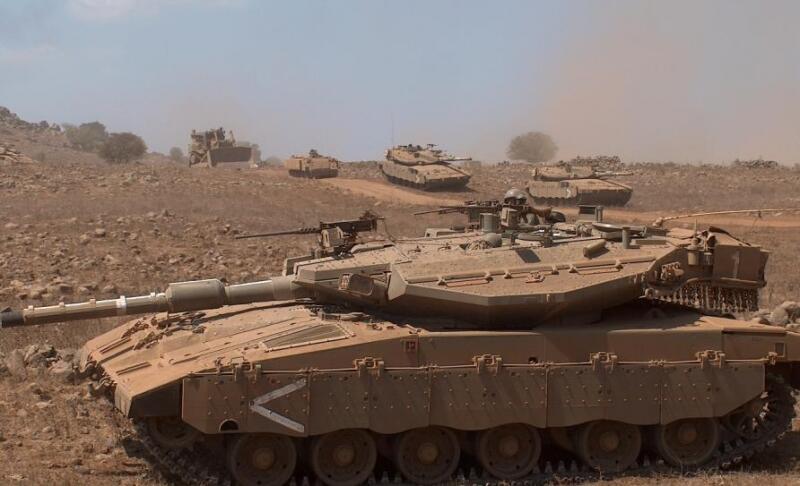
“梅卡瓦”3
The Merkava Mark III was introduced in December 1989 and was in production until 2003. As of 2016, the Merkava III is by far the most numerous tank in frontline IDF service. Compared to the Merkava II, it has upgrades to the drivetrain, powertrain, armament, and electronic systems. The most prominent addition was the incorporation of the locally developed IMI 120 mm gun. This gun and a larger 1,200 horsepower (890 kW) diesel engine increased the total weight of the tank to 65 tonnes (143,000 lb), but the larger engine increased the maximum cruising speed to 60 km/h (37 mph).
“梅卡瓦”3于1989年12月推出,一直生产到2003年。截至2016年,“梅卡瓦”3是目前为止在国防军前线服役的数量最多的坦克。与“梅卡瓦”2相比,它升级了传动系统、动力系统、武器和电子系统。最突出的一点是加入了IMI开发的120毫米火炮。这杆大根和一台更大的1,200马力的柴油发动机把坦克的总重量增加到了65吨,但更大的发动机使最大巡航速度增加到60公里/小时。

标注了武器的“梅卡瓦”3-BAZ(BAZ系统下期要讲)
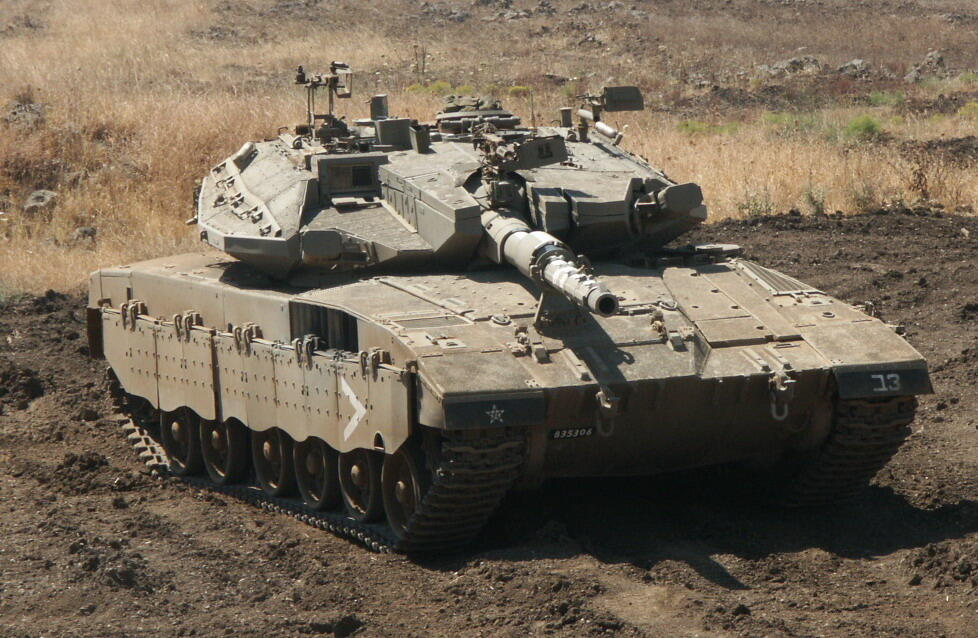
“梅卡瓦”3-BAZ“道尔”,这是“梅卡瓦”3的完全体(“道尔”升级项目下期要讲)
The turret was re-engineered for movement independent of the tank chassis, allowing it to track a target regardless of the tank's movement. Many other changes were made, including:
External two-way telephone for secure communications between the tank crew and dismounted infantry,
Upgraded ammunition storage containers to minimize ammunition cook-off,
Addition of laser designators,
Incorporation of the Kasag modular armor system, designed for rapid replacement and repair in the battlefield and for quick upgrading as new designs and sophisticated materials become available.
炮塔被重新设计,能独立于坦克底盘运动,她还进行了许多其他更改,包括:外部双向电话,用于坦克乘员和徒步步兵之间的安全通信;升级的弹药架,以尽量减少弹药烧毁;增加激光指示器;加装Kasag模块化装甲系统,用于战场上的快速更换和维修,并随着新设计和先进材料的出现而快速升级。
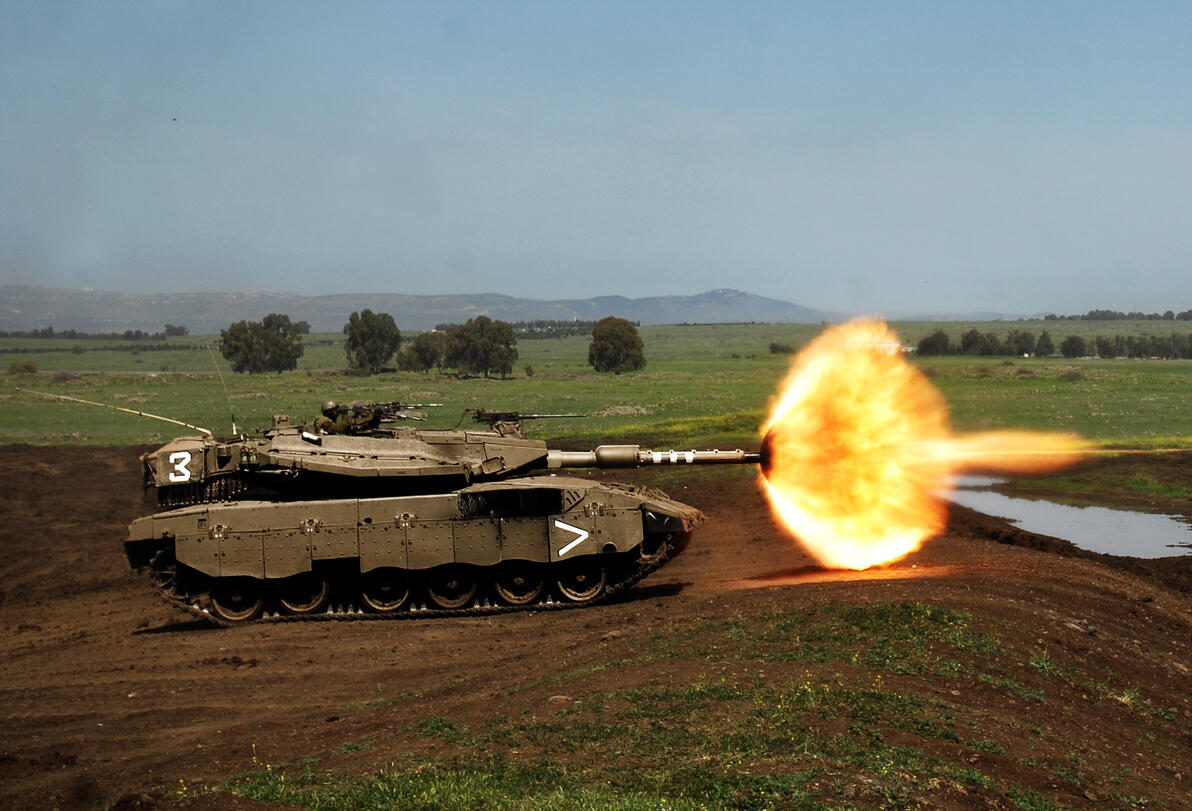
“梅卡瓦”3D-BAZ开火瞬间
Merkava Mark IV “梅卡瓦”4
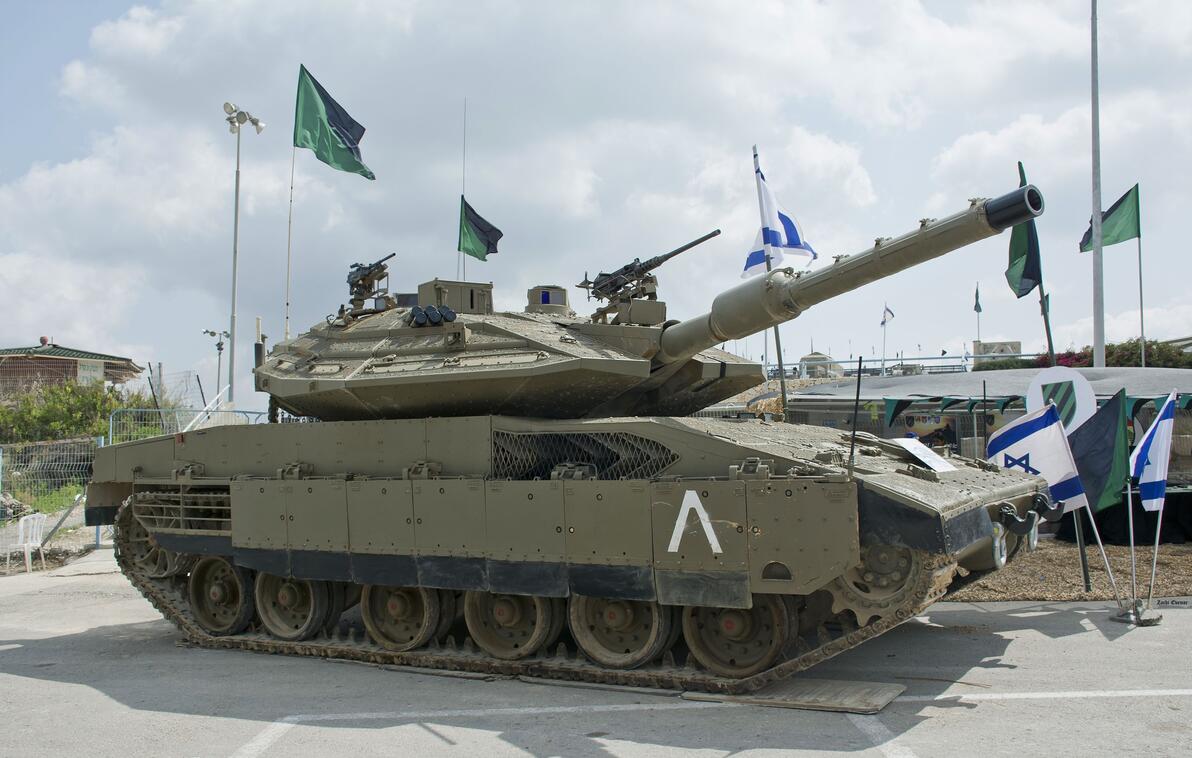
“梅卡瓦”4
The Mark IV is the most recent variant of the Merkava tank that has been in development since 1999 and production since 2004. The upgrade's development was announced in an October 1999 edition of the Bamachaneh ("At the Camp") military publication. However, the Merkava Mark III remained in production until 2003. The first Merkava IVs were in production in limited numbers by the end of 2004.
Mk. 4是“梅卡瓦”坦克的最新型号,自1999年开始开发,2004年开始生产。升级项目在1999年10月出版的《巴马查纳》军事刊物上发布。然而,Mk.3的生产一直持续到2003年。到2004年底,第一批Mk.4的生产数量仍然有限。
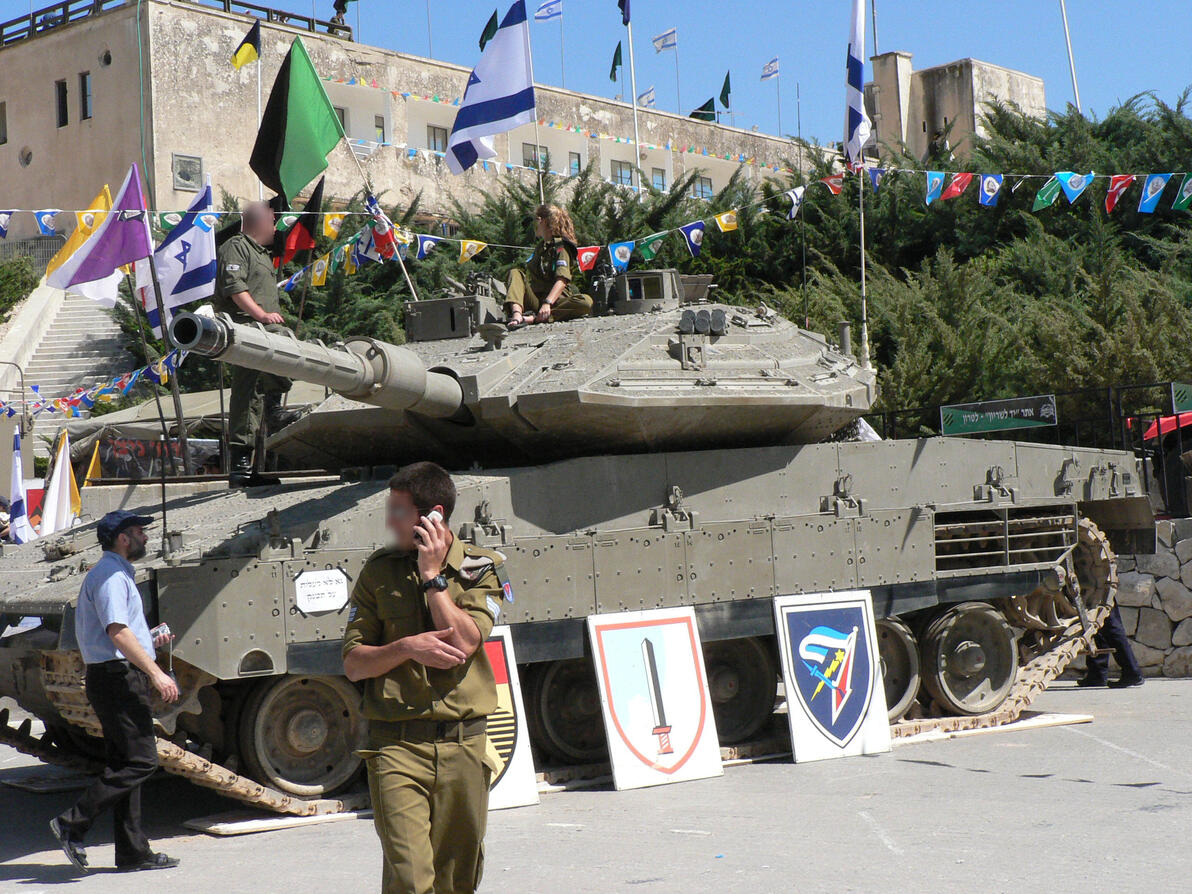
2002年以色列独立日庆祝活动上首秀的“梅卡瓦”4
Removable modular armor, from the Merkava Mark IIID, is used on all sides, including the top and a V-shaped belly armor pack for the underside. This modular system is designed to allow for damaged tanks to be rapidly repaired and returned to the field. Because rear armor is thinner, chains with iron balls are attached in order to detonate projectiles before they hit the main armored hull.
从“梅卡瓦”3D沿用的可拆卸模块化装甲,用于车辆全身,包括顶部和V形腹部装甲包的下方。该模块化系统的设计允许对损坏的装甲块进行快速维修并返回战场。因为后装甲较薄,所以为了在HEAT击中主装甲之前引爆炮弹,需要安装铁球链。
It is the first contemporary tank with no loaders hatch in the turret roof, because any aperture in the turret roof increases risk of penetration by ATGMs. Tank rounds are stored in individual fire-proof canisters, which reduce the chance of cookoffs in a fire inside the tank. The turret is electrically-powered (hydraulic turrets use flammable liquid that ignites if the turret is penetrated) and "dry": no active rounds are stored in it.
这是第一款没有在炮塔顶安装装填手出入口的现代坦克,因为炮塔顶上的任何孔都会增加ATGM的穿透风险。坦克炮弹存放在单独的防火罐中,这样可以减少坦克内火灾发生的可能性。炮塔是电动的(液压炮塔使用易燃液体驱动,如果炮塔被穿透则会点燃),没有炮弹存放在里面。
The Mark IV includes the larger 120 mm main gun of the previous versions, but can fire a wider variety of ammunition, including HEAT and sabot rounds like the APFSDS kinetic energy penetrator, using an electrical semi-automatic revolving magazine for 10 rounds. It also includes a much larger 12.7 mm machine gun for anti-vehicle operations.
Mk.4使用了之前版本的120毫米炮,但可以使用电动半自动旋转弹匣容纳10发更多种类的弹药,包括HEAT和APFSDS。它还包括一门更大的12.7毫米机枪,用于摧毁车辆。
The Mark IV has the Israeli-designed "TSAWS (Tracks, Springs, and Wheels System)" caterpillar track system, called "Mazkom" by troops. This system is designed to reduce track-shedding under the harsh basalt rock conditions of Lebanon and the Golan Heights.
Mk.4拥有以色列设计的“TSAWS(履带,弹簧和车轮系统)”履带系统,部队称为“Mazkom”。该系统旨在减少在黎巴嫩和戈兰高地苛刻的玄武岩地表环境下的履带脱落情况。
The model has a new fire-control system, the El-Op Knight Mark 4. The computer-controlled fire control system can acquire and lock onto moving targets, even airborne helicopters, while the tank itself is on the move. It includes line-of-sight stabilisation in two axes, a second-generation television sight and automatic thermal target tracker, a laser range finder, an improved thermal night vision system and a dynamic cant angle indicator. An Amcoram LWS-2 laser warning receiver notifies the crew of threats like laser-guided anti-tank missiles,which can fire smoke grenade launchers to obscure the tank from the laser beam. Electromagnetic warning against radar illumination is also installed.
该型安装了一个新的火控系统,即El-Op Knight Mk. 4。计算机控制的火控系统可以在坦克本身也在移动的情况下,获取并锁定移动目标,甚至是空中直升机。它包括双稳,第二代电视瞄准器和自动热目标跟踪器,激光测距仪,改进的热夜视系统和动态倾斜角度指示器。 Amcoram LWS-2激光警告接收器能向车组人员通报激光制导反坦克导弹等威胁,并发射烟雾弹,使激光束被遮住。她还安装了针对雷达照射的电磁警告。
The tank carries the Israeli Elbit Systems BMS (Battle Management System), a centralised system that takes data from tracked units and UAVs in theater, displays it on color screens, and distributes it in encrypted form to all other units equipped with BMS in a given theater.
该坦克载有以色列Elbit战斗管理系统,这是一个集中式系统,可从战区内被它跟踪的单位和无人机获取数据,将其显示在彩色屏幕上,并以加密形式分发给所有其他在特定区域配备BMS的单位。
The Merkava IV has been designed for rapid repair and fast replacement of damaged armour, with modular armour that can be easily removed and replaced. It is also designed to be cost-effective in production and maintenance; its cost is lower than that of a number of other tanks used by Western armies. The engine can be replaced in field conditions within 30 minutes.
“梅卡瓦”4采用模块化装甲,专为快速修复和快速更换受损装甲而设计,可轻松拆卸和更换。它还在生产和维护方面具有成本效益:它的成本低于西方军队使用的其他坦克的成本。发动机可在30分钟内在战场条件下更换。
The tank has a high performance air conditioning system and can even be fitted with a toilet for long duration missions.
坦克有一个高性能的空调系统,甚至可以配备厕所以适应长期任务。
Mark IVm Windbreaker “梅卡瓦”4M “风衣”
The Merkava Mark IVm Windbreaker is a Merkava Mark IV equipped with the Trophy active protection system (APS), designated "Meil Ruach" (Hebrew: מעיל רוח; "Windbreaker" or "Wind Coat"). The serial production of Mark IVm tanks started in 2009 and the first whole brigade of Mark IVms was declared operational in 2011. The Trophy APS successfully intercepted rocket-propelled grenadesand anti-tank missiles, including 9M133 Kornets, fired by Hamas before and during Operation Protective Edge in 2014. Not a single Merkava tank was lost in combat operations in 2008 and 2014—despite the war in 2014 being a costly one for the Israeli Defense Forces. The system also notifies the tanks crew of the location that the projectile came from, allowing them to fire back quickly. It can transmit the coordinates to nearby ground and air units through the Tzayad battlefield management system. All friendly units in the theater are instantly apprised of the enemy's position, making escape and evasion difficult.
“梅卡瓦”4M “风衣”是一款配备了 命名为“Meil Ruach”(“Windbreaker”或“Wind Coat”)的 主动防护系统(APS)的 “梅卡瓦”4。“梅卡瓦”4M坦克的量产于2009年开始,第一个旅在2011年宣布投入使用。在2014年,APS成功拦截了哈马斯在行动前和行动期间发射的火箭推进榴弹和反坦克导弹,包括9M133。尽管2014年的战争对以色列国防军来说是一场代价高昂的战争,但2008年和2014年的战斗行动中没有一辆梅卡瓦坦克损失。该系统还能告知车组导弹来袭的位置,使他们能够快速反击。它可以通过Tzayad战场管理系统将坐标传输到附近的地面和空中单位。区域中的所有友军单位都会立即了解敌人的位置,使敌人的逃跑和逃避变得困难。
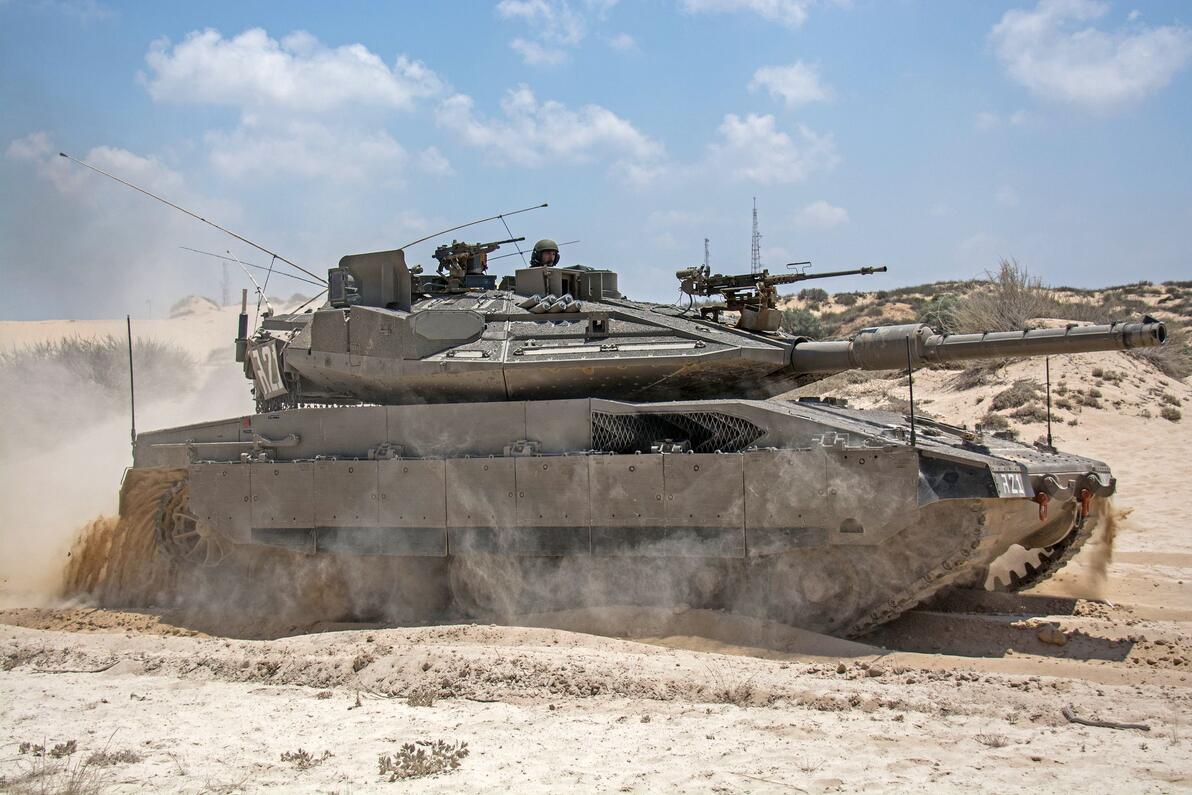
“护刃”行动期间的“梅卡瓦”4M “风衣”
Merkava Mk IV Barak “梅卡瓦”4“巴拉克”
The first Merkava Mk 4 Baraks are planned to begin trials and testing sometime in 2020. The new tank will use advanced artificial intelligence capability to reduce the team members’ workload and help them more accurately locate and strike targets. "The tank’s sensors, along with a 360-degree camera fitted outside the tank, will allow troops to remain in the tank at all times". A new smart helmet, similar to the one Elbit Systems’ has developed for the F-35, will allow the commander of the tank to see exactly what happens outside the tank. The task computer of the Merkava Mk 4 Barak will present all information to crew members, and to the other tanks and vehicles present in the field, and provide more precise and rapid fire closure, which will allow the new tank to eliminate the target before it disappears.
第一批“梅卡瓦”4“巴拉克”计划在2020年开始测试。新坦克将使用先进的人工智能功能来减少车组成员的工作量,并帮助他们更准确地定位和攻击目标。坦克的传感器,以及安装在坦克外面的360度摄像头,将允许车组始终留在坦克中。坦克的指挥官使用类似于Elbit Systems公司为F-35开发的新型智能头盔,能够准确地看到坦克外面发生的事情。“梅卡瓦”4“巴拉克”的任务计算机将向机组人员以及现场的其他坦克和车辆提供所有信息,并提供更精确和快速的火控数据,这将允许新坦克在目标消失之前消灭敌方。
Specifications of models 型号规格
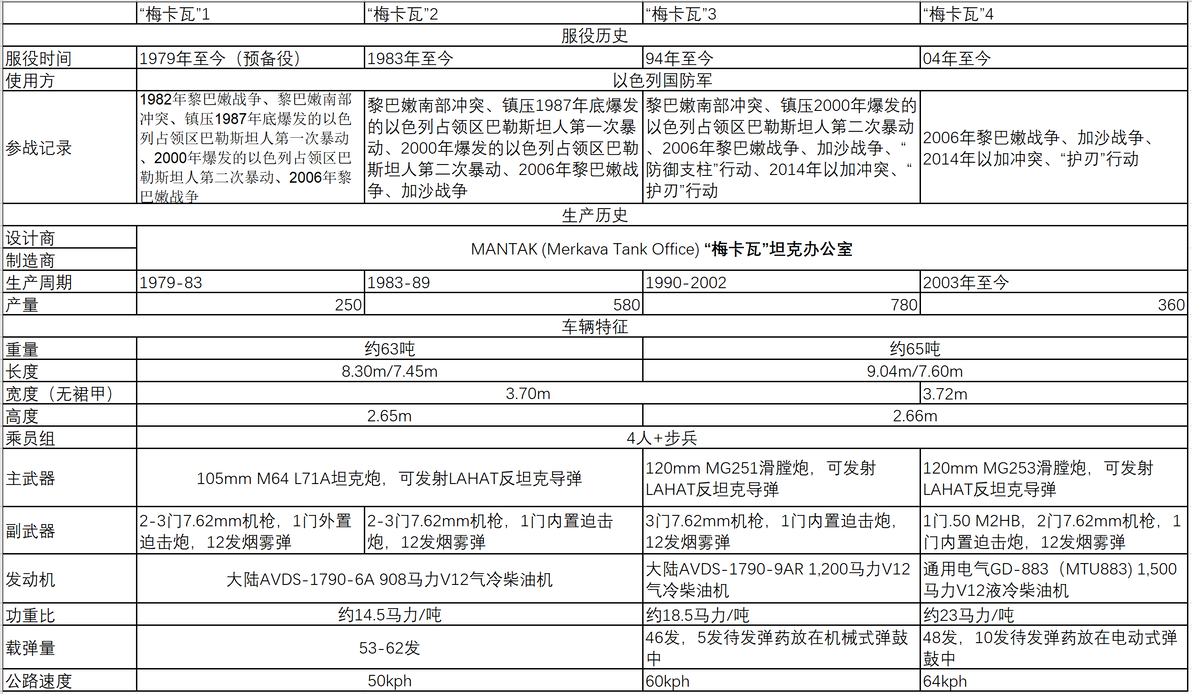
自制
下期预告:作战历史、改装套件、外销出口、改装型号
