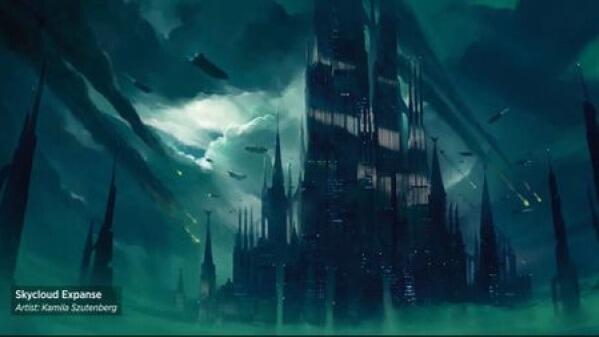

A Hive is a huge urban accretion, built-up over many thousands of years, and home to countless numbers of people.
巢都是一个巨大的城市,经过数千年的建造,是无数人的家园。
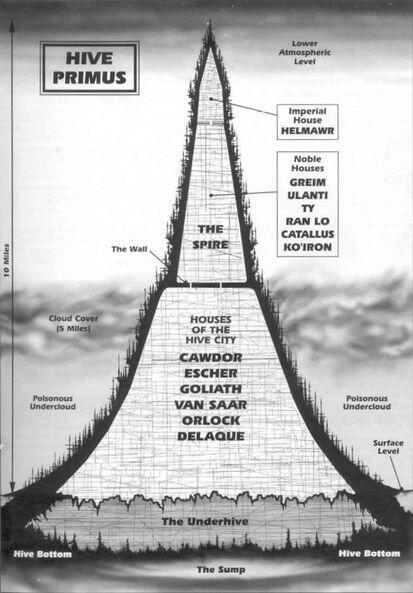
Hive Primus 第一巢都
Overview 概述
Around the entire Imperium over 85% of all planets have at least one hive city cluster.
在整个帝国周围,超过85%的行星至少有一个巢都城市群。
Hives consist of great housing and factory blocks, forming ranges of man-made mountains. These huge towering urban complexes are known as city hives, or simply as hives, and their individual peaks or towers are called city spires or spires. A close group of hives is known as a hive cluster. There are often several thousand hives on a single Hive world. A Hive consists of many layers; the lowest layers form the underhive. Hives are worlds in themselves, where the populace has never seen the outer world, and concepts such as the ground and sky are completely alien. There are entire regions inside the hive blocked off by collapsed sections, where is found the treasure of the hive, the Archeotech hoards, ancient stores of technology.
巢都由巨大的居住区和工厂区组成,形成了人造山脉。这些巨大的高耸城市建筑群被称为巢都城市,或者简称为巢都,它们各自的尖端或塔楼被称为城市尖塔或尖塔。一组紧密的巢都被称为巢都群。一个巢都世界里通常有几千个巢都。巢都由许多层组成;最底层形成下巢。巢都本身就是世界,民众从未见过外面的世界,地面和天空等概念完全陌生。巢都内的整个区域都被坍塌的部分封锁了,在那里发现了巢都的宝藏、考古科技密藏和古老技术贮存。
Exotic planetary environments give rise to unusual hives, such as those of Landunder which cling to the floating surface crust and extend downwards into the world's oceans. Even gas giants can host hive cities suspended in their upper atmospheres, like Scitalyss or Vesmir II, which are sometimes known as skyhives. Above the latter the main hives are connected with the gas-enshrouded planet via elevator mineshafts providing a steady flow of raw materials.
奇异的行星环境会产生不寻常的巢都,例如地下巢都,它们附着在漂浮的地表地壳上,向下延伸到世界的海洋中。即使是气态巨行星也可以拥有悬浮在其高层大气中的巢都城市,如西塔利斯或维斯米尔二号,有时被称为天巢。在后者上,主巢都通过电梯矿井与气体笼罩的行星相连,提供稳定的原材料流。
Anatomy of a Hive 巢都结构
The Spire 尖塔
The upper hive is the region in which the administrators of the hive and various important people live. The homes are better, space is a premium and power is free for all. Life is easy here. The spires are the furthest from the horrors of the lower levels and as such are the best fitted. They are for anyone visiting the planet, giving the best view of the surroundings. Some hive spires pierce through the cloud barriers giving a huge area to watch over.
上巢是巢都管理者和各种重要人物居住的区域。房子更好,空间优质,能量是免费的。这里的生活很轻松。尖塔距离低层的恐怖最远,因此是最合适的。它们适合任何访问行星的人,可以欣赏到周围环境的最佳景色。一些巢都的尖塔穿透云层屏障,提供了一个巨大的观察区域。
Spire 尖塔
The Shell 外壳
The outer shell of a hive is punctuated by deep vertical and angled shafts that allow light and air into the hive's core. These shafts are covered by movable, massive shields for protection. The shell houses crucial infrastructure like travel tunnels, gateway fortresses, and garrison blocks, vital for regulating traffic and defending against invasion. Giant defence lasers mounted on the shell target orbiting threats, whether human or alien spacecraft.
巢都的外壳上点缀着深深的垂直和倾斜的竖井,允许光线和空气进入巢都的核心。这些竖井由可移动的大型护盾覆盖,以提供保护。外壳内有重要的基础设施,如旅行隧道、门户堡垒和驻军区,对调节交通和防御入侵至关重要。安装在外壳上的巨型防御激光瞄准了轨道上的威胁,无论是人类还是异型飞船。
One of the shell's major function is the defense against fierce ash storms, common on Necromunda. These storms can strip away outer layers, including laser defences and essential facilities, threatening the stability of the hive. Regular maintenance by work gangs is necessary to reinforce and repair the shell, preventing ash storms from penetrating deep into the spire's tunnels and infrastructure.
外壳的主要功能之一是防御在涅克罗蒙达上常见的猛烈火山灰风暴。这些风暴会剥离外层,包括激光防御和基本设施,威胁巢都的稳定性。有必要由工作小组进行定期维护,以加固和修复外壳,防止火山灰风暴深入尖塔的隧道和基础设施。
Heat Sinks 散热器
At the core of every spire on Necromunda is a vertical shaft known as the heat sink, extending from the topmost levels to deep below the planet's crust. This vast, hollow plasteel tube, several kilometres wide, harnesses heat from the planet’s core to generate power for the spire. Generator stations along the heat sink convert raw heat into energy, which is distributed to manufactories and hab layers around the core. In the lower levels, the heat sink provides warmth but no direct power.
涅克罗蒙达上每个尖塔的核心都是一个被称为散热器的垂直竖井,从最高层延伸到地壳深处。这根几公里宽的巨大中空塑钢管道利用行星核心的热量为尖塔发电。散热器沿线的发电站将原始热能转化为能量,分配给核心周围的制造厂和居住层。在较低的层,散热器提供热量,但不提供直接电力。
Control of power generation systems is a major marker of a powerful clan in Necromunda's inner core, as clans in whose territory these systems fall earn substantial income. Other clans may control territories through which power is transmitted, extracting tolls from factories and power producers. This creates a feudal economy where clans act as producers, suppliers, and consumers. In the upper hab layers, power services are regulated and controlled by the government, specifically by the troops of Lord Helmawr.
发电系统的控制是涅克罗蒙达的内核的强大氏族的主要标志,因为这些系统所在的氏族可以获得可观的收入。其他氏族可能控制着输电的领土,从工厂和电力生产者那里收取通行费。这创造了一种封建经济,氏族充当生产者、供应者和消费者。在上方居住层,电力服务由政府,特别是赫尔马沃领主的部队进行监管和控制。
Hab Zones 居住区
The majority of a hive’s population on Necromunda belongs to the indentured worker class, living in overcrowded and squalid hab zones. Social standing within the spire is reflected by residential levels: the elite live luxuriously in the uppermost levels, enjoying natural light, fresh air, and real food imported from agri-worlds. Below them are the twilight levels, where conditions are harsher with dim natural light, no fresh air, and heavily recycled food. The lowest levels are the undercity, shrouded in artificial light and characterized by extreme recycling, including air and even people.
涅克罗蒙达上的巢都的大部分人口属于契约工人阶级,生活在过度拥挤和肮脏的居住区。尖塔内的社会地位反映在居住层:精英们奢华地生活在最高层,享受自然光、新鲜空气和从农业世界进口的真正食物。在它们下面是黄昏层,那里的条件更为恶劣,自然光线昏暗,没有新鲜空气,食物大量回收利用。最低层是地下城市,笼罩在人造光下,以极端的回收利用为特征,包括空气甚至人。
Manufactories 制造厂
The industrial complexes within the spires of Necromunda produce various goods traded for food to sustain the planet's vast population. These manufactories extend from below the hab zones to the surface of the Ash Wastes, with their waste solidifying around the hive bases and adding to the planet's layers. As ash levels rise, lower factories are buried but remain operational as long as waste can be pumped to the surface. The manufactory levels are filled with waste pipes, shafts, and drains, expelling toxic substances into the environment.
涅克罗蒙达尖塔内的工业建筑群生产各种商品,以换取食物,维持行星上庞大的人口。这些工厂从居住区下方延伸到灰烬荒地的表面,它们的废弃物在巢都底部周围固化,并增加了行星的层次。随着灰烬层的上升,较低的工厂被掩埋,但只要废弃物可以被泵送到地表,工厂就会继续运营。制造厂层充满了废水管、竖井和排水管,将有毒物质排放到环境中。
Industrial production is controlled by numerous clans, each fitting into a feudal system of supply and demand. Powerful clans, particularly the six Clan Houses, serve as intermediaries for goods and services. This system efficiently regulates industrial activity, with clans forming alliances or engaging in feuds that often result in gang warfare. Workers, who live near the manufactories, are essential resources and may undergo expensive surgical enhancements to improve their utility, making them highly valuable to their employers.
工业生产由众多氏族控制,每个氏族都符合封建供需体系。强大的氏族,特别是六个氏族家族,是商品和服务的中介。这种制度有效地规范了工业活动,氏族结成联盟或进行交战,这往往导致帮派战争。居住在制造厂附近的工人是必不可少的资源,他们可能会接受昂贵的手术增强以提高他们的效用,这使他们对雇主来说非常有价值。
Ruined Manufactories 废弃制造厂
As the ash waste surface rises, servicing buried manufactories becomes increasingly difficult. Massive vacuum pumps lift waste above the surface, but this process has limits. When waste disposal becomes impractical, manufactories are shut down and abandoned. Consequently, lower levels become wastelands inhabited by low-life scum, while lower hab zones are converted into new manufactories, and upper habs are extended upwards, perpetually renewing the spires of the hive city.
随着灰烬荒地表面的上升,为被埋葬的制造厂提供服务变得越来越困难。大型真空泵将废弃物拉升到地表以上,但这一过程有其局限性。当废弃物处理变得不切实际时,制造厂就会关闭并废弃。因此,较低的层变成了居住着下层渣滓的荒地,而较低的居住区则被改造成了新的制造厂,而较高的居住区则向上延伸,不断重申着巢都城市的尖塔。
Abandoned manufactories, filled with obsolete machinery, can extend as far below ground as the spires stretch above. The lowest parts of these zones often collapse under the hive's weight or are filled in to create foundations for new structures. These derelict areas are infested by scavvies—mutant gangs scavenging for anything usable or tradable.
废弃的制造厂里堆满了废弃的机器,可以延伸到地下,就像尖塔延伸到地上一样。这些区域的最低部分经常在巢都的重量下坍塌,或者被填充为新结构的地基。这些荒废的地区到处都是拾荒者 — 变种人帮派在寻找任何可用或可交易的东西。
Underhive 下巢
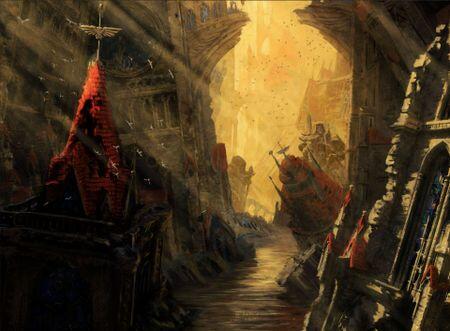
The Underhive is the most run-down area where most of the rules are created by gangs. It is a difficult place to live where the power has long been turned off. People rule through fear and shun the rich above them in the better apartments.
下巢是最破败的地区,大部分规则都是由帮派制定的。这是一个很难生活的地方,那里的电力早已被切断。人们通过恐惧来统治,在更好的房间里避开上面的富人。
Part of an Underhive 下巢的一部分
The Hive Bottom 底巢
At the base of the hive, buildings become structurally dangerous, creating an inhospitable area known as the hive bottom. This zone is filled with decayed and crumbling structures, collapsed domes, and foundation piles, forming a layer of almost solid rubble. Enclosed pockets within the rubble are linked by tunnels formed by leaking liquids, resulting in a vast lake of radioactive waste called the Sump. The hive bottom is uninhabitable for most life forms, except for monstrous mutants that thrive in the darkness and pollution. Occasionally, these creatures make their way into the underhive or lower parts of the city, but their natural habitat remains the hive bottom.
在巢都底部,建筑物的结构变得危险,形成了一个不适宜居住的区域,称为底巢。这个区域充满了腐烂和摇摇欲坠的结构、倒塌的穹顶和基桩,形成了一层几乎实心的碎石。瓦砾中的封闭口袋由泄漏液体形成的隧道连接起来,形成了一个巨大的放射性废弃物湖,称为污水坑。底巢不适合大多数生命形态居住,除了在黑暗和污染中茁壮成长的可怕变种人。偶尔,这些生物会进入下巢或城市的下部,但它们的自然栖息地仍然是底巢。
Outskirts 郊区
The outskirts are not as bad to live in as the underhive, but certainly not an easy place to live. Power is nonexistant and running water and constant food supplies are rare. It is certain that people die of starvation here or of some disease spreading through the area.
郊区不像下巢那么糟糕,但肯定不是一个容易居住的地方。电力是不存在的,自来水和持续的食物供应是罕见的。可以肯定的是,这里的人们死于饥饿或某种疾病在该地区传播。
Main Parts of any Hive City 任何巢都城市的主要部分
The main Sectors of each Hive City are:
每个巢都城市的主要区域是:
Sectors Imperialis - the main hive levels (the most varied and populated of divisions within a hive city);
帝国区 - 主要的巢都层(巢都城市内最多样化和人口最多的分区);
Sectors Periferus - the outskirts beyond a hive's borders;
外围区 — 巢都边界之外的郊区;
Sectors Mechanicus - heavy industrial zones;
机械教区 - 重工业区;
Sectors Spirum - the upper spires;
尖塔区 - 上面的尖塔;
Sectors Habculum - vast hab-blocks;
居住区 - 巨大的居住区;
Sectors Infernus - either the underhive or the underwastes.
炼狱区 — 要么是下巢,要么是下层荒原。
